The Affordable Art Fair (AAF), taking place this week end in Battersea, is one of our favourite art fairs in London. We enjoy it for many reasons but above all because of the quality and diversity of the exhibitors such as Artful.
110 galleries with 1,100 artists
Get ready to add a splash of art to your walls as the Affordable Art Fair returns to Battersea Park this October. New galleries will fly in from across the globe to exhibit alongside fair favourites, so whether your taste is traditional or trailblazing, classic or cutting-edge, you’re sure to find an artwork to suit your space.
___________
Artful, stand F2
Meet Joshua Blackburn, its founder:
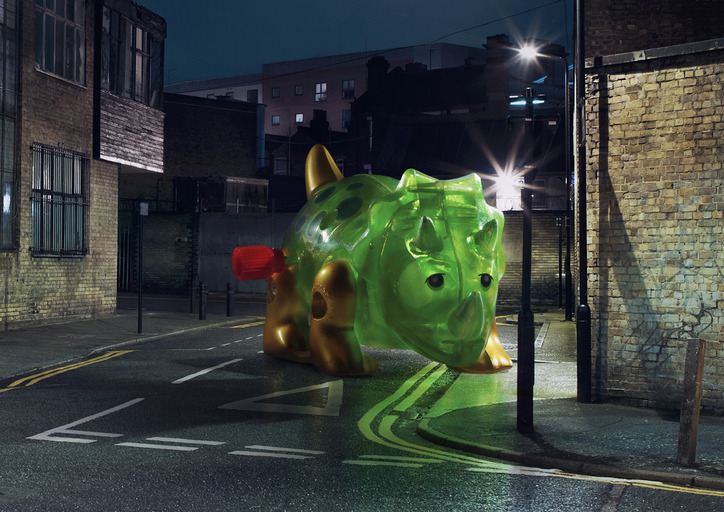
“Photography is a narrative art that deals with snatched moments, like a form of visual eavesdropping. For me, this quality is what makes photography so engaging. The audience gets a window into an alternate reality that can be enigmatic and intriguing. Night Visitors #4 by Adrian Siamson | Art-Pie
This is certainly what drew me to the works you find here. These stories, or story fragments, have an aura of the unreal and unexpected. Some, like Adrian Samson’s Night Visitors, are fantastic. Others, like James French’s Beach, are almost cinematic. Even familiar subjects – the city skyline, the petrol station, the forest – have an unfamiliar quality that draws me in.
I love work like this because I can return to it again and again and feel its pull. It’s a pleasure listening to a great storyteller, even when you’ve heard the story before, and it’s the same with great photography. You want to stop and look… and look again.”
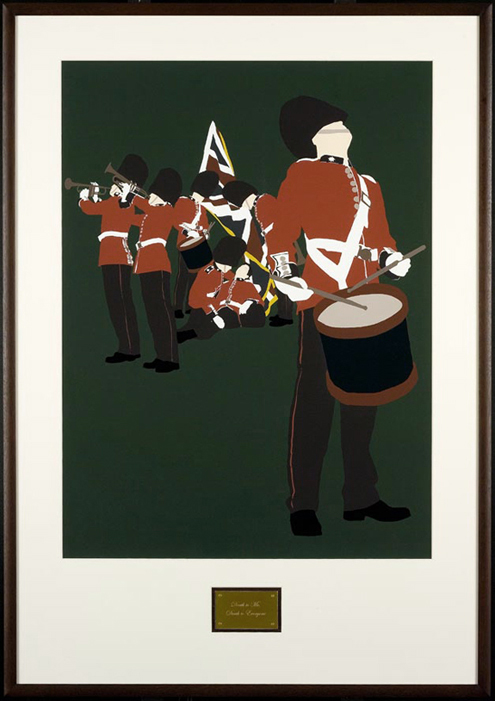
Death To Me, Death To Everyone, (c)2008 Edd Pearman
“The concept of ‘the spectacle’ interrelates and explains a wide range of seemingly unconnected phenomena. The apparent diversities and contrasts of the phenomena stem from the social organisation of appearances, whose essential nature must itself be recognised. Considered in its own terms, the spectacle is an affirmation of appearances and an identification of all human social life with appearances. But a critique that grasps the spectacle’s essential character reveals it to be a visible negation of life – a negation that has taken on a visible form.”[1]
Guy Debord from Society of the Spectacle
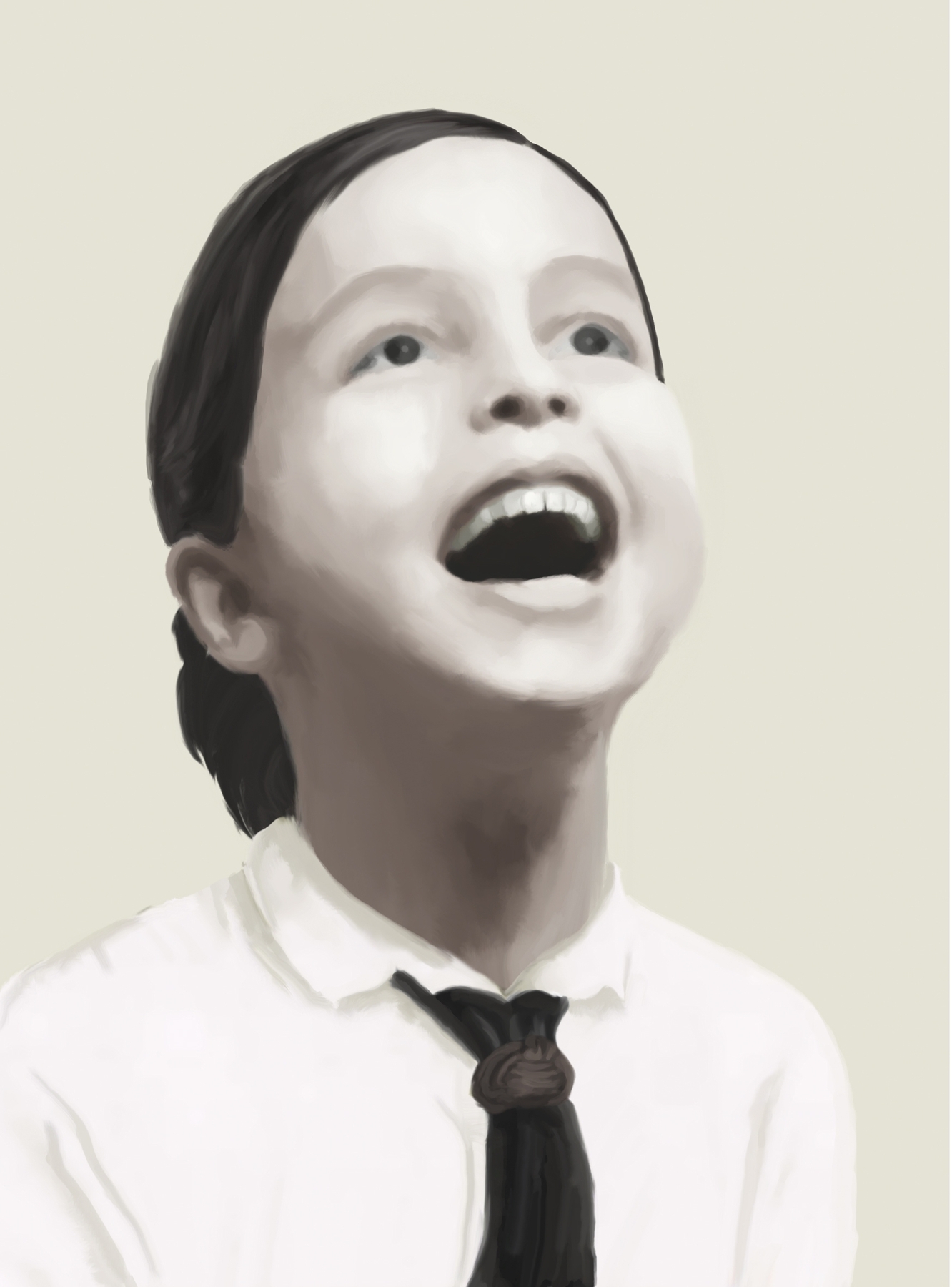
Whilst I Breathe, I Hope, (c)2011 Edd Pearman
I didn’t have to delve far into Guy Debord’s Society of the Spectacle to find what I was hoping to find. This quote by Debord states the nature of the spectacle as an affirmation of ‘appearance’, while a critical look at spectacle reveals the spectacle to be a ‘negation of life’. This is the very essence of what Edd Pearman explores in his work. “Duality has a strong influence throughout my work, each work maintains a two-fold characteristic in its content i.e. Humour and horror, life and death, hope and despair. All initially appear to embody one intention, yet possess in equal measure, opposite qualities,” says Edd.
Appearance is seductive – and deadly. Is that a hyperbolic statement for effect? Possibly, but think of all the little deaths you’ve experienced for the sake of appearance and you may find you agree with me.
Read more of our interview, False Together, for This ‘Me’ of Mine.
[1] Debord, Guy, Society of the Spectacle, trans. Ken Knabb, Rebel Press, London, pg.9
Having been a fan of Ben Oakley’s art work for the last few years I was really excited to see the Ben Oakley Gallery open in Greenwich last year. Having spoken to Ben this week he has given me details of the upcoming show in January which looks to be another good mix of contemporary street art. Ben works with a range of artists involved in the emerging and established contemporary and street art culture as well as creating his own work and being involved in various art projects and curatorial events. As a lover of series my favourite work of Ben’s are his trademark fairies, bears and yeti’s.
Show Details:
In January 2012, Otto Schade brings his extraordinary artwork to the Ben Oakley Gallery in Greenwich. He will be exhibiting original unseen artwork and ltd edition prints from 21st January – 5th February.
Originally from Concepcion in Nothern Chile, Schade now lives in London, where he works as a University Lecturer in the field of Architecture. He balances his career with a passion for creating beautiful and detailed artworks, both in the studio and at street level.
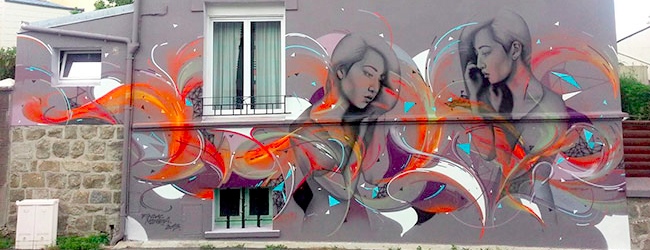
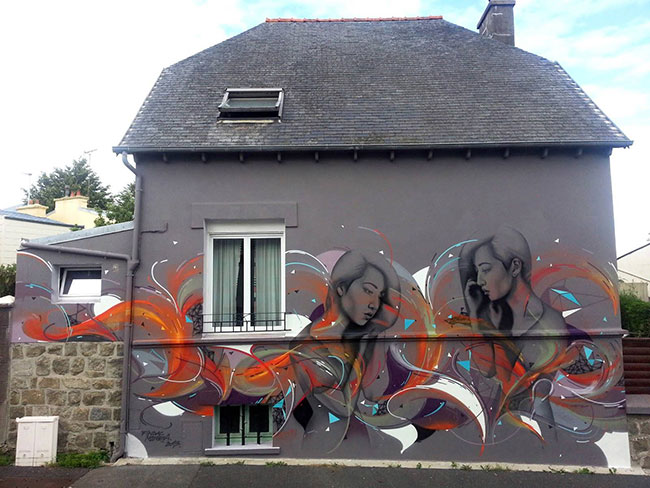
Schade uses his ribbons to compose beautifully intricate images, often referencing popular culture. However, he also creates more thought-provoking works, that resonate with deep and symbolic meaning.
Schade has forged a reputation as one of London’s foremost street artists, with his instantly recognisable ribbon motif adorning many walls throughout London and beyond gaining admiration from Private collectors and Artists alike.
Otto Schade will be in attendance.
BEN OAKLEY GALLERY PRESENTS: ‘URBAN SCHADE’
PREVIEW EVENING: Friday 20th January 2012 7.00 – 9.30 pm
EXHIBITION DATES: Saturday 21st January – Sunday 5th February 2012
VISITOR INFORMATION.
BEN OAKLEY GALLERY
9 Turnpin Lane Greenwich London SE10 9JA
(top end of the indoor market.)
Opening Times: Thursdays –Sundays 11-6pm
Monday –Wednesday by appointment.
All media enquiries /invitations: please email Ben Oakley.
Telephone. 07976 692 751 www.benoakleygallery.com
DLR: Cutty Sark Greenwich ( 2 minutes walk )
Overground Train:Greenwich Station ( 5 minutes walk )
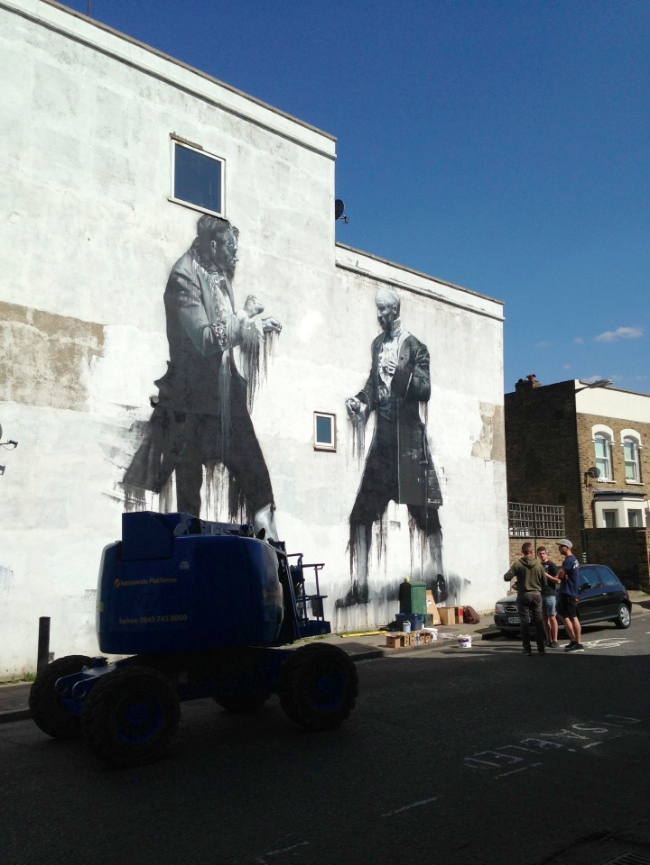
A few works from Codefc can now been seen across Amsterdam. We have put some of these below. We particularly like the juxtaposition with the famous painting “The milkmaid” by the Dutch painter Johannes Vermeer.
Gaston Gouron is a visual media artist based in Brussels. His work caught my attention at a show about art books. Not by surprise, yet I think more by design, I had picked out each of Gaston’s three artworks on display before swooping in to catch a word with him. I arranged to meet two days later in Bar De Matin – BDM to those in the know – a chatty bar in Place Eugéne. I went in with having noted down a few choice questions and also the book ‘The Secret War between Downloading and Uploading’. I’d intended this as a visual prompt to get us going on a Sunday morning. Luckily too we’re both keen on our coffee! Gaston launched in by telling me that notorious mega-uploads site had just been killed-off by the US government’s new anti-piracy laws.
‘Tutt!!’ He mentioned also the group called Script-Kiddies who work anonymously, and how he was fond of subverting the hacking potential of freewares like Keylogger to the advantage of as a tool for making artwork. He also threw in the word Caviarder – but not to be cast aside, really that word defines Gaston Gouron’s working process – which for him is to make things in a simple way or with no design.
Maybe this makes him a censor of what he considers to be an over-design of things? I asked him how much he thought his work to take refuge in and show hallmarks of the graffiti artist – expressive, edgy, playful? Here is the interview.
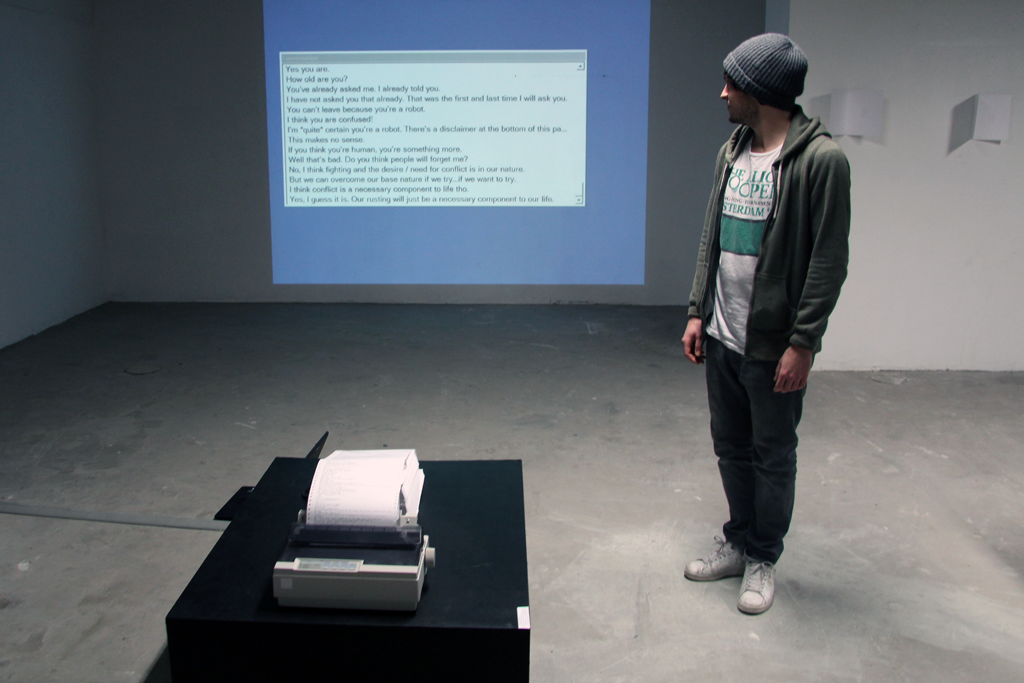
Media artist Gaston Gouron presiding over the inspired techno-language-sculpture ‘Never-ending Conversation’ at the exhibition 50 Livres D’Artistes which happened 19–21 Jan 2012 – an annual showcase of students’ work from Lacambre Arts Visuels, Brussels
PW: Please describe your working method relating to the artwork Never-ending Conversation, exhibited in 50 Livres d’ Artistes at ARA (Amis de la Reliure d’Art) Belgica in January.
GG: It’s totally process driven, and it’s about finding a moment when something flips into being interesting, no; in fact, amazing. I do this on the web, chasing links that may have been sparked by a conversations with friends or a hangover from a previous idea.
Never-ending Conversation comes off the back of me buzzing around the internet and settling on something amazing. An example is when I discovered Chatbot, a web-based AI that you can talk with. I like to have fun with things so I was cutting & pasting text between the two conversation boxes to see how absurd it could be. But instead, Chatbot was sufficiently intelligent enough and made responses to expressions how you’d expect a human conversation to go.
That conversation became the default material I wanted to work with for one of my projects. As a bee might extract and pollinate, I wanted to do the same. Taking from one place and have it settle in another. Pollinating might be stretching the bee analogy too far though. It’s not that serious, really I’m simply interested in making things feel new.
PW: The artwork which you called Never-ending Conversation is very sculptural and invades the exhibition space but also plays with text that came literally out of thin air (or more aptly, it came virtually from the chatbot’s AI). So, how do you deal with the ‘real’ and ‘virtual’ and did that affect the way you chose to exhibit the artwork at 50 Livres d’Artistes?
GG: On the one hand I’m not proud to see the work presented. In reality it should appear more disordered. I created the original version in my bedroom which is more a workspace. I’m a collector too, collecting documentation about programming language and old network cables.
In a more common workspace environment Never-ending Conversation looks more ‘gutsy’ – how you’d expect a living machine should be. But when I saw it set-up in the exhibition space it looked, well… Naked! but I understand that the conditions – or restrictions – between workspace and exhibition space are very different.
In the stark, brightly lit – and clean! – exhibition space of ARA (a space with an orthodox for presenting aesthetically-biased artbook artists) I imagine my work is more readable to an audience. But It would be a great idea to have the work redone – simply to make the sprawling technology in the sculpture more obvious, revealing more about how it was put together. I’m really aware that I don’t want to conceal any part of the process.
PW: Which technological forms tend to produce the best renditions of language or ‘text-sampling’ that you’ve seen recently?
GG: Basic plain text.
I prefer reading rather than to listen to spoken words.
I just love data.
It’s strange I know, but more recently I’ve been understanding why my work borders on being seen as simplistic – which is a good thing. One thing is knowing about a study a friend sent to me. It shows that we read in contours – going from the corner of a page to the centre. So I think I’m interested in written material. Then I think about if it should be offered up as a bound-book, a pamphlet, a techno-language-sculpture. These are vessels and simply carry the language, I’m not even sure they’re that an important part of the process. The finding and discovering is more what I’m into.
PW: What’s interesting or peculiar that you’ve discovered about the ins and outs of language when you’re thinking how it needs to appear in or affect a piece of work?
GG: It’s that English language is most important in the creation process. It’s the language of IT and because I’m working a lot with script languages, English is most widely used. My mother tongue is French, but it’s not the language of IT and because I’m into revealing all of the process I’m always going to be showing parts of script and programming language.
One other thing is that using the French language this might make my work appear to be more exotic and specialist. It’s the opposite – I want to hit on an international crowd with an equally international language and for them to read the words. If they admire the vessel in which it’s concealed, then great, but for me it’s about getting the language to speak for itself.
PW: Who has done the most, or been most instinctive, in making the printed word part of their bank of visual language?
GG: I have several references. I would say the graphic works of Marcel Broadthaer’s and he’s Belgian. Japanese artist On Kawara is a big inspiration. He made two books retracing one million years – making the words and numbers from the dates into material – which then could be bound in a book, spoken out aloud and painted on a canvas (then, showing me on the screen of his laptop) like this.
I also can’t forget North Amercian artist Ed Ruscha for his famous graphics and text paintings. In England there’s Daniel Eatock – I love his work; well more than love. It’s his approach – easy and efficient. Then there’s Vaska who is Eatock’s founding partner of the web-building-platform Indexhibit. He came into my school last year. Working together they made the most clean of interfaces.
PW: ‘Artbook’ as a category seems an anathema to your visual language because you’re looking for ways of re-doing and re-showing printed texts. I can see a binary to the way you bulk-up on language and downplay the format (or vessel as you refer). You serve-up things leaving the text in it’s raw elemental form – to fend for itself. So, how do you think your work relates to the ready-made, or made-ready?
GG: I produced Never-ending Conversation on a course I was studying at Lacambre Artes Visuels in Brussels. It was only 3 months and the course was refreshing because of the trans-disciplinary interests of the students I was studying with. Everyone doing this short-course was coming from a bigger discipline including design, photography, typography, urban space and for me it’s graphic communication. A bias is coming in too from a fine-art background but I’m also a programmer.
The tutors were really supportive an encouraged us to explore ideas. It’s completely energizing to share ideas with such a diversity of artistic personalities.
My work relates to the ready-made in process really. I do things to get rid of some idea – maybe to bank them so I can buzz on the next amazing discovery.
PW: We could go on, but thanks Gaston for the giving a nice twist to thinking about the how artbooks can still be brought to life beyond the printed and bound page.
GG: That’s OK
Gaston Gouron is currently writing his transcript for application to RCA, London.
Related: From 26 January to 6 May 2012 MAMbo – Museo d’Arte Moderna di Bologna is delighted to present Marcel Broodthaers. L’espace de l’écriture, the first complete retrospective in Italy devoted to the Belgian artist, curated by Gloria Moure.
Samsung and the Galaxy Note II introduce Liquid Pixels. A short film documenting a piece of interactive water art, controlled solely using the Galaxy Note II and its S Pen technology. The concept was created by Daniel Kupfer, and took 10 days to create and used over 3,000 connections, which were all fitted individually.
We have also included an interview with interactive designer Daniel Kupfer talking about his professional an personal projects.
I just love the concept and even more the outcome: a unique series of prints now available to purchase at Prescription Art
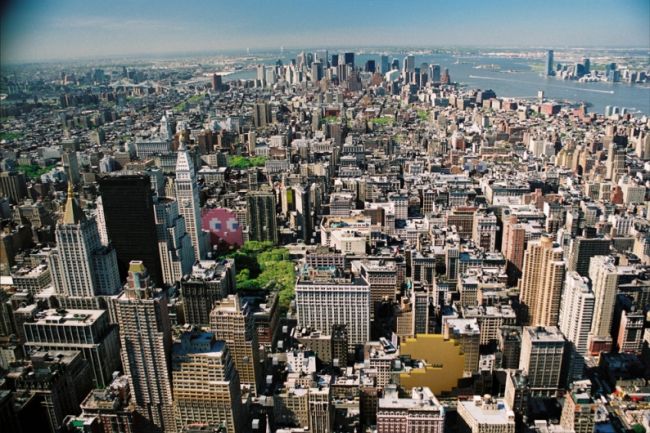
8-bitscapes is a collaboration between designer Jamie Sneddon and photographer Kevin Rozario-Johnson. The concept is simple: they use well-known classic video game characters such as pac-man or invaders and intricate them into real-life scenarios. The results is just ace. Continue reading 8-bitscapes prints now available: want one, defo.→
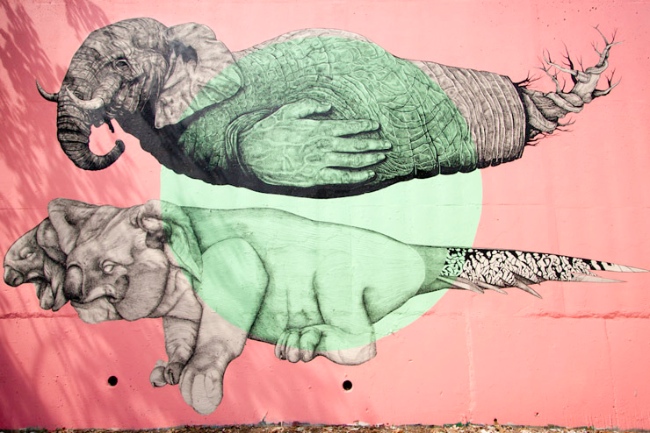
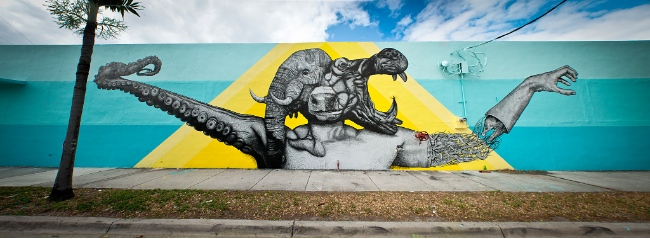
We have come across La Pandilla art and have liked very much the uniqueness of it. The recurrent theme it’d seem is the animal morphology: different species of animals are blended together creating totally unique specimens.
Definitely odd at first, this approach appears powerful and give the viewer plenty to think of what and why we look the way we are. You will find a few examples of their work below.
Make sure to check out the video too about the duo artists.
Living Walls Concepts | Cabbage Town, Atlanta 2012Primer Mural en Wynwood Miami Art Basel 2011


 The Affordable Art Fair (AAF), taking place this week end in Battersea, is one of our favourite art fairs in London. We enjoy it for many reasons but above all because of the quality and diversity of the exhibitors such as Artful.
 Meet Joshua Blackburn, its founder: