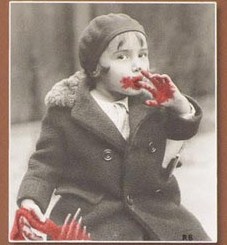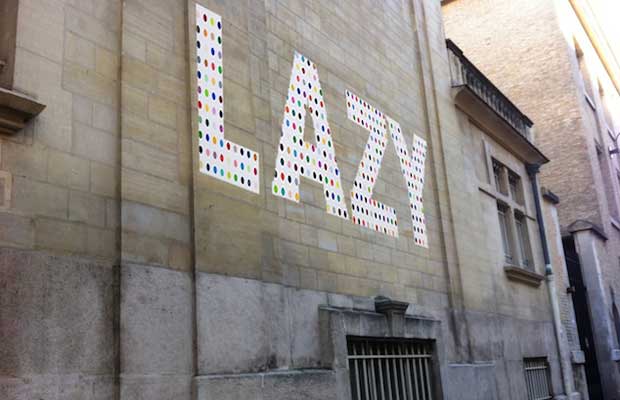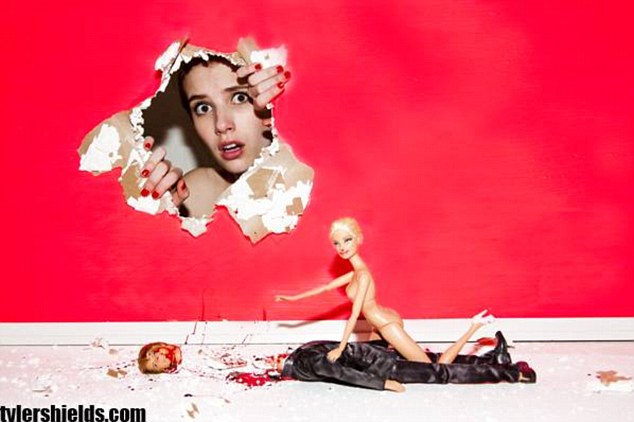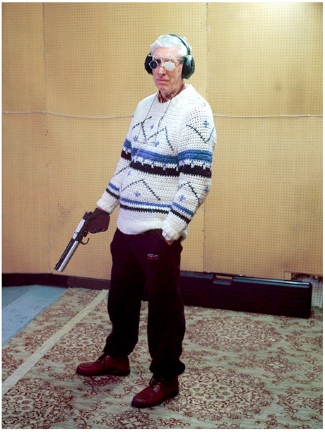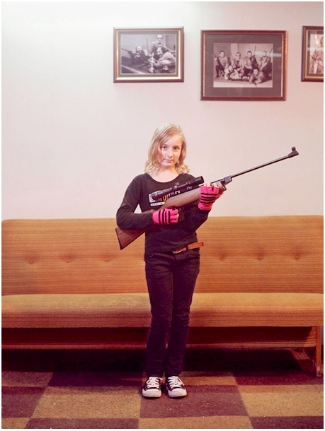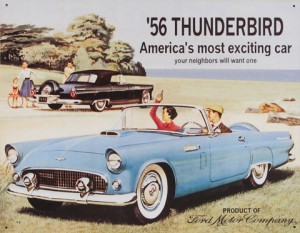
Part of our 3 street art works series you should see today. Artists featured are Anthony Lemer, Seth and Sipros
Anthony Lemer
Seth

Sipros

Related links
Anthony lemer’s website
Seth’s Flicker account
Sipros YouTube channel
Part of our 3 street art works series you should see today. Artists featured are Anthony Lemer, Seth and Sipros
Anthony Lemer
Seth

Sipros

Related links
Anthony lemer’s website
Seth’s Flicker account
Sipros YouTube channel
Edward Kienholz’s Five Car Stud depicts a horrific scene of racial violence during the civil rights era. Actually, the term horrific does nothing to illustrate the nauseating effects of this life-size interactive work currently on display at the Los Angeles Contemporary Museum of Art.
The piece is set up in a darkened room with a sandy dirt floor. Five cars form a circle, illuminating the focal point of the work with their headlights. Life-sized, white male figures stand next to their cars menacingly wielding batons and other weapons. One man holds a shotgun at his side. Clown-like masks and sagging skin cover their faces. The eyes are hollow and insipid, yet smirk at inflicting pain upon another human.
The sense of entitlement emanates not only from their facial expressions, but also from the positions of the bodies and the looming presence of each of these men. Garbed in jeans with the ruddy faces of moonshine alcoholics, they abuse and castrate another man, lassoing his foot like cattle, simply due to the color of his skin.
The victim lies in the center of the scene flanked by two men gripping his arms. Instead of casting an entire figure, Kienholz installs a rectangular trough in place of his torso. He filled the trough with water and six wooden alphabet blocks, two of the same letter, floating around, and leaving the viewer to piece together their meaning.
Kienholz spent three years working on this project between 1969 and 1972 during the height of civil rights era when activists had reached some victories for desegregation. However, through his depiction viewers realize that prejudice and unfounded bias continue to infiltrate society.
Kienholz is best known for using found objects to create jarring sculptures that comment on social issues within the United States. He created this work shortly before he relocated to Germany where it first appeared publicly. A private collector acquired the work and for 40 years it remained in storage. Los Angeles County Museum of Art is the first to display the work in the United States.
I do not exaggerate the gravity of this work. Guards stand at the doorway advising parents against allowing their children to witness it.
The pictures cannot convey the deeply unsettling feeling evoked by the piece. Perhaps it is the blatant intolerance, the flagrant violence, or simply the knowledge that things have not changed enough. Whatever the reason, whatever the effects, Kienholz has created a penetrating work that shocks viewers with its content but awes with the undeniable skill and ingenuity it took to mastermind.


When I first saw these pictures by photographer Jean-Paul Bourdier, I was completely amazed by the clever compositions and juxtapositions and even more by the colours which shine in front of your eyes.
My immediate second thought was that these must be digitally manipulated but I was glad to find out that they do not appear to be, the models used here would get body painted.
What a superb piece of body art mixed with photography these are.
All the pics below were taken in the deserts of West America with an analog camera. You can find more of these body paintings photography in his book entitled Bodyscapes
Jean Paul Bourdier is the author of Leap Into The Blue, Bodyscapes (introduction and dvd by Trinh T. Minh-ha), co-author with Trinh Minh-ha of Vernacular Architecture of West Africa, Habiter un monde, African Spaces and Drawn from African Dwellings. Production designer of seven films and co-director of two films directed by Trinh T. Minh-ha.
Awards include Guggenheim, American Council of Learned Societies, NEA, Graham, UC President’s Humanities, and Getty. Professor of design, drawing and photography in the department of architecture at UC Berkeley.


In a previous post, we brought to you an amazing set of watercolour tattoos and because we cannot get enough of them, we browsed the web and found those germs below.
We hope you’ll like them.


The Krah is having his first London solo show at Lava gallery
As vandalism was the most fun thing to do, The KRAH started painting the streets and the subway trains of Athens in 1997, but his graffiti and street-art can also be seen in the streets all over Europe and cities such as Tokyo and Bangkok.
After moving to East London The KRAH is still a very active street-artist and if graffiti is about underground freestyle funky visuals in illegal spots.
He has also exhibited in lots of galleries in London and internationally in gallery’s such as: Brooklynite in New York, ATM Gallery in Berlin, Art Basel at Miami Beach, in both of the Mutate Britain shows, Black rat Press, the Pure Evil Gallery and Art-Republic in London or Whinos Gallery Washington and the Vavel International Comics Festival in Athens.
Words from trackitdown.net
When – 14/4 till 21/4/11
Where – Lava gallery


Last week ART-PIE went to see Arth Daniel’s first solo show – ‘Itsa Bitsa, Face and Bone’ at Stolen Space ( read the post here) and was impressed and excited by Arth’s new works and his completely new and fresh approach to portraiture.
ART-PIE had the chance to get Arth to answer a few questions about his work and his current show. Continue reading Interview with Arth Daniels
If there is one art fair I have been and do not want to miss from now on, is the London Art Fair (LAF). Why is that? Just simply because it presents over 100 galleries featuring the great names of 20th century British art and exceptional contemporary work from leading figures and emerging talent.
Added to that, there are always a bunch of solo shows and curated group displays in the Art Projects section and even a showcase for contemporary photography. You’ll have understood by now, the LAF is my Thorpe park as a kid; always eager to go and never willing to go home once in it.
Here below is our artist pick (part 1) | Read part 2 | Read part 3
Sarah Hardcare via Paul Stolper
Habd pulled, four colour photo silk screen print on 300 gsm Caneletto paper


Thomas Allen via Foley gallery (left) | Shaun Doyle and Mally Mallinson via Paul Stolper
Chromogenic print (left) | Cast bronze (right)


Tom Ormond via Charlie Smith
Oil on linen

Rob and Nick Carter via Fine Art Society
Paint pigment photographs

Matthew Redford via Agnew’s gallery (left) | Paul Wright via Thompson’s gallery (right)
Oil on canvas (left) | Oil on canvas (right)


Carla Melegari via Thompson’s gallery
Oil on canvas

Cameron Gray via Sims Reed gallery
Photocollage


Since the day we first saw Jonathan’s work in 2008 we have been amazed at how much it has blossomed and how many people have responded positively to his distinct and developing style. Since then several shows at Signal and exhibitions in Los Angeles, San Francisco and Denver have confirmed his international appeal.
Jonathan has achieved that rare thing of combining socio-political subject matter, with a real sense of beauty and truth. Despite the evils in the world he depicts, you come away from a Darby piece feeling refreshed.
Jonathan’s second solo show ‘Favela’ at Signal will take him deeper into the areas of concern he has touched on so successfully before. Concentrating on the favelas (slums) in the big cities of Brazil, Jonathan became acutely aware of the overwhelming social problems facing these communities. The favelas have been abandoned by national and local government and have been taken over by drug dealers and their gangs. A culture of lawlessness and violence exists unchecked, creating a level of poverty that gives Brazil the dubious accolade of nurturing the biggest gap between rich and poor in the world.

Some of the most vulnerable victims of this sorry state of affairs are the countless number of street children orphaned or abandoned by their parents. Jonathan’s show focuses on them and their plight. The show will be supported by the charity CARF (Children At Risk Foundation) that was founded by Englishman Gregory J Smith. Giving up a lucrative business career Smith set up and ran a home for street children called The Hummingford Project in Sao Paolo. Also a passionate photographer he has brilliantly documented this entire experience. Many of Jonathan’s works for the show will use these photographs as source material, creating a direct link to the abandoned children of the favelas. Some of the proceeds of the show will donated to CARF.
Jonathan’s work for the show is moving away from the more obvious use of logos. Instead, he will be using a range of more subtle artistic means to achieve his artistic goals. He has also spent time collecting together wooden objects to paint on, so that many of the works will have a more organic feel to them than his works on canvas. His aim in the show will be to create a unique experience combining paintings with atmospheric installations. This will be Jonathan’s most ambitious body of work to date, exploring an important issue using a wide range of materials and techniques. The show should establish him as one of the most important young artists on the scene.
When: 11th – March – 2nd April 2011
Tuesday – Saturday 12 – 6pm
Where: Signal Gallery | 32 Paul Street, London EC2A 4LB | 0207 613 1550 | mobile 07766 057 212
Words by Signal gallery

I do not go to Paris very often – fact. Quality not quantity they say, well it was definitely quality this time.
‘Born in the streets’exhibition was one of a those events not to miss if you like street art and especially graffiti. Continue reading Born in the streets – New York city legends