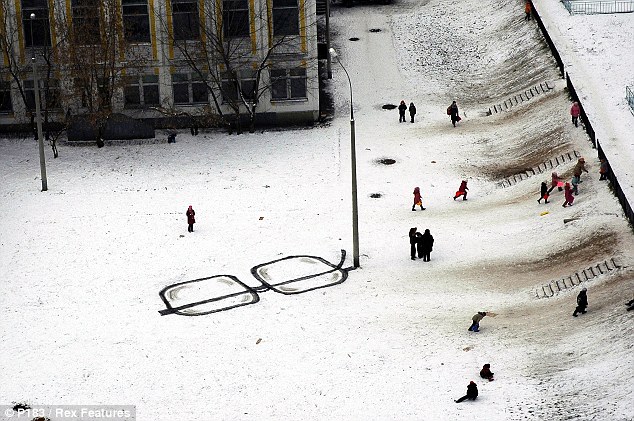
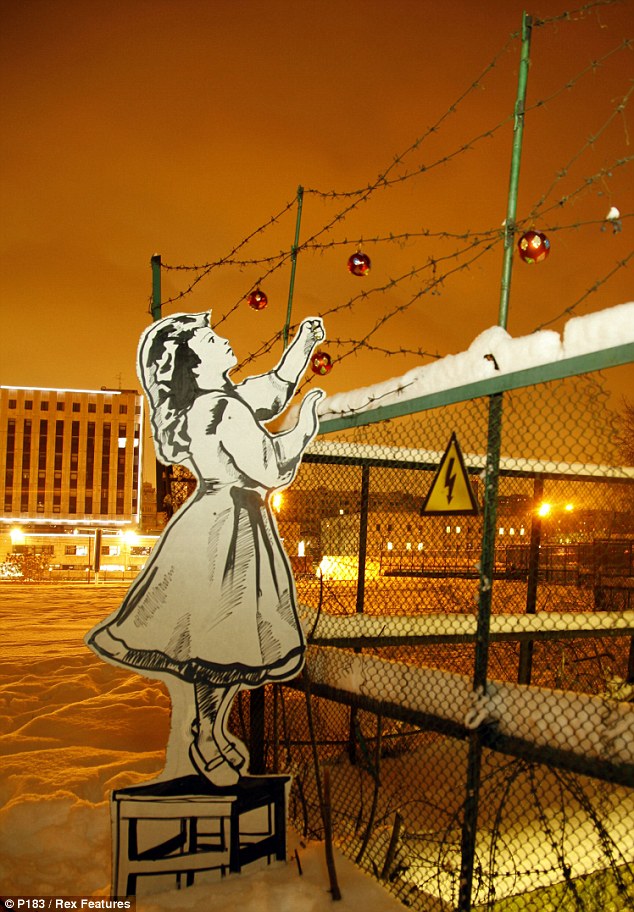
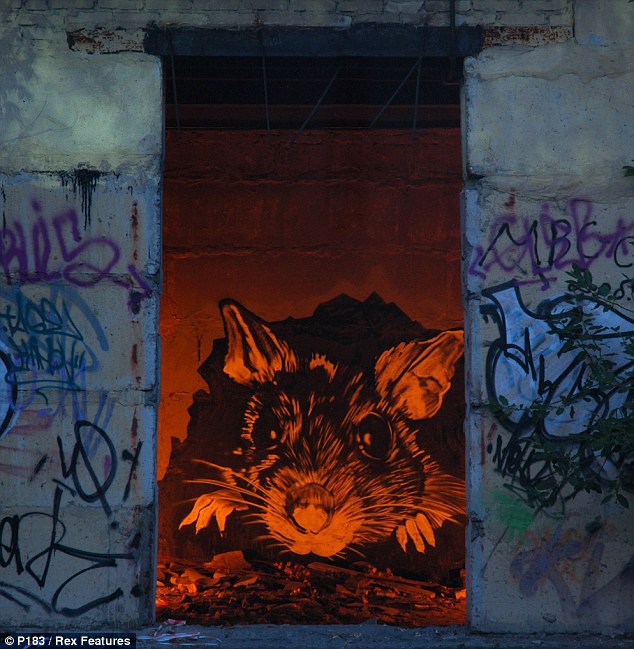
P183 is his name and Moscow his playground where he has recently dropped a series of street artworks which some will tell feels very “banksy-ish”. Banksy, British artist, first began his guerilla artwork campaign in Bristol in the early 1990s.
It is hard not to agree when you see some of his works below but one piece particularly caught my eye – Seeing is believing, I actually think it is very clever and is one of the best use of the urban furniture I have seen in recent street art. It uses lamp-post to double as the arm of a giant pair of eyeglasses, with the rest of the ‘frames’ drawn in the snow. Clever
Another piece is worth mentioning too – Instigators Of Bridges. A rioter with a flare has been drawn on a flyover and fire is lit at night giving the piece another realistic dimension.
What do you reckon?
P183 - Seeing Is BelievingP183 - Instigators Of BridgesP183 - SeasonalP183 - Urban Hazard
We have all seen the stick men across East London, well the man behind all this, STIK, is having a solo exhibition at the Subway gallery, venue as quirky as STIK men.
Stik’s show at the Subway Gallery will feature an exciting Live Graffiti event, an installation comprised of four large light-boxes and hosts the long awaited launch of the new high quality print edition “Single Mum” produced by Squarity. As always there will be smaller, affordable pieces on sale too at this show which is set to be a vibrant and fascinating event for all.
When –
Preview is on Wednesday 2 March 6—9pm
The show will then run until the 26 march 2011.
Where –
SUBWAY GALLERY | Kiosk 1 Joe Strummer Subway | Edgware Rd / Harrow Rd | London W2 1DX
“Fairy tales challenge the reader to imagine magical worlds different from our own. We are reminded by the fairy tale of the thing we never should have forgotten — that our world might have been different and is magical the way it is: unexplainable, unpredictable, wild, and surprising. With our imaginations awakened, we can see with new eyes our own world filled with wonder once again.”[1]
Travis Prinzi from G.K. Chesterton on Fairy Tales
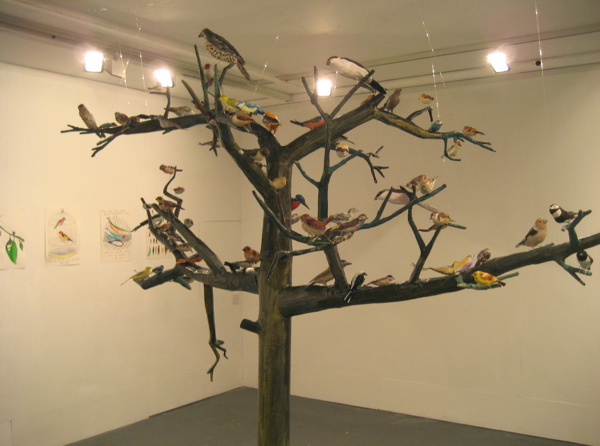
Oriole, (c)2006 Annabel Dover
There once was a girl, some said she was blue, some said pink, but the sparrow outside her window knew. She was iridescent.
The sparrow had seen many yellows fatten to red and be swallowed whole by the worm-mother, but he loved it best when the worm-mother let loose the pearl. The pearl was always different; she was a crescent, a mysterious creature that changed shapes. There were many crescents, sweetsacs that fell and turned into whisperers, featherwash which appeared when the sky was heavy and sparkled when the yellow came out from behind the heavy, but his favourite was the pearl. Sometimes the pearl hid and would not come out, sometimes she laid bare her beautiful pearly skin and shone with exhilarating force, this made the iridescent girl come to her window and the sparrow would see her shimmering colour. The girl would breathe deep the scent of the pearl and she would leave gifts of her copper strands for the sparrow. The sparrow always repaid the girl’s kindness with gifts of his speckled feathers. Sometimes he would leave pebbles that looked like the pearl.
The sparrow knew the girl was pleased with his gifts because she would study them intently, then she would make another one appear by tracing their outline with a stick! The sparrow thought it a very clever thing to do.
This little fairy tale is for Annabel Dover, a fellow fairy tale lover. I interviewed her recently for This ‘Me’ of Mine:
Jane Boyer: On your website you describe yourself as constantly being “drawn to objects and the invisible stories that surround them; [t]hrough their subtle representation…exploring their power as intercessionary agents that allow socially acceptable emotional expression. The work presents itself as a complex mixture of scientific observation and tender girlish enthusiasm which often belies their history.” That is a wonderful compendium of mystery, fact and fascination. Do they share equal weight in your explorations?
Annabel Dover: I really enjoyed the show ‘Life or Theatre’ by Charlotte Salomans. It showed a very personal, fabulous fantasy representation of her life.
My upbringing was constructed from lies and my parents indulged in their own personal dramas. The truth was impossible to decipher and the objects that surrounded my sisters and I were often the only witnesses to ludicrous acts of fantasy and violence – the Freemason’s case with a bag of un-hewn rocks, a sign of dishonour; the naval coat with the buttons ripped off, indicators of an affair that my father had with a Naval officer; the college gown of my sisters’ father, an alcoholic professor; the love letters of his father, Canon for the BBC; the jewellery that represented both my mother’s and my grandmother’s love affairs. These and many other objects highlighted the traumas and the breaks in human relationships that made up the atmosphere of my upbringing. The stories told to me by my family unravelled with the discovery of these indiscreet objects.
The personal stories people tell are fascinating to me, they announce who they would like to be and often contrast with how others might perceive them to actually be.
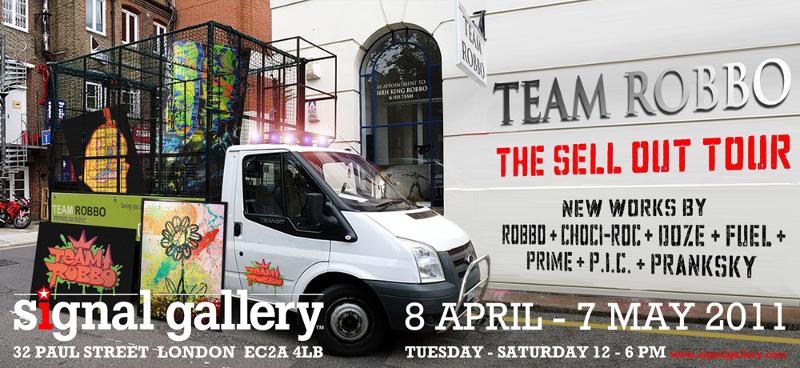
Already a legend within the international graffiti community, London’s ‘King Robbo’ will soon lead his entire UK crew (known to the world as ‘Team Robbo’) into Signal Gallery for their first gallery show of the year.
Team Robbo is an intentionally amorphous and anonymous graffiti crew, which has now grown into The Team Robbo Network. Its presence stretches across the world, overseas members working in collaboration with their UK counterparts.
Team Robbo UK will be represented in this show by core crew members: ROBBO, CHOCI-ROC, DOZE, FUEL, PRIME and P.I.C. – some of whom have worked together as a crew for around 25 years!
They will be supported by the artist known as ‘Pranksky’, who provides coverage of Team Robbo’s continuing war with street artists via his media organization, Prank Sky Media.
Several members of Team Robbo are already well-known to members of the street art/ graffiti community and to art collectors alike. This stemmed from several very successful shows last year, including Robbo’s solo show at The Pure Evil Gallery plus Fuel & Prime’s work in ‘The Architects’ Group Show at The Atom Rooms in London. Prime’s controversial piece ‘The Age of Shiva’ was widely publicised when it appeared again last year in Pictures on Walls’ show – ‘Marks and Stencils’ before Christmas.
The crew’s new show, ‘The Sell-Out Tour’ (which can be interpreted in a variety of ways), will be the first time that Team Robbo UK have exhibited in a gallery together.
It will showcase an impressive variety of their work: prints, canvases, sculpture and photographic work. The photographs trace Team Robbo’s joint output, (both legal and illegal) over the years. They will be shown alongside new solo work where crew members push forward the graffiti genre and develop their own work in highly divergent and novel artistic directions. The show is expected to tour the world after the Signal Gallery launch.
The Sell-Out Tour will be supported by work by the artist Pranksky. His work is described as hybrid art (merging art, photography and graffiti) providing a commentary on the ongoing art feud between street artists and graffiti writers that has received considerable media attention.
The show offers a rare chance to both view and purchase original new works and prints by this notorious crew. All work shown is for sale.
Words by Signal gallery
When
7th April: Private View and Press.
8th April: Writer’s night (By invitation only).
8th April – 7th May: open to public.
Gaston Gouron is a visual media artist based in Brussels. His work caught my attention at a show about art books. Not by surprise, yet I think more by design, I had picked out each of Gaston’s three artworks on display before swooping in to catch a word with him. I arranged to meet two days later in Bar De Matin – BDM to those in the know – a chatty bar in Place Eugéne. I went in with having noted down a few choice questions and also the book ‘The Secret War between Downloading and Uploading’. I’d intended this as a visual prompt to get us going on a Sunday morning. Luckily too we’re both keen on our coffee! Gaston launched in by telling me that notorious mega-uploads site had just been killed-off by the US government’s new anti-piracy laws.
‘Tutt!!’ He mentioned also the group called Script-Kiddies who work anonymously, and how he was fond of subverting the hacking potential of freewares like Keylogger to the advantage of as a tool for making artwork. He also threw in the word Caviarder – but not to be cast aside, really that word defines Gaston Gouron’s working process – which for him is to make things in a simple way or with no design.
Maybe this makes him a censor of what he considers to be an over-design of things? I asked him how much he thought his work to take refuge in and show hallmarks of the graffiti artist – expressive, edgy, playful? Here is the interview.
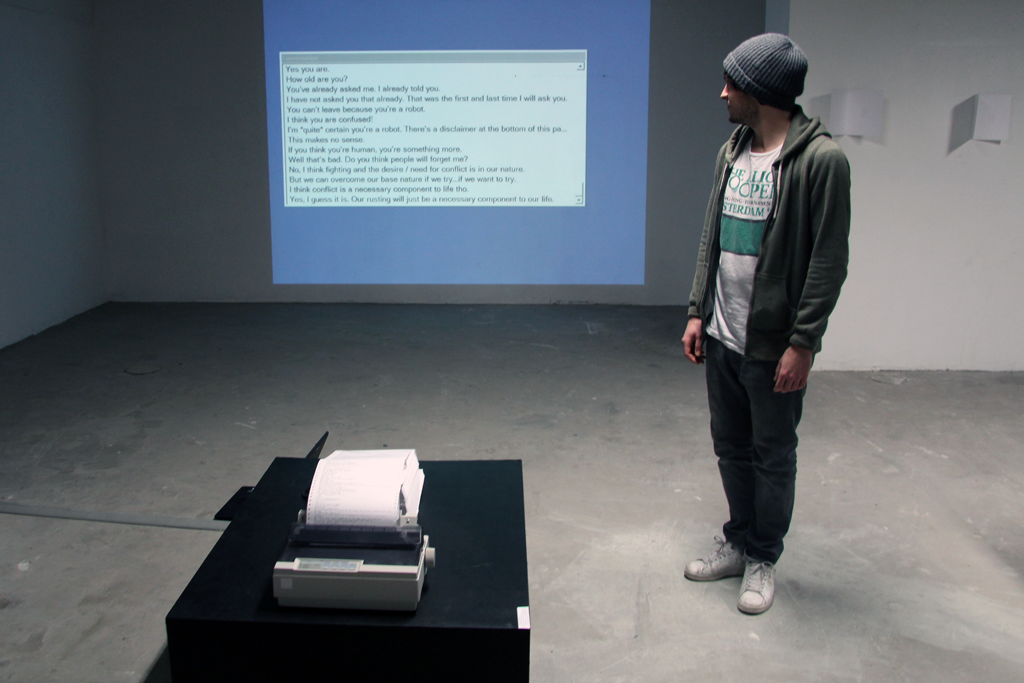
Media artist Gaston Gouron presiding over the inspired techno-language-sculpture ‘Never-ending Conversation’ at the exhibition 50 Livres D’Artistes which happened 19–21 Jan 2012 – an annual showcase of students’ work from Lacambre Arts Visuels, Brussels
PW: Please describe your working method relating to the artwork Never-ending Conversation, exhibited in 50 Livres d’ Artistes at ARA (Amis de la Reliure d’Art) Belgica in January.
GG: It’s totally process driven, and it’s about finding a moment when something flips into being interesting, no; in fact, amazing. I do this on the web, chasing links that may have been sparked by a conversations with friends or a hangover from a previous idea.
Never-ending Conversation comes off the back of me buzzing around the internet and settling on something amazing. An example is when I discovered Chatbot, a web-based AI that you can talk with. I like to have fun with things so I was cutting & pasting text between the two conversation boxes to see how absurd it could be. But instead, Chatbot was sufficiently intelligent enough and made responses to expressions how you’d expect a human conversation to go.
That conversation became the default material I wanted to work with for one of my projects. As a bee might extract and pollinate, I wanted to do the same. Taking from one place and have it settle in another. Pollinating might be stretching the bee analogy too far though. It’s not that serious, really I’m simply interested in making things feel new.
PW: The artwork which you called Never-ending Conversation is very sculptural and invades the exhibition space but also plays with text that came literally out of thin air (or more aptly, it came virtually from the chatbot’s AI). So, how do you deal with the ‘real’ and ‘virtual’ and did that affect the way you chose to exhibit the artwork at 50 Livres d’Artistes?
GG: On the one hand I’m not proud to see the work presented. In reality it should appear more disordered. I created the original version in my bedroom which is more a workspace. I’m a collector too, collecting documentation about programming language and old network cables.
In a more common workspace environment Never-ending Conversation looks more ‘gutsy’ – how you’d expect a living machine should be. But when I saw it set-up in the exhibition space it looked, well… Naked! but I understand that the conditions – or restrictions – between workspace and exhibition space are very different.
In the stark, brightly lit – and clean! – exhibition space of ARA (a space with an orthodox for presenting aesthetically-biased artbook artists) I imagine my work is more readable to an audience. But It would be a great idea to have the work redone – simply to make the sprawling technology in the sculpture more obvious, revealing more about how it was put together. I’m really aware that I don’t want to conceal any part of the process.
PW: Which technological forms tend to produce the best renditions of language or ‘text-sampling’ that you’ve seen recently?
GG: Basic plain text.
I prefer reading rather than to listen to spoken words.
I just love data.
It’s strange I know, but more recently I’ve been understanding why my work borders on being seen as simplistic – which is a good thing. One thing is knowing about a study a friend sent to me. It shows that we read in contours – going from the corner of a page to the centre. So I think I’m interested in written material. Then I think about if it should be offered up as a bound-book, a pamphlet, a techno-language-sculpture. These are vessels and simply carry the language, I’m not even sure they’re that an important part of the process. The finding and discovering is more what I’m into.
PW: What’s interesting or peculiar that you’ve discovered about the ins and outs of language when you’re thinking how it needs to appear in or affect a piece of work?
GG: It’s that English language is most important in the creation process. It’s the language of IT and because I’m working a lot with script languages, English is most widely used. My mother tongue is French, but it’s not the language of IT and because I’m into revealing all of the process I’m always going to be showing parts of script and programming language.
One other thing is that using the French language this might make my work appear to be more exotic and specialist. It’s the opposite – I want to hit on an international crowd with an equally international language and for them to read the words. If they admire the vessel in which it’s concealed, then great, but for me it’s about getting the language to speak for itself.
PW: Who has done the most, or been most instinctive, in making the printed word part of their bank of visual language?
GG: I have several references. I would say the graphic works of Marcel Broadthaer’s and he’s Belgian. Japanese artist On Kawara is a big inspiration. He made two books retracing one million years – making the words and numbers from the dates into material – which then could be bound in a book, spoken out aloud and painted on a canvas (then, showing me on the screen of his laptop) like this.
I also can’t forget North Amercian artist Ed Ruscha for his famous graphics and text paintings. In England there’s Daniel Eatock – I love his work; well more than love. It’s his approach – easy and efficient. Then there’s Vaska who is Eatock’s founding partner of the web-building-platform Indexhibit. He came into my school last year. Working together they made the most clean of interfaces.
PW: ‘Artbook’ as a category seems an anathema to your visual language because you’re looking for ways of re-doing and re-showing printed texts. I can see a binary to the way you bulk-up on language and downplay the format (or vessel as you refer). You serve-up things leaving the text in it’s raw elemental form – to fend for itself. So, how do you think your work relates to the ready-made, or made-ready?
GG: I produced Never-ending Conversation on a course I was studying at Lacambre Artes Visuels in Brussels. It was only 3 months and the course was refreshing because of the trans-disciplinary interests of the students I was studying with. Everyone doing this short-course was coming from a bigger discipline including design, photography, typography, urban space and for me it’s graphic communication. A bias is coming in too from a fine-art background but I’m also a programmer.
The tutors were really supportive an encouraged us to explore ideas. It’s completely energizing to share ideas with such a diversity of artistic personalities.
My work relates to the ready-made in process really. I do things to get rid of some idea – maybe to bank them so I can buzz on the next amazing discovery.
PW: We could go on, but thanks Gaston for the giving a nice twist to thinking about the how artbooks can still be brought to life beyond the printed and bound page.
GG: That’s OK
Gaston Gouron is currently writing his transcript for application to RCA, London.
Related: From 26 January to 6 May 2012 MAMbo – Museo d’Arte Moderna di Bologna is delighted to present Marcel Broodthaers. L’espace de l’écriture, the first complete retrospective in Italy devoted to the Belgian artist, curated by Gloria Moure.
We are thrilled to have partnered with the Curious Duke gallery and are now able to bring you awesome art.
Representing only the best UK emerging artist, Curious Duke Gallery aims to change the way you buy art work. Curious Duke is fast becoming the go to gallery to buy affordable original and limited edition art.
Curious Duke is housed in Curious Duke Gallery a 400 year old subterranean space on Whitecross Street in Islington. One of the most welcoming and unique gallery spaces you will ever encounter.
Wow, it really feels like we have been going on about Barcelona forever, not only it one of our favorite places to visit, yet there is always some much content to gather.
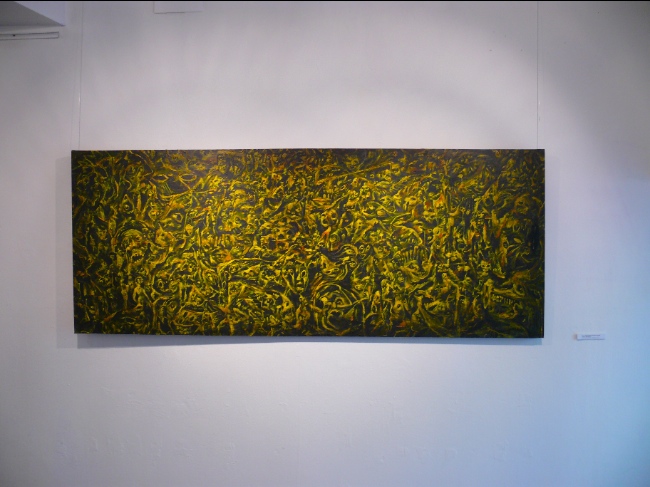
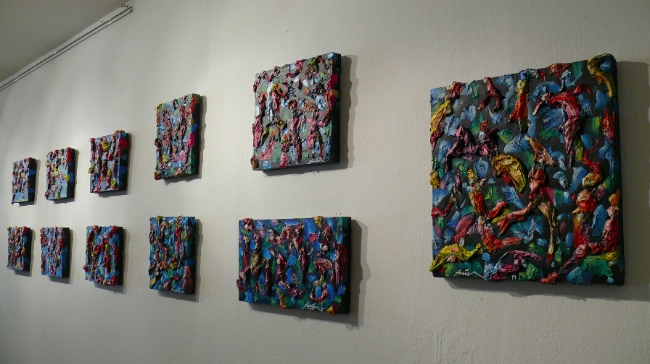
Fasim is some what of a local legend, being active on the local and global street scene for over 12 years. This show focussed on a more contemporary style. If this show was placed in any other gallery you would be hard pressed to find any link to a self taught graffiti artist, something we found very interesting.
This show was not so much about subject matter and more about the exploration of texture, with the use of heavy layering and scored paint to create depth. you really needed to view the works from all angels to get a complete feel for what Fasim was attempting to create.
This show was a easy on the eyes and set in a simple and welcoming gallery.
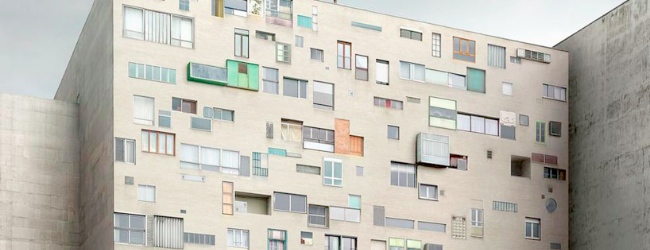
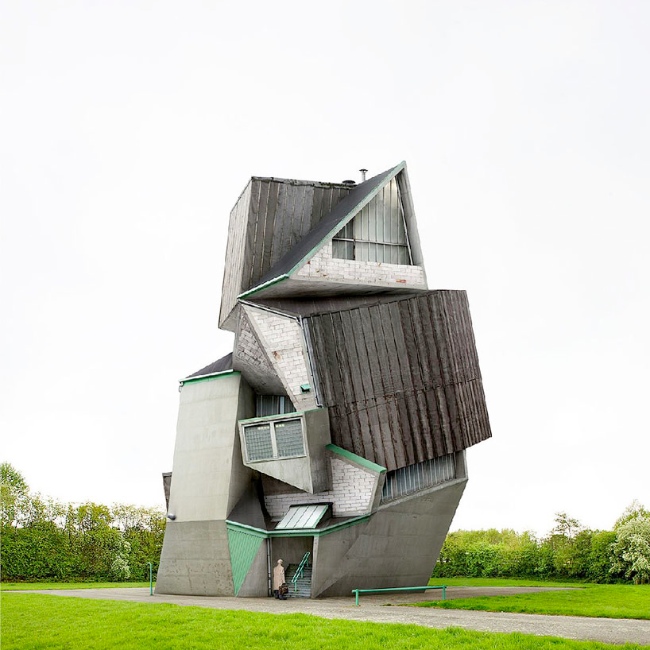
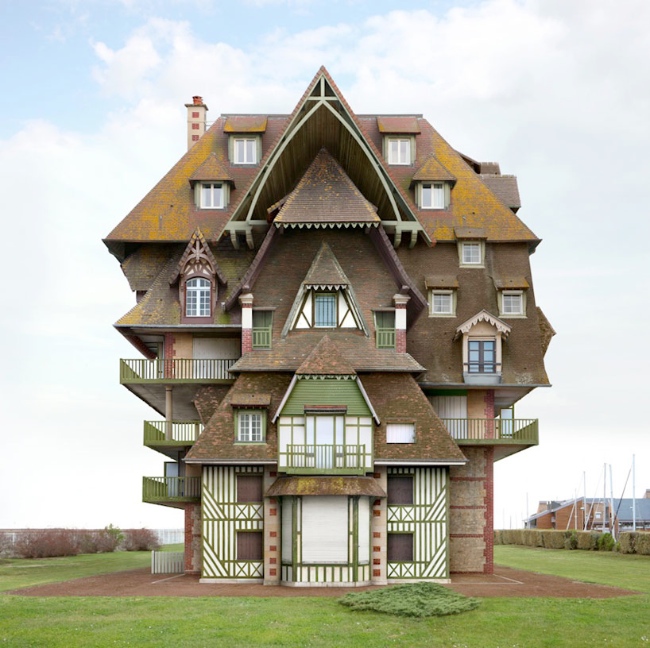
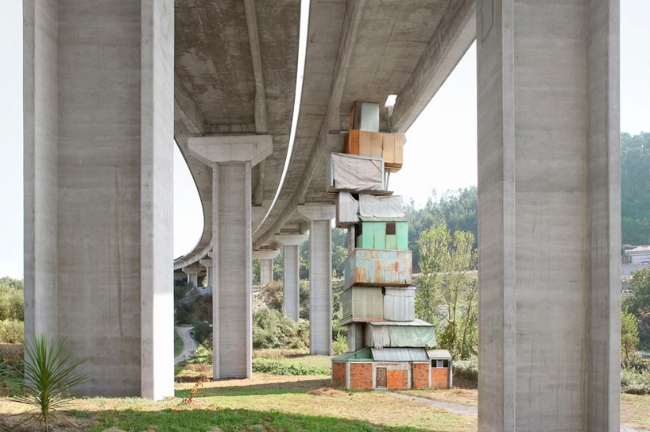
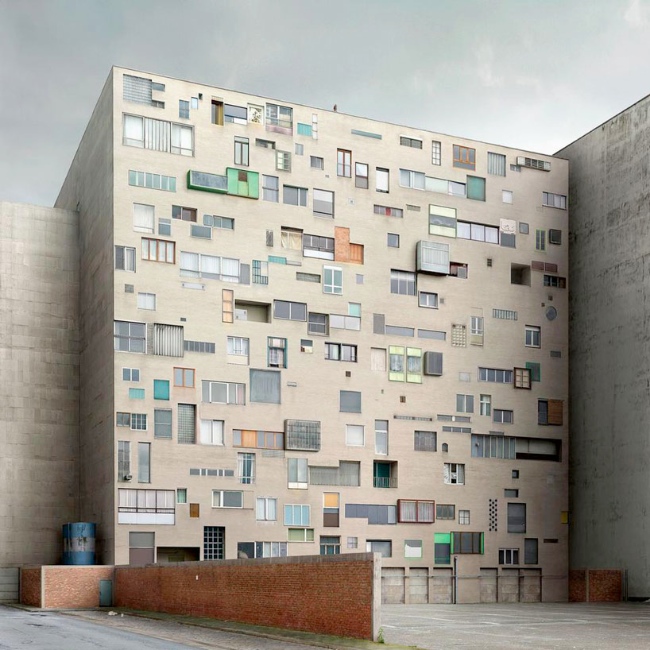
Architecture is often looked over isn’t it? But when you come across architects such as the belgian artist and architectural photographer Filip Dujardin, you have to share a bit of love and make you aware of his works.
He just had a show at Highlight Gallery in San Francisco and we hear that the works focused on “fictional buildings that Dujardin has created using a digital collaging technique from photographs of real buildings around Ghent, Belgium.”
One will classify these as “absurd“, as the “René Magritte and Raoul Servais” of architecture.
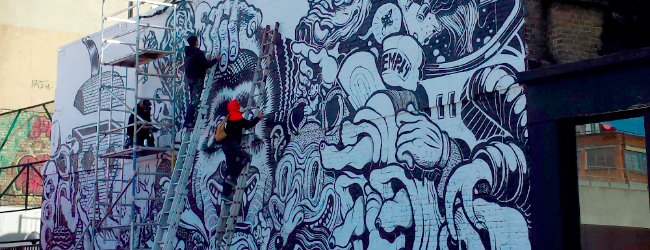
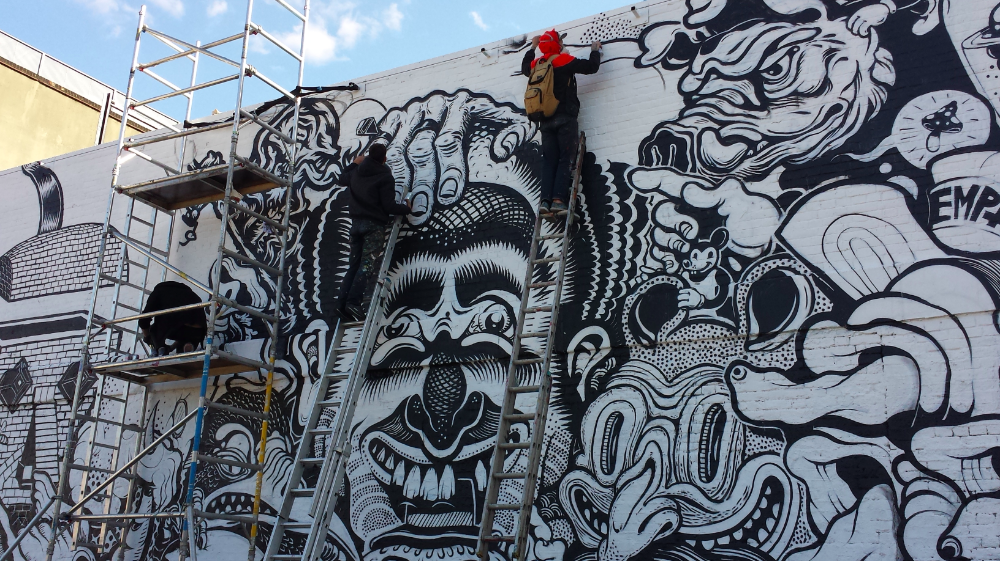
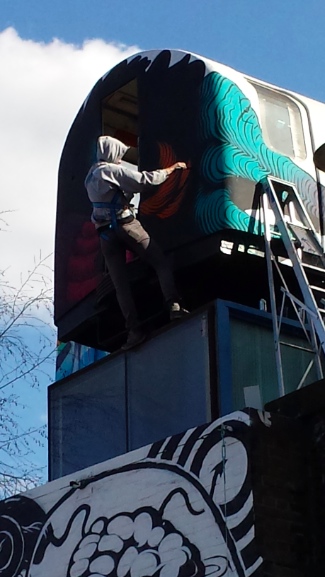
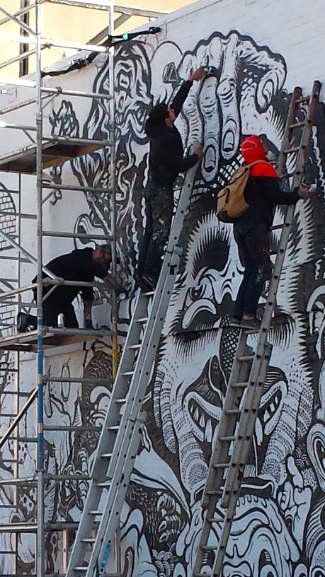
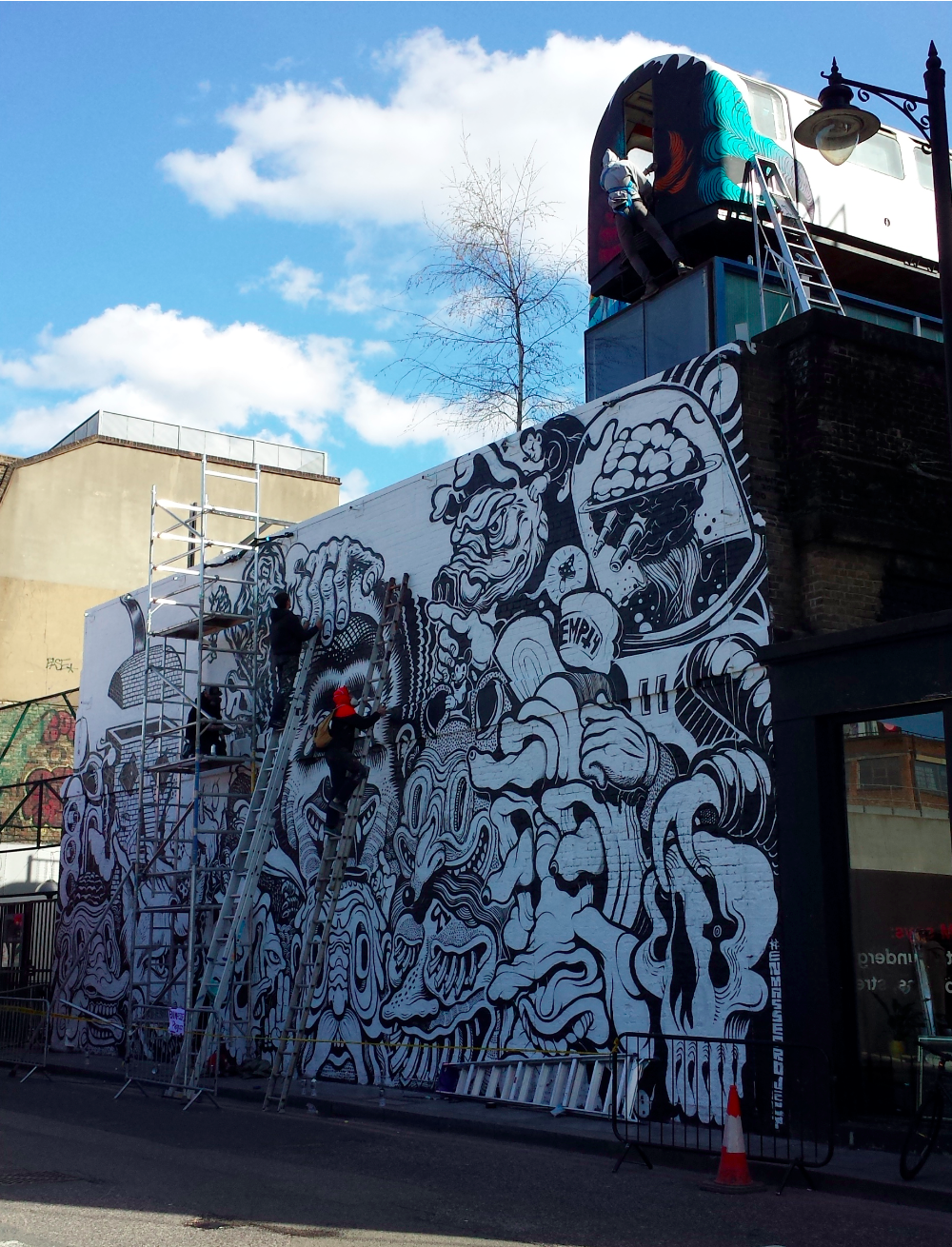
It was a glorious day when we had the chance to see the EN MASSE crew working on anew and huge wall at Village Underground
EN MASSE : (from French) “as a whole”, or “all together”
EN MASSE is a Montreal based, multi-artist collaborative drawing project. It draws life from the many creative individuals who take part in the project to create large-scale, highly spontaneous drawings in black and white.
EN MASSE explores the creation of a collective vision; works created together that are greater than any one person could create alone.
HISTORY
The project was created by Tim Barnard and Jason Botkin in 2009, at the Galerie Pangée. Now under the direction of Botkin and Rupert Bottenberg, the initiative has worked with nearly 250+ artists internationally.
MANDATE
The EN MASSE Project nurtures the broadening and solidification of artistic communities everywhere it goes, serving artists from extremely diverse backgrounds such as graphic novels, graffiti, tattoo, illustration, design and the fine arts.
For the most part, artists participating in the project are self-taught creative entrepreneurs. EN MASSE is a high-profile public platform for these people who have often found themselves in an awkward relationship with many contemporary arts institutions (resulting in their work often being excluded from mainstream galleries, museums, and funding agencies). This is a bridge for artist to institution, and vice versa.