Spray cans sculptures

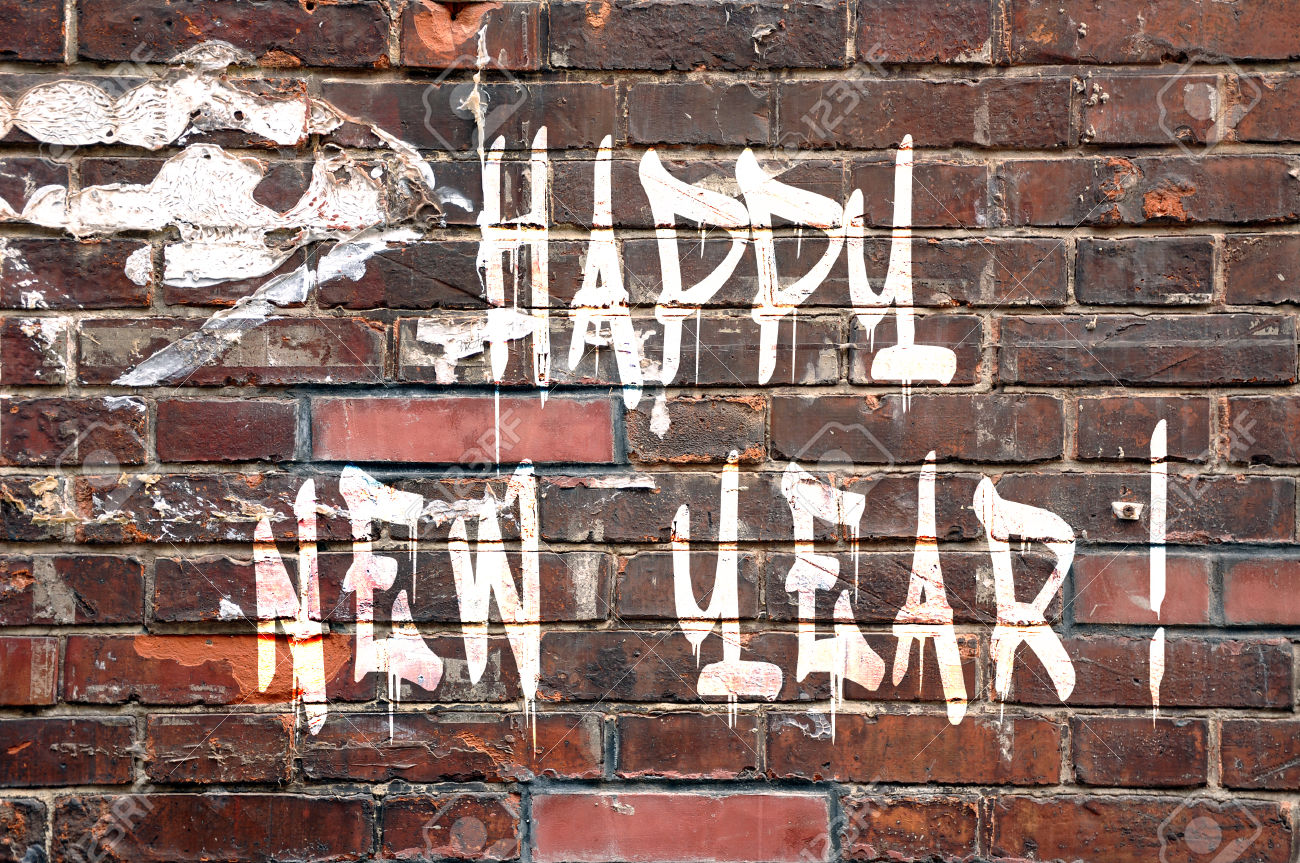
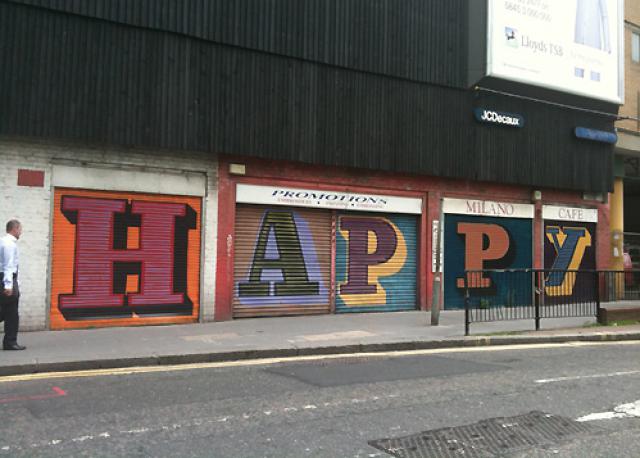
We instantly fell in love when we first saw these little wonders of sculpture. Kresimir Buden 2Fast is the sculptor behind these creations which obviously are graffiti inspired.

The artist is based in Zagreb (Croatia) and use various brands of spray cans from Montana to Ironlak.  You will have noticed the Warhol’s Campbell’s Soup Cans version amongst others.

I do not know for you but we particularly like the green one. What about you?

Click on the images below to launch the slideshow

Kresimir Buden - Art-PieKresimir Buden - Art-PieKresimir Buden - Art-PieKresimir Buden - Art-Pie

Kresimir Buden - Art-PieKresimir Buden - Art-PieKresimir Buden - Art-PieKresimir Buden - Art-Pie

When just interesting isn't enough – breathing new life into the artbook. An interview with French-Belgian media artist Gaston Gouron

Gaston Gouron is a visual media artist based in Brussels. His work caught my attention at a show about art books. Not by surprise, yet I think more by design, I had picked out each of Gaston’s three artworks on display before swooping in to catch a word with him. I arranged to meet two days later in Bar De MatinBDM to those in the know – a chatty bar in Place Eugéne. I went in with having noted down a few choice questions and also the book ‘The Secret War between Downloading and Uploading’. I’d intended this as a visual prompt to get us going on a Sunday morning. Luckily too we’re both keen on our coffee! Gaston launched in by telling me that notorious mega-uploads site had just been killed-off by the US government’s new anti-piracy laws.

‘Tutt!!’           He mentioned also the group called Script-Kiddies who work anonymously, and how he was fond of subverting the hacking potential of freewares like Keylogger to the advantage of as a tool for making artwork. He also threw in the word Caviarder – but not to be cast aside, really that word defines Gaston Gouron’s working process – which for him is to make things in a simple way or with no design.

Maybe this makes him a censor of what he considers to be an over-design of things? I asked him how much he thought his work to take refuge in and show hallmarks of the graffiti artist – expressive, edgy, playful? Here is the interview.


Media Artist Gaston Gouron with Never-ending Conversation
Media artist Gaston Gouron presiding over the inspired techno-language-sculpture ‘Never-ending Conversation’ at the exhibition 50 Livres D’Artistes which happened 19–21 Jan 2012 – an annual showcase of students’ work from Lacambre Arts Visuels, Brussels


PW: Please describe your working method relating to the artwork Never-ending Conversation, exhibited in 50 Livres d’ Artistes at ARA (Amis de la Reliure d’Art) Belgica in January.

GG: It’s totally process driven, and it’s about finding a moment when something flips into being interesting, no; in fact, amazing. I do this on the web, chasing links that may have been sparked by a conversations with friends or a hangover from a previous idea.

Never-ending Conversation comes off the back of me buzzing around the internet and settling on something amazing. An example is when I discovered Chatbot, a web-based AI that you can talk with. I like to have fun with things so I was cutting & pasting text between the two conversation boxes to see how absurd it could be. But instead, Chatbot was sufficiently intelligent enough and made responses to expressions how you’d expect a human conversation to go.

That conversation became the default material I wanted to work with for one of my projects. As a bee might extract and pollinate, I wanted to do the same. Taking from one place and have it settle in another. Pollinating might be stretching the bee analogy too far though. It’s not that serious, really I’m simply interested in making things feel new.

PW: The artwork which you called Never-ending Conversation is very sculptural and invades the exhibition space but also plays with text that came literally out of thin air (or more aptly, it came virtually from the chatbot’s AI). So, how do you deal with the ‘real’ and ‘virtual’ and did that affect the way you chose to exhibit the artwork at 50 Livres d’Artistes?

GG: On the one hand I’m not proud to see the work presented. In reality it should appear more disordered. I created the original version in my bedroom which is more a workspace. I’m a collector too, collecting documentation about programming language and old network cables.

In a more common workspace environment Never-ending Conversation looks more ‘gutsy’ – how you’d expect a living machine should be. But when I saw it set-up in the exhibition space it looked, well… Naked! but I understand that the conditions – or restrictions – between workspace and exhibition space are very different.

In the stark, brightly lit – and clean! – exhibition space of ARA (a space with an orthodox for presenting aesthetically-biased artbook artists) I imagine my work is more readable to an audience. But It would be a great idea to have the work redone – simply to make the sprawling technology in the sculpture more obvious, revealing more about how it was put together. I’m really aware that I don’t want to conceal any part of the process.

PW: Which technological forms tend to produce the best renditions of language or ‘text-sampling’ that you’ve seen recently?

GG: Basic plain text.

I prefer reading rather than to listen to spoken words.

I just love data.

It’s strange I know, but more recently I’ve been understanding why my work borders on being seen as simplistic – which is a good thing. One thing is knowing about a study a friend sent to me. It shows that we read in contours – going from the corner of a page to the centre. So I think I’m interested in written material. Then I think about if it should be offered up as a bound-book, a pamphlet, a techno-language-sculpture. These are vessels and simply carry the language, I’m not even sure they’re that an important part of the process. The finding and discovering is more what I’m into.

PW: What’s interesting or peculiar that you’ve discovered about the ins and outs of language when you’re thinking how it needs to appear in or affect a piece of work?

GG: It’s that English language is most important in the creation process. It’s the language of IT and because I’m working a lot with script languages, English is most widely used. My mother tongue is French, but it’s not the language of IT and because I’m into revealing all of the process I’m always going to be showing parts of script and programming language.

One other thing is that using the French language this might make my work appear to be more exotic and specialist. It’s the opposite – I want to hit on an international crowd with an equally international language and for them to read the words. If they admire the vessel in which it’s concealed, then great, but for me it’s about getting the language to speak for itself.

PW: Who has done the most, or been most instinctive, in making the printed word part of their bank of visual language?

GG: I have several references. I would say the graphic works of Marcel Broadthaer’s and he’s Belgian. Japanese artist On Kawara is a big inspiration. He made two books retracing one million years – making the words and numbers from the dates into material – which then could be bound in a book, spoken out aloud and painted on a canvas (then, showing me on the screen of his laptop) like this.

http://metropolism.com/features/on-kawara-at-the-stedelijk-museu/english

I also can’t forget North Amercian artist Ed Ruscha for his famous graphics and text paintings. In England there’s Daniel Eatock – I love his work; well more than love. It’s his approach – easy and efficient. Then there’s Vaska who is Eatock’s founding partner of the web-building-platform Indexhibit. He came into my school last year. Working together they made the most clean of interfaces.

PW: ‘Artbook’ as a category seems an anathema to your visual language because you’re looking for ways of re-doing and re-showing printed texts. I can see a binary to the way you bulk-up on language and downplay the format (or vessel as you refer).
    You serve-up things leaving the text in it’s raw elemental form – to fend for itself. So, how do you think your work relates to the ready-made, or made-ready?

GG: I produced Never-ending Conversation on a course I was studying at Lacambre Artes Visuels in Brussels. It was only 3 months and the course was refreshing because of the trans-disciplinary interests of the students I was studying with. Everyone doing this short-course was coming from a bigger discipline including design, photography, typography, urban space and for me it’s graphic communication. A bias is coming in too from a fine-art background but I’m also a programmer.

The tutors were really supportive an encouraged us to explore ideas. It’s completely energizing to share ideas with such a diversity of artistic personalities.

My work relates to the ready-made in process really. I do things to get rid of some idea – maybe to bank them so I can buzz on the next amazing discovery.

PW: We could go on, but thanks Gaston for the giving a nice twist to thinking about the how artbooks can still be brought to life beyond the printed and bound page.

GG: That’s OK

Gaston Gouron is currently writing his transcript for application to RCA, London.

Related: From 26 January to 6 May 2012 MAMbo – Museo d’Arte Moderna di Bologna is delighted to present Marcel Broodthaers. L’espace de l’écriture, the first complete retrospective in Italy devoted to the Belgian artist, curated by Gloria Moure.

HORFE at CELAL gallery

To celebrate the release of Beats&Drips 2 boxset, Sofarida has invited Horfé to Celal gallery for their 1st solo show in France.

http://www.flickr.com/photos/chasingghosts/sets/72157626310867397/

The shows runs until tomorrow so hurry.

Also included, a teaser video of Horfé’s first solo exhibition in Paris, Celal gallery, jump

Music « Beaten thursdays » by Prefuse 73

Beats&Drips Part2 // HORFE : Passage

Where: Celal gallery

Opening: until 09.04.11

galeriecelal.com
sofarida.com
chasinghosts.com

Noise project – Challenge #2 The Little Things

Here is our second entry for the Noise Intercepted project, a global art project curated by Labspace Studio (a creative agency & art house in Toronto, Canada). Noise Intercepted is a series of ten experience-activated noise challenges that prompt participants to listen, observe and interact with their urban soundscape in new and unlikely ways.

Noise challenge #2: The little things

“This week spend some time paying attention to the little things… the sounds that you tend to ignore and the seemingly insignificant noises that you take for granted. You have 1 week to listen, identify and select one “insignificant” sound and transform it into something “significant.”

—————————

Water is all around us but often forgotten, we may see it but not necessarily hear it or listen to it but yet it can take all sorts of sound shapes or noises.

Here are four of them, from the subtle to the fierce…

“The Ugly American” by Saber at The Outsiders

“The Ugly America” show opening today at The Outsiders is the work of legendary graffiti artist Saber’. The artist spent 8 weeks immersed in the Outsiders Newcastle branch last autumn and created all the works on display in the gallery this time in London.

We stepped in and were hardly wowed by what we were seeing: a series of pale wooden pallets works. We quickly realised that they were all depicting “The Star-Spangled Banner”, understand the American flag.

But then we remembered that “The Ugly American” refers to a multi-million-copy best selling book and 1963 movie, in which Marlon Brando starred, and is all about telling about the dark side of the American foreign policy. I looked again at the pale stuff and could relate now. Off downstairs…

The Ugly American by Saber | Art-Pie

The Ugly American by Saber | Art-Pie

The mood was slightly happier down here and colours from Saber’s pieces smiling at me. The artist’s technique that consists of mixing aerosol art with oil and even charcoal pleased my little eyes.

The Ugly American by Saber | Art-Pie

The Ugly American by Saber | Art-Pie

The Ugly American by Saber | Art-Pie

What – “The Ugly American” by Saber
Where – The Outsiders London | 8 Greek Street, Soho, London W1D 4DG | Monday – Saturday, 11:00AM – 7:00PM
When – Friday 10th of January 2014 to Saturday 15th of February 2014

The Friends of Tony Romanoff at Pure Evil

Following his appearance in the adidas is all in campaign, London street artist Lucas Price a.k.a. Cyclops has been hard at work on his latest exhibition ‘The Friends of Tony Romanoff’.


Words from Pure Evil gallery

This film below documents the show and is narrated by the eponymous Tony Romanoff who uses an electronic voice generator to speak on the artist’s behalf.

Featuring brand new conceptual photographic work, as well as two dramatic installations in the gallery’s basement, there’s also a beautifully packaged, limited 7’’ single available to purchase at the gallery or selected vinyl emporiums.

Where: Pure Evil gallery
When: 1/4 till 13/4/2011

Ye Hongxing "The Modern Utopia" at Scream

Ye Hongxing | Art-PieBeijing based artist Ye Hongxing is having her the first UK exhibition at Scream on Eastcastle street, London and the interest seems to be great and not only for this artist but for the entire Chinese contemporary art since the country has turned to capitalism.

Hongxing new works will be an answer to this profound social system change that has gone with that change. What jumps straight at you you when looking at her works is the explosion of colours and the somewhat chaos of the composition. One will see in this body of works a mirror of what China’s expansion has been – fast paced, anarchic and incoherent. The artist looks at questioning what it has cost China and its people and put forward the utopian vision that governing people may sometimes have.

On a more pratical aspect, the artist’s technique is remarkable and definitely creative. Hongxing woud use canvases and elaborate complex collages made of stickers and what we could called popular imagery collected for different medias since she was a kid. This clever assemblage often results to an eruption of colours and intricated compositions.

For those interested to know where the title of the exhibiiton comes from, it actually references the 1905 novel ‘A Modern Utopia’ by H.G Wells and is suggestive of the artist’s investigation into society and modern life.

Ye Hongxing | Art-Pie

Ye Hongxing | Art-Pie

Read more about Ye Hongxing on the Scream gallery website

What – “Modern Utopia” by Ye Hongxing
Where – Scream | 27-28 Eastcastle street, London W1W 8DH
When – opens to the public on the 13th September 2012

STREET ART ENCOUNTERS