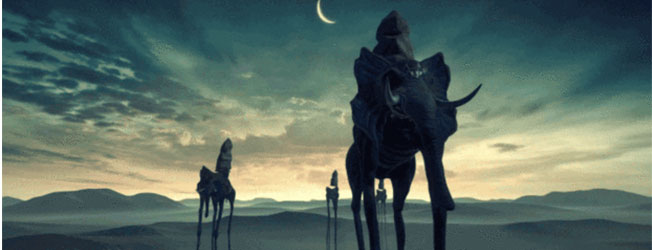
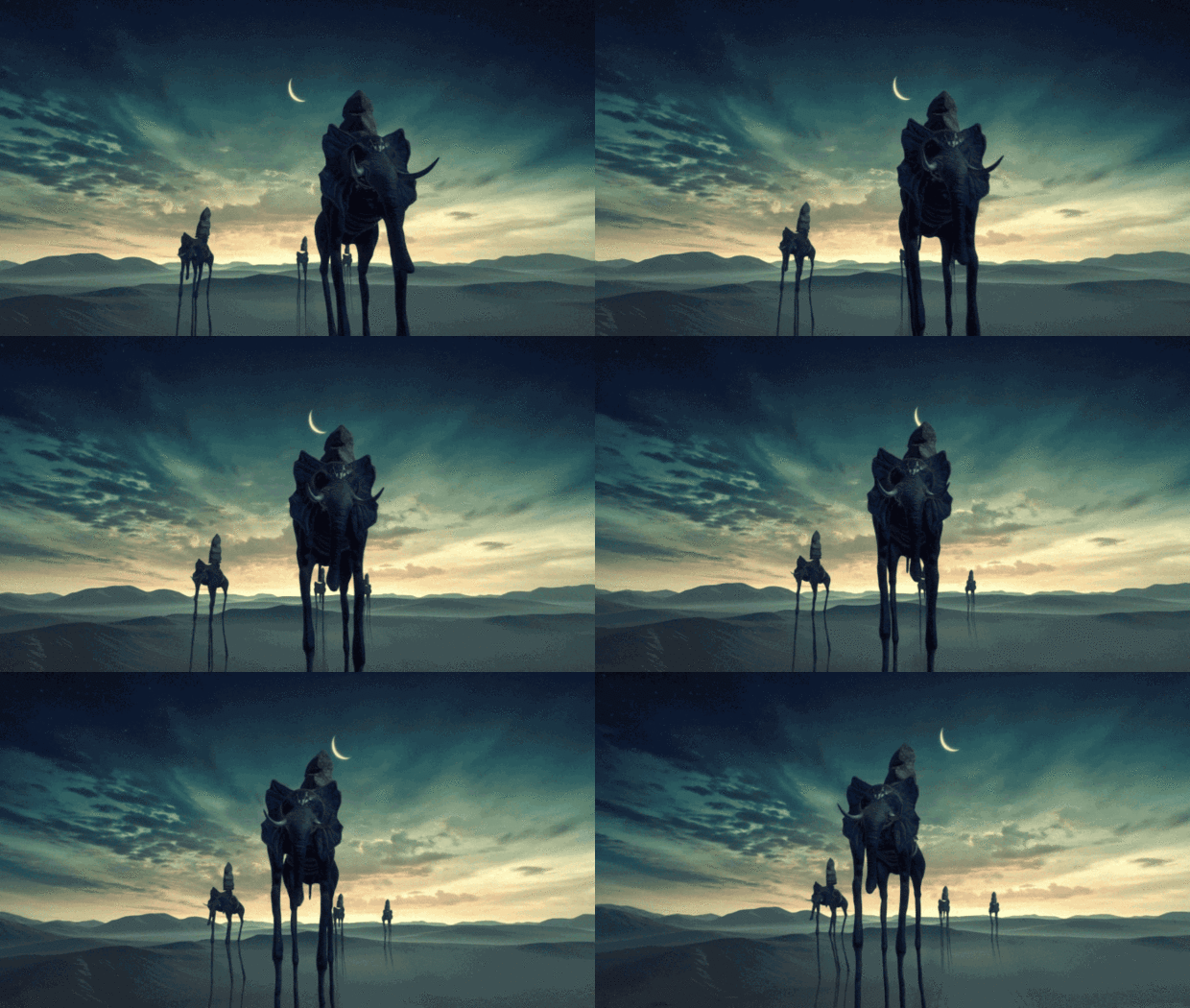
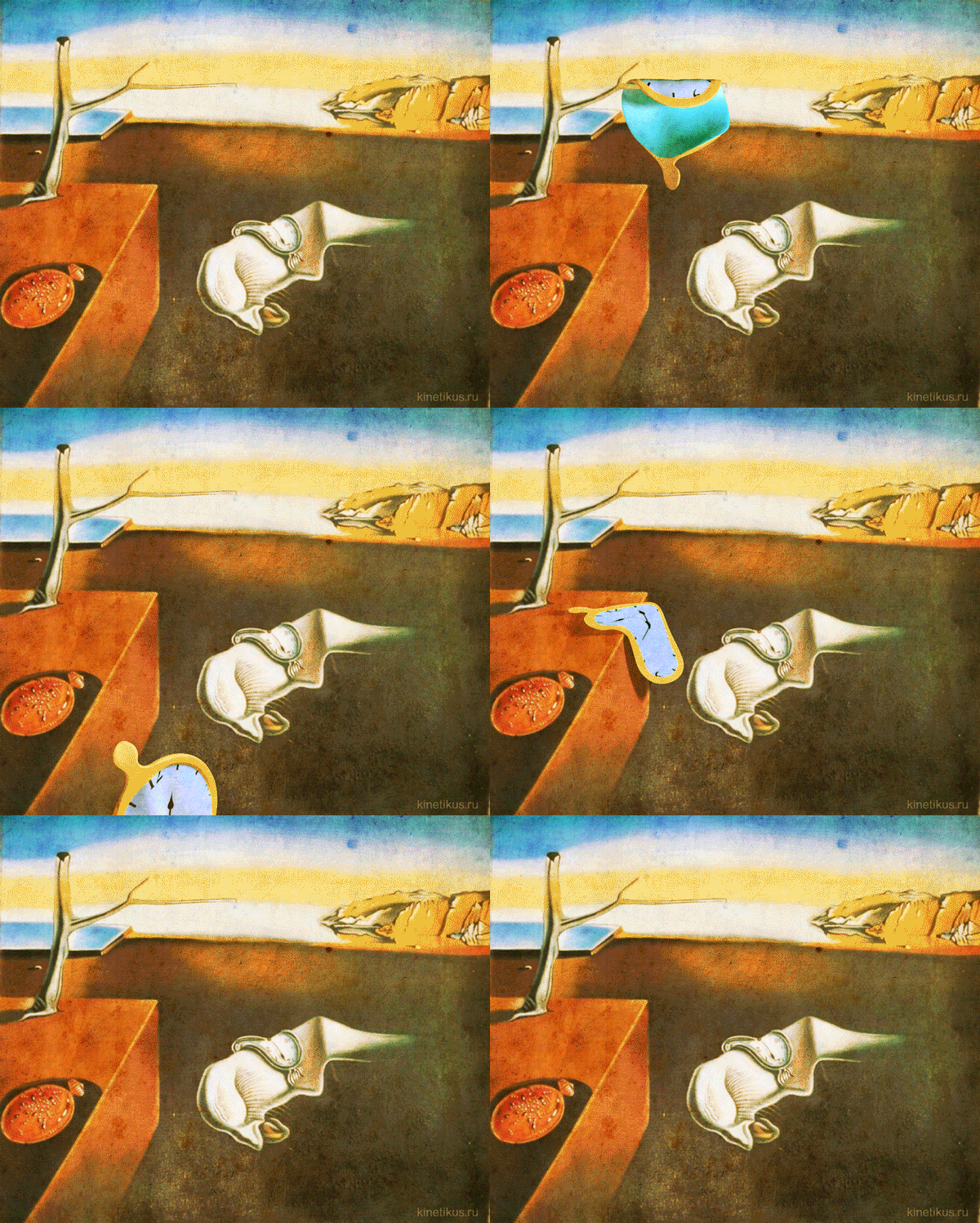
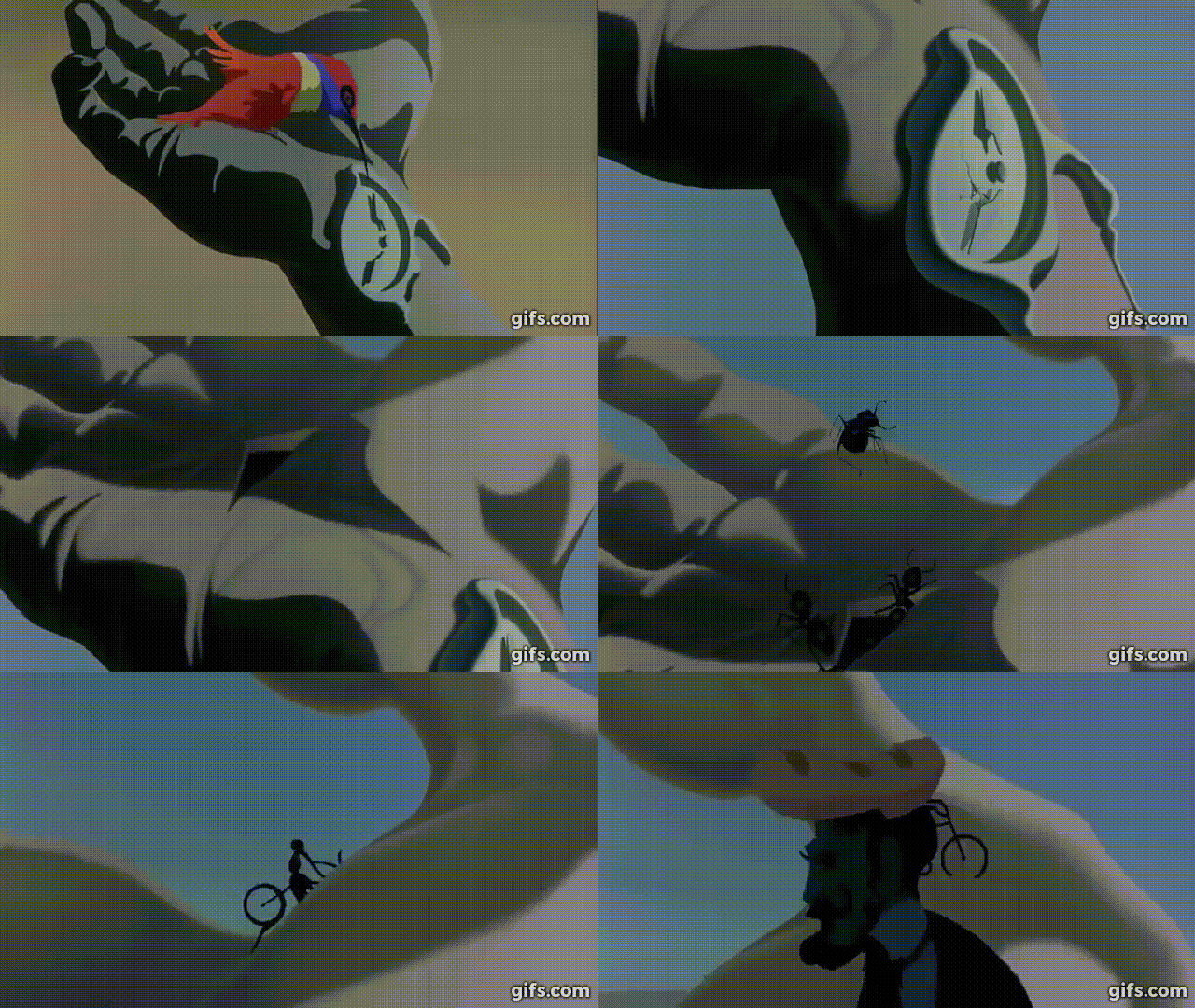
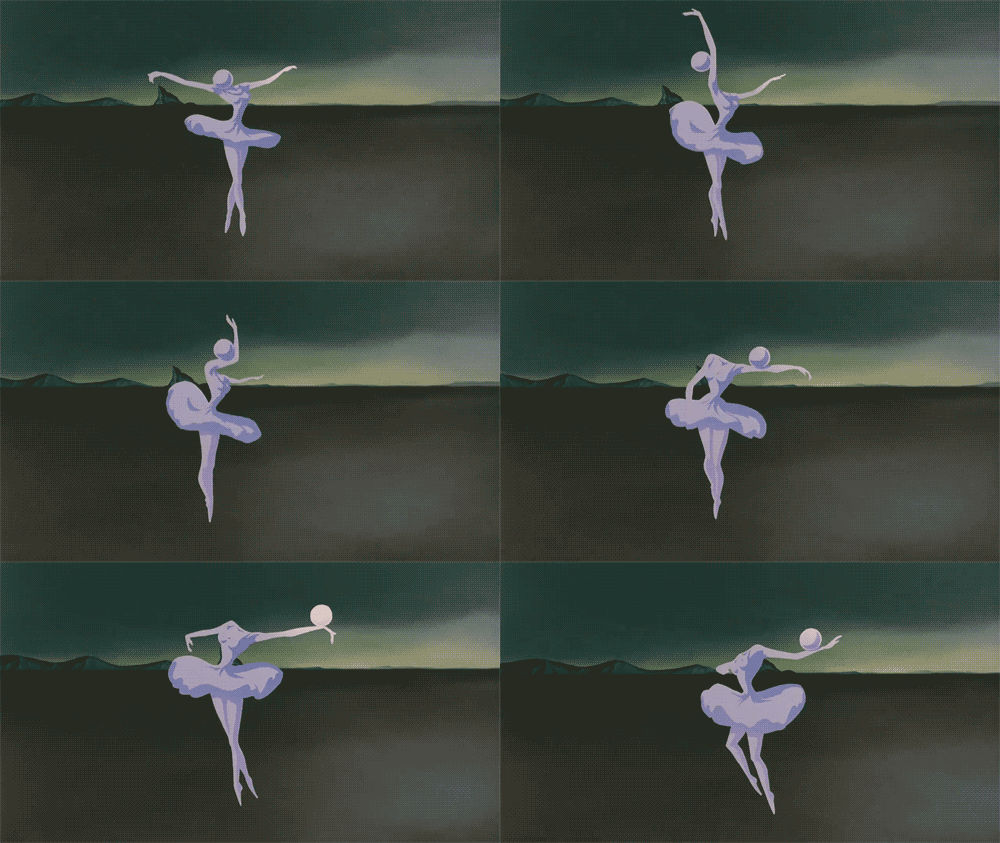
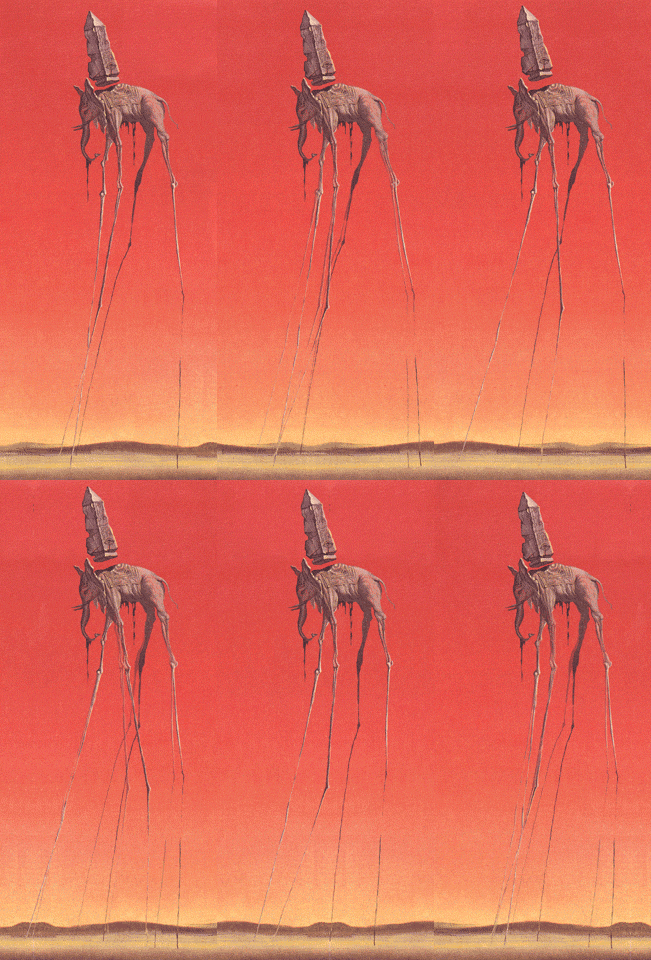
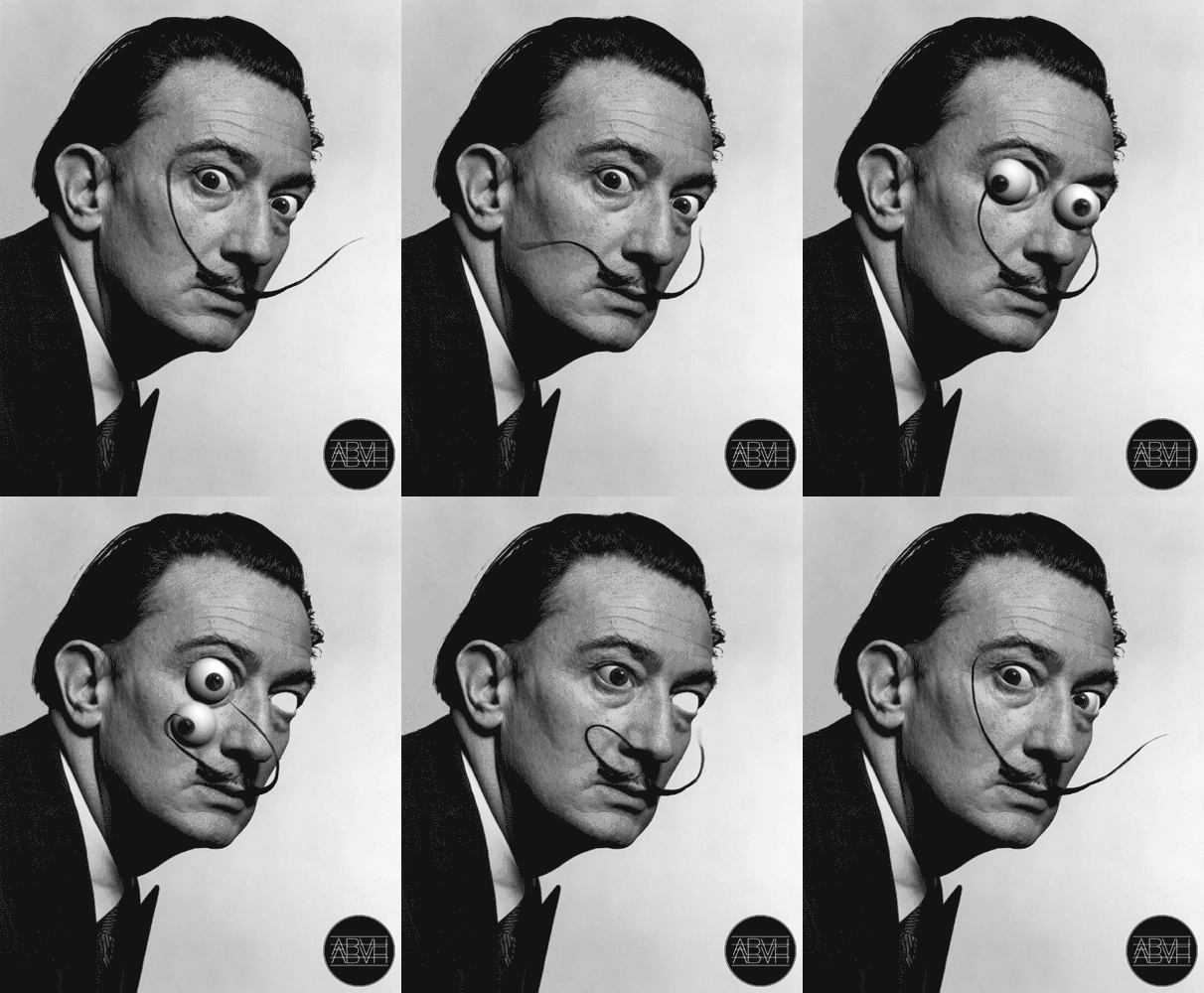
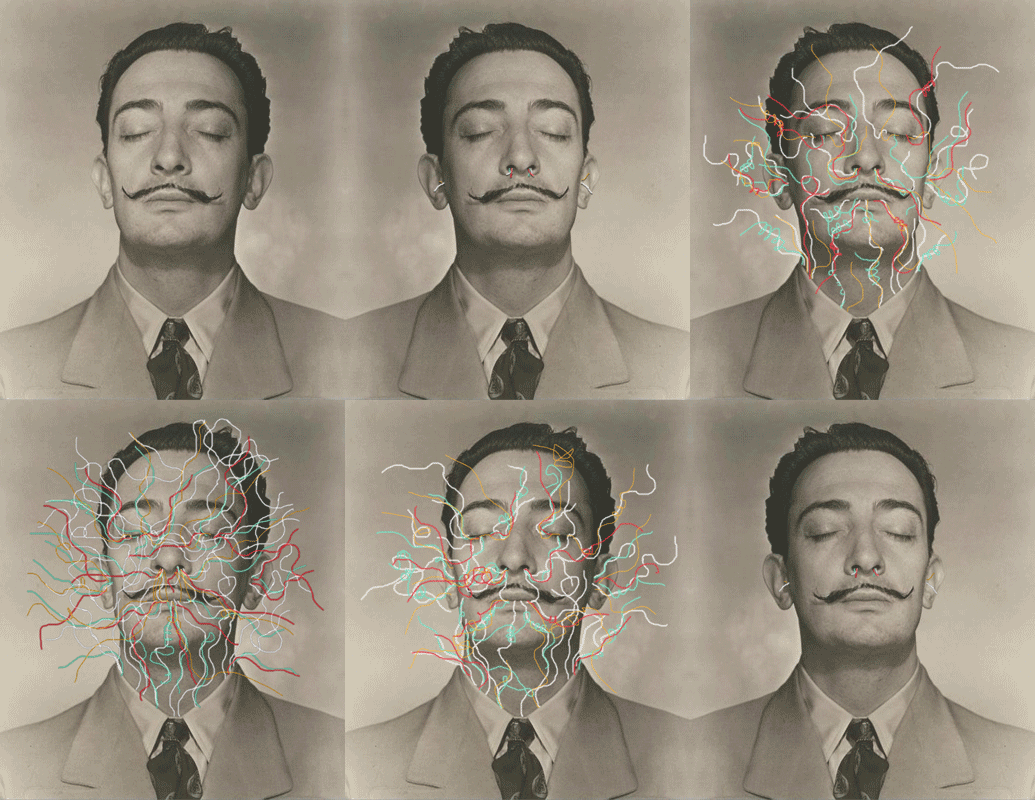
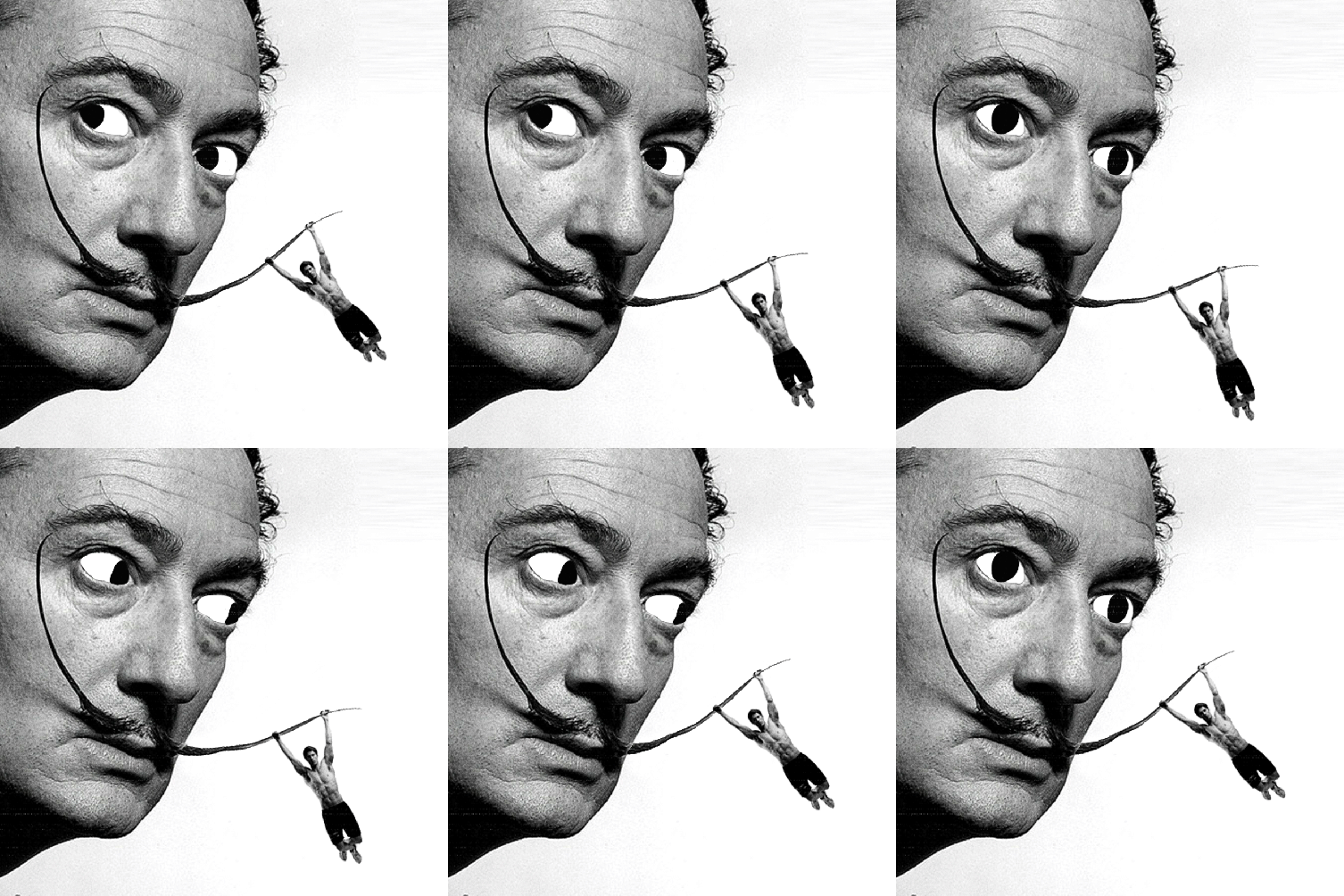
We love animated GIFs as well as Salvador Dali so here is 10 animations we found combining the two. Enjoy
About Salvador Dali
Salvador Domingo Felipe Jacinto Dalí i Domènech, Marqués de Dalí de Pubol (11 May 1904 – 23 January 1989), known as Salvador Dalí (Catalan: [səɫβəˈðo ðəˈɫi]; Spanish: [salβaˈðoɾ ðaˈli]), was a prominent Spanish surrealist painter born in Figueres, Catalonia, Spain.
Dalí was a skilled draftsman, best known for the striking and bizarre images in his surrealist work. His painterly skills are often attributed to the influence of Renaissance masters. His best-known work, The Persistence of Memory, was completed in August 1931. Dalí’s expansive artistic repertoire included film, sculpture, and photography, in collaboration with a range of artists in a variety of media.
Dalí attributed his “love of everything that is gilded and excessive, my passion for luxury and my love of oriental clothes”to an “Arab lineage”, claiming that his ancestors were descended from the Moors.
Dalí was highly imaginative, and also enjoyed indulging in unusual and grandiose behavior. His eccentric manner and attention-grabbing public actions sometimes drew more attention than his artwork, to the dismay of those who held his work in high esteem, and to the irritation of his critics.
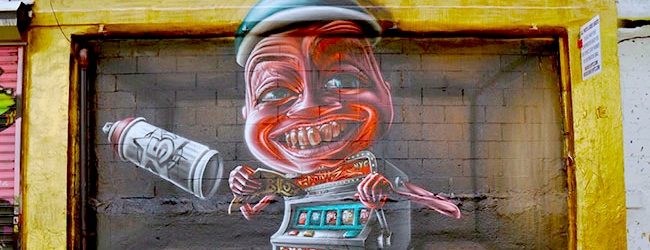
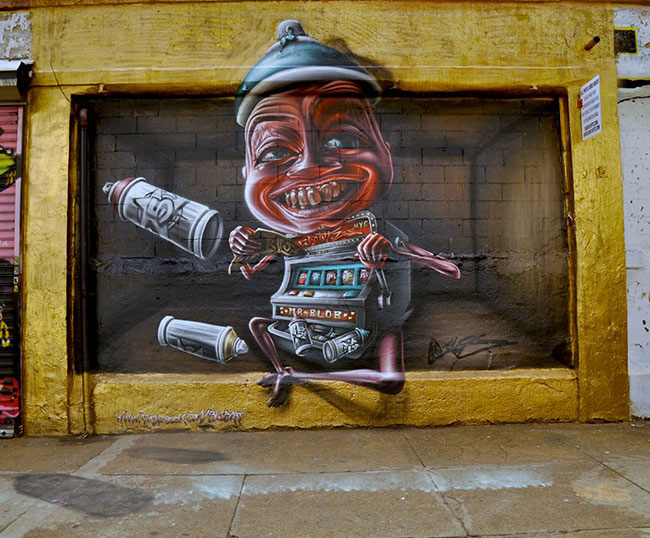
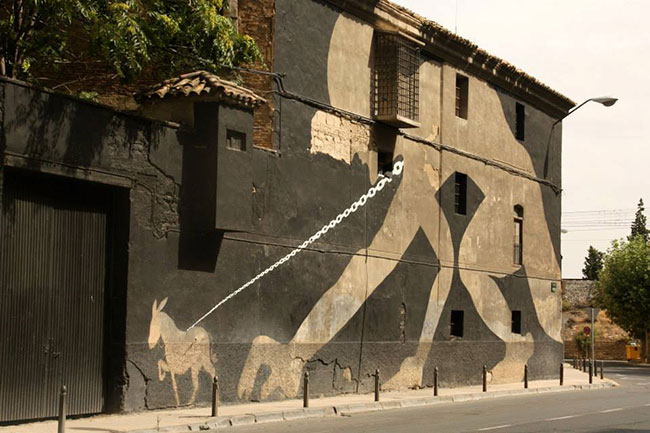
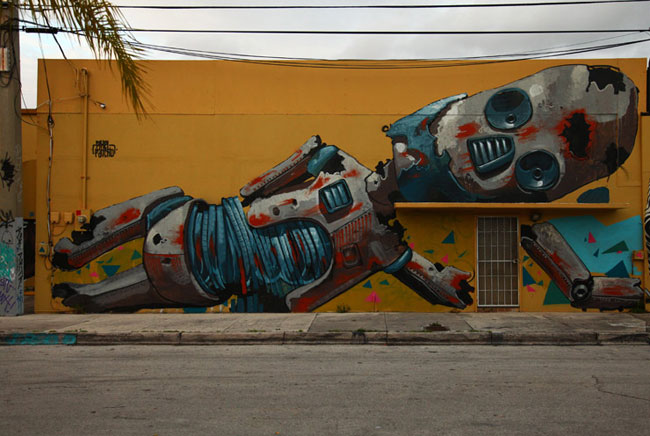
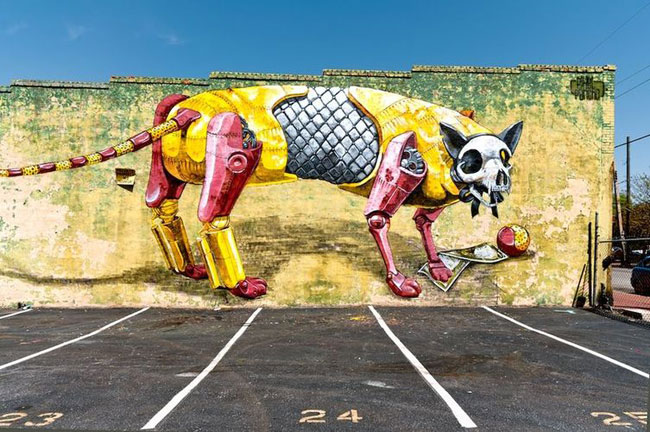
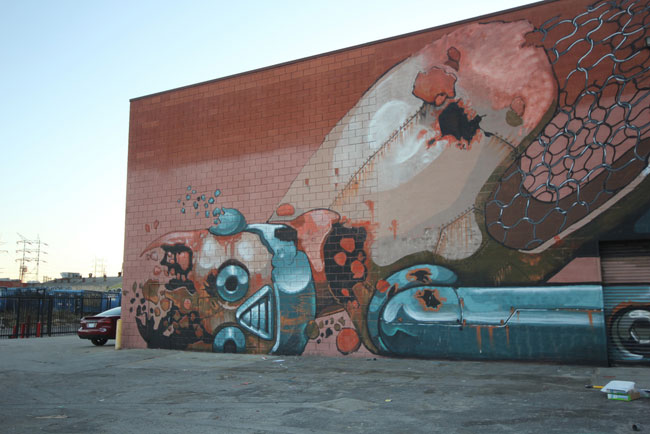
Pixel Pancho street art style stands out of the crowd and often includes robotic like characters. It was difficult to choose which pieces to show so anything Pixel Pancho sprays turns into wonders. We have included below a few examples of his works.
Unquestioning. I, say I. Unbelieving. Questions, hypotheses, call them that. Keep going, going on, call that going, call that on. Can it be that one day, off it goes on, that one day I simply stayed in, in where, instead of going out, in the old way, out to spend day and night as far away as possible, it wasn’t far. Perhaps that is how it began. You think you are simply resting, the better to act when the time comes, or for no reason, and you soon find yourself powerless ever to do anything again. No matter how it happened. It, say it, not knowing what. Perhaps I simply assented at last to an old thing. But I did nothing. I seem to speak, it is not I, about me, it is not about me. These few general remarks to begin with. What am I to do, what shall I do, what should I do, in my situation, how proceed? By aporia pure and simple? Or by affirmations and negations invalidated as uttered, or sooner or later?
Generally speaking. There must be other shifts. Otherwise it would be quite hopeless. But it is quite hopeless. I should mentions before going any further, any further on, that I say aporia without knowing what it means. Can one be ephectic otherwise than unawares? I don’t know. With the yesses and the noes it is different, they will come back to me as I go along and how, like a bird, to shit on them all without exception. The fact would seem to be, if in my situation one may speak of facts, not only that I shall have to speak of things of which I cannot speak, but also, which is even more interesting, but also that I, which is if possible even more interesting, that I shall have to, I forget, no matter. And at the same time I am obliged to speak. I shall never be silent. Never.” Opening paragraph to The Unnamable by Samuel Beckett
Contemporary philosopher Alain Badiou asks if we can name a truth, anticipating and forcing into knowledge all the elements contained in that truth, risking a totality of knowledge related to it; a problem, for example, in politics where this turns to totalitarianism. He says, “The construction of a truth is made by a choice within the indiscernible…But the potency of a truth depends on the hypothetical forcing…The problem is to know whether such a potency of anticipation [hypothetical forcing] is total…My answer is there is always, in any situation, a real point that resists this potency.
I call this point the unnameable of the situation. It is what, within the situation, never has a name in the eyes of truth. A term that consequently remains unforceable. This term fixes the limit of the potency of a truth. The unnambeable is what is excluded from having a proper name, and what is alone in such exclusion. The unnameable is then the proper of the proper, so singular in its singularity that it does not even tolerate having a proper name. The unnameable is the point where the situation in its most intimate being is submitted to thought; in the pure presence that no knowledge can circumscribe. The unnameable is something like the inexpressible real of everything a truth authorizes to be said.” Alain Badiou from Infinite Thought
The unnameable is something I have personal experience with. The secret and the truth. I’ve held both of these things, safeguarding, I thought, others and myself. Both secret and truth can be destructive if kept silent. But it has been my experience that once spoken, the unnameable is an agent of transformation; it comes in facing what’s real.
Read more of my interview, When Context Takes The Game, conducted by Becky Huff Hunter for This ‘Me’ of Mine.
Badiou, Alain, Infinite Thought, Continuum International Publishing Group, London, New York. Trans and ed by Oliver Feltham and Justin Clemens, 2005 – 2011. “Philosophy and Truth”, pp. 43 to 51, originally titled “The ethic of truths: construction and potency” quote p.49.
Whatever some may think about the London 2012 Olympics, it is bringing a lot art and life to the city making it not only the sport capital of the world but very much a cultural hub right now. We have started to enjoy the many exhibitions and pop up art shows part of the London 2012 festival that is running along the Olympics and actually right into September.
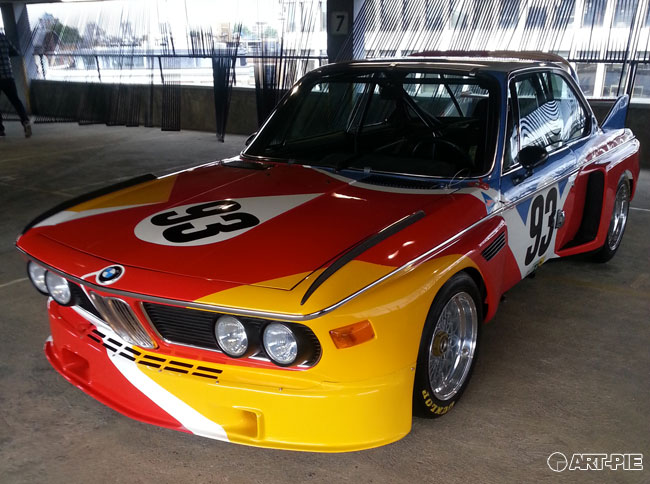
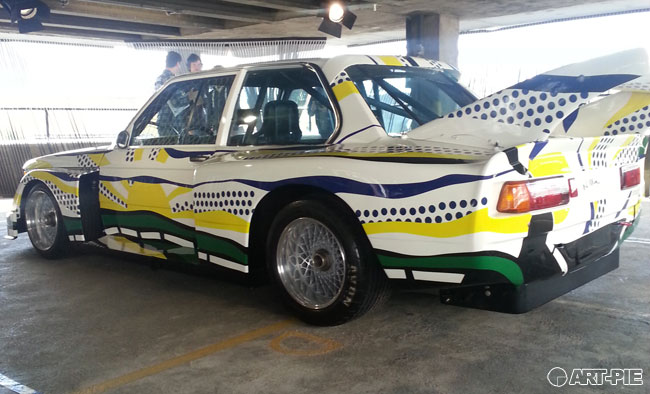
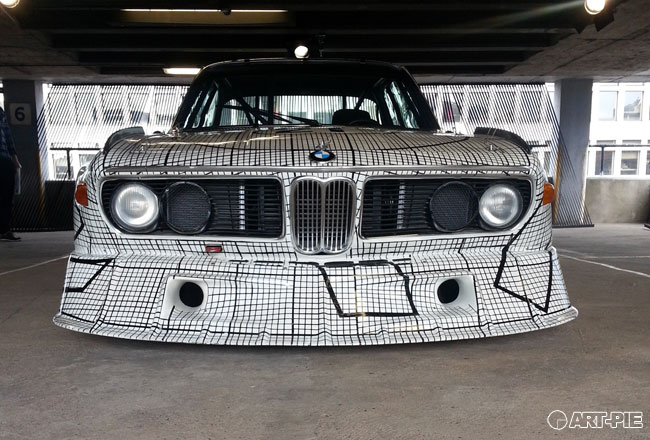
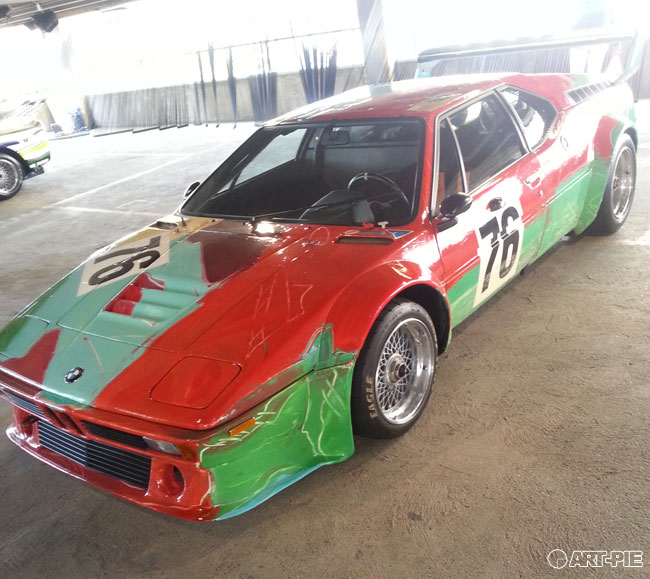
We made our first stop at Art Drive and we so glad we did. The NCP Car Park, 35 Great Eastern Street, Shoreditch, London EC2A 3ER which I ignored so many times as I walked past, is now cocooning the BMW Art Car Collection. 17 cars turned into pieces of art. I will never see again that car park with the same eyes.
You have to go back in 1975 to see the first ever BMW Art Car burning some rubber at the famous Le Mans 24-hour race. From there 16 other Art cars followed which all competed in this very race until the current and last one ever painted – The Jeff Koons one, see below for pictures. Some of the artists who got involved in this 35-year long project are Andy Warhol, Alexander Calder, Cesar Manrique or Frank Stella.
But enough about the history, let’s go and see the cars! The settings for this show are completely surreal: the car wash team, based outside of the car park was at it while I was greeted with a big smile by the the Art Drive team and quickly ushered inside the car park and rapidly wafted in a huge lift that can most definitely contain a couple of cars but above all that made me feel right into some sort of action or sci-fi movies like Alien. I was excited now.
The girofar then went off, a strident sound soon followed that smashed the relative silence that had settled during my journey up to the unknown. The door slid open: I had reached the 8th floor and was about to see my first Art Car.
Enjoy the pictures below and leave a comment if you like any of them! Consult this website to read more about the cars, designs and artists that took part in this project
A bit of trivia for you – the BMW Art Car M1 by Andy Warhol was the most successful car on the circuit de la Sarthe, it took sixth place overall in 1979.
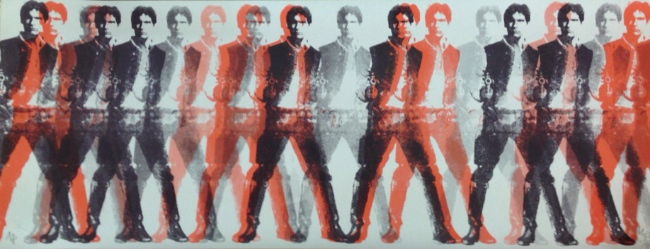
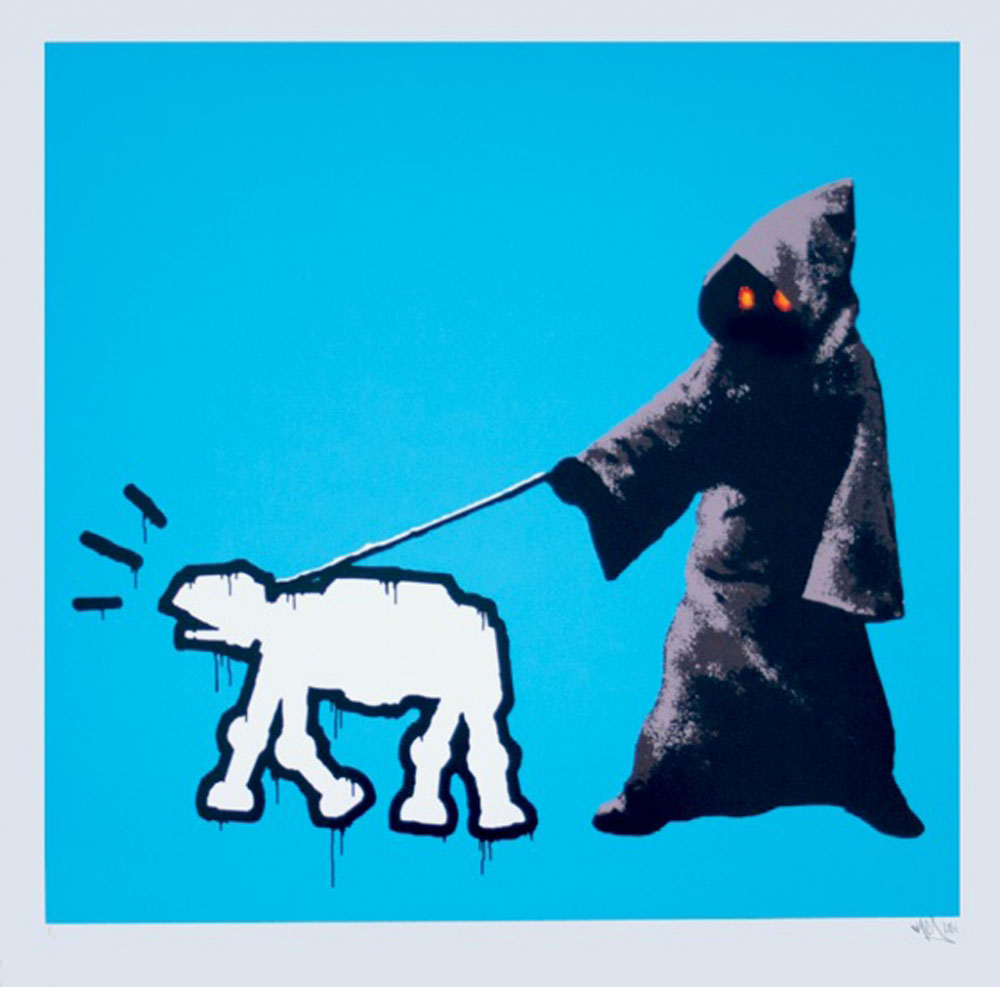
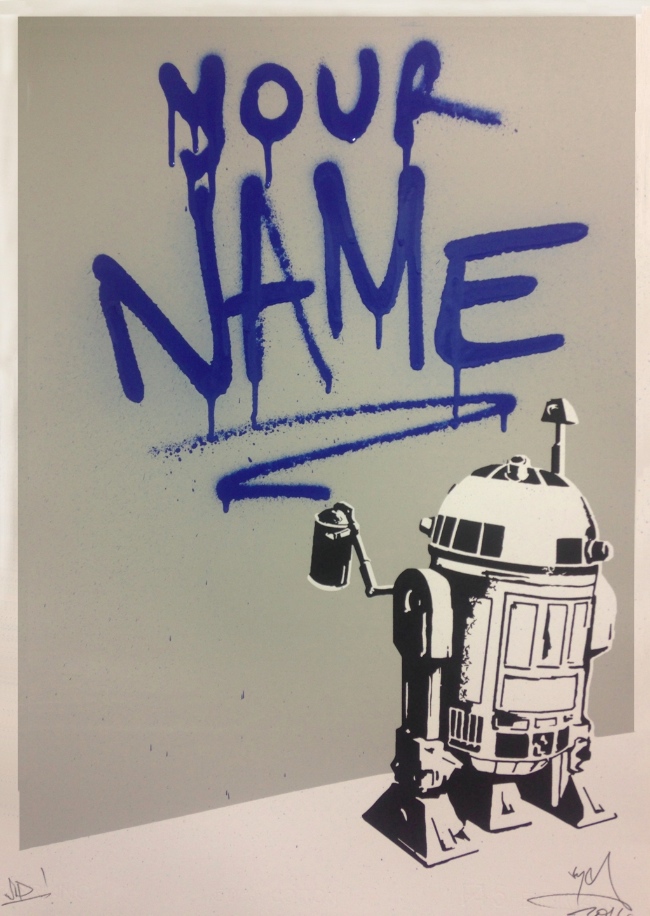
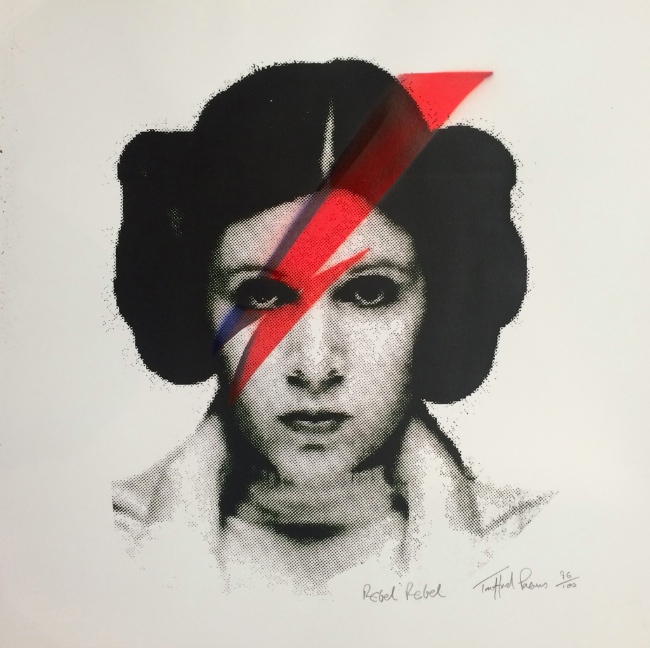
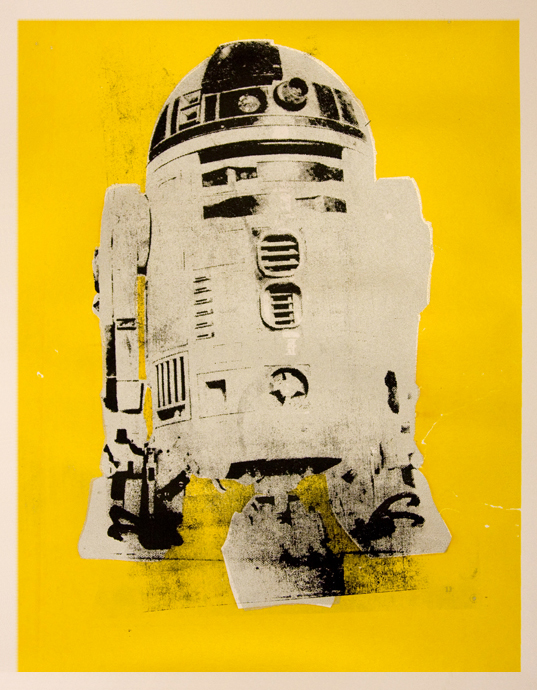
With the release of yet another episode of the Star Wars saga – Star Wars: Episode VII – The Force Awakens, later on this year we looked at how much artists get inspired by it and selected 10 pieces we felt were worth sharing.
May the (art) force be with you. Enjoy these 5 awesome Star Wars themed prints by RYCA & Trafford Parsons
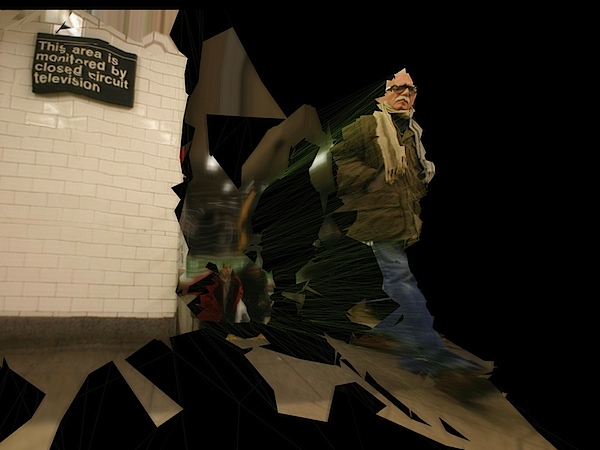
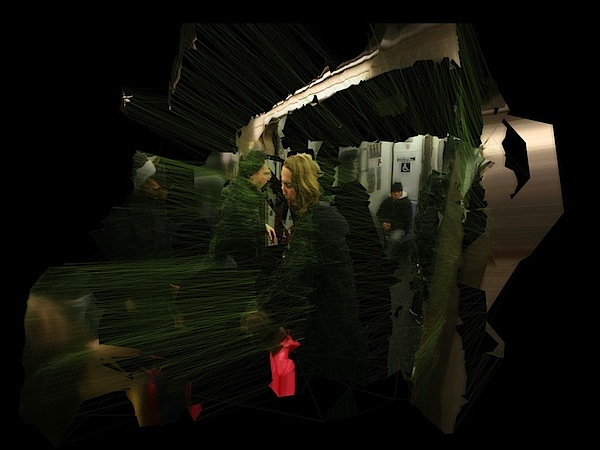
Microsoft must have amazed quite a few of us with their latest innovation, I want to talke here about Kinect by like for all genius products, there is a sleepy hacker waiting to exploit and excel in using such products.
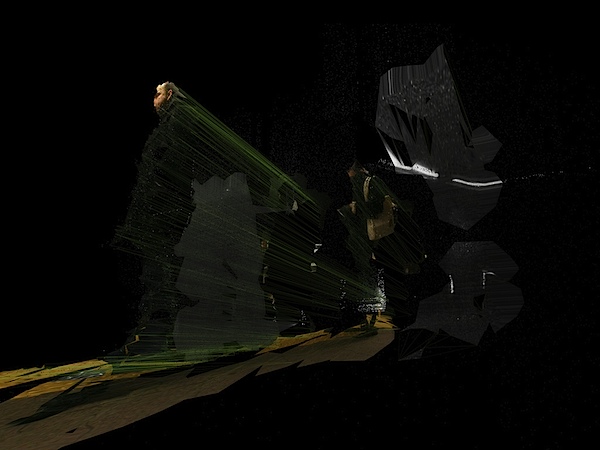
James George had the idea to modify the Kinect accessory and with the help of a HD SLR, he presents us with these amazing shots below taken across the NYC subway.
For the techies, James is using the depth image in a custom open framework application.
Jester Jacques – First of all, how did your interest in art making come about? Were there any specific events or influences in your childhood which swayed you to be more creative?
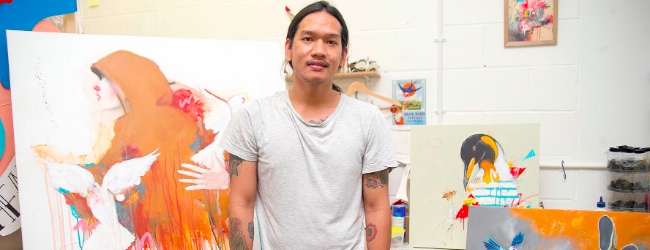
Novemto Komo – I have always been doodling since I was kid, on the wall of my parent’s room and my room; also sticking stickers I got on the doors all around the house.
Simon Sarin Photography Copyright
I remember when I was in kindergarten and elementary schools, almost every weekend my parents took me to “Ancol art market” to see paintings, sculptures and crafts by local artists. We got our family portrait from one of the artist there using paper cut, and when my sister and brother were born, we also get their portrait done by the same artist. I also participated a lot in kids drawing competition and some of them came out top 3.
I also remember saw a painting by Ford Madox Brown, titled “Take Your Son, Sir!” in a book and I was finally able to see it in real a year ago in Tate Britain.
JJ – You were born in Indonesia. Does any of the culture seep into your work, even though you live in the UK?
NK – It does influence me a lot. There is so many social issues going on in Indonesia that kind of influence my way of thinking when developing the idea.
Also, the diversity of animals in Indonesia can be seen on most of my artwork lately. A lot of animals in Indonesia are very rare now and a lot are in risk of extinct.
JJ – Where did you study Fine Art and do you think it helped in your career as a visual artist? In what ways?
NK – I never studied Fine Art, I was trained as multimedia designer which lead to my first job as a junior flash developer. Then as time went on, I got more jobs doing illustration which carried me into doing more hand drawing/illustration. I got more into painting when I took my master in graphic design in 2010 at Newcastle where I had a lot of spare time to practice and develop my skills.
JJ – What is your fascination with animals? And anthropomorphising them?
NK- I started using animal a lot in my artworks as they are part of our life. They are also very attractive subjects because they are beautiful. I believe every human has their wild side which I interpret through animals.
I also want to bring awareness to people about animal extinction, especially caused by poachers and hunter. I’ve followed and joined a hunter online forum and feel sad every time I see them posted photos of animal they killed proudly.
Simon Sarin Photography Copyright
JJ – How do you get inspired?
NK – I get inspired from many things; news, people around me and their relationship towards each other. A lot of time I got inspiration by talking with strangers or random people. I visit Stolen Space Gallery a lot and Signal Gallery. I guess I get a lot of inspiration from street art around the world and there are so much of it in London created by international artists. To name a few, Faith47, Remi Rough, and Anthony Lister.
JJ – In your painting ‘Worst thing of Screaming,’ there is a feeling of pop art in there; the Lichtenstein type of shapes. Tell us more about that particular painting, as it stands out to me in your most recent body of paintings.
NK – The starting point of that painting was based on an idea of relationships. There are many situations where no one listens to you even when you scream out loud and sometimes it make you scream even louder, which end up make you feel like a freak show.
JJ – You do commercial work as an illustrator. What do you enjoy doing more – that, or your personal work? Is there an overlap in ideas and style, or do you try and keep them separated?
NK – I always try to separate the idea and style between them, but I have to admit sometimes there’s a mix in some of them.
JJ – Your work has a collage feel to it. How do you begin a new piece? Do you actually cut and paste, or just play with objects and figures as you go along?
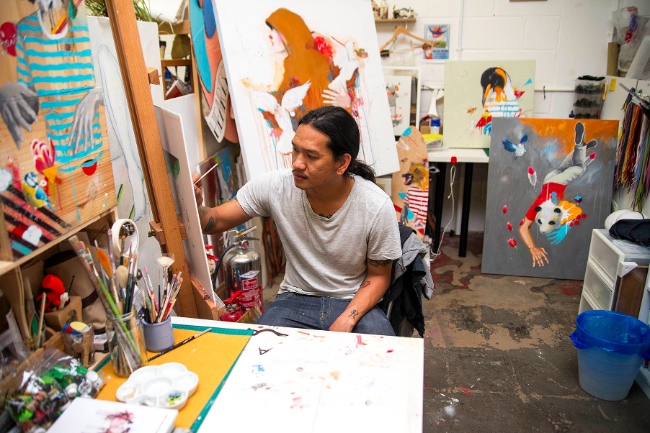
NK – I never thought my work has a collage feel but I heard some people said that they thought my work was a collage, especially “escape the game.” I guess I just play with objects, figures and imaginations to visualise my idea into a painting. Many times when I’m in the middle of painting, I come out with some graphic elements that I can incorporate with and I just play around with it.
JJ – Do you have any exhibitions or projects/events coming up which we should look out for?
NK – The exhibition that I confirm at the moment is in December but I am doing another live art on the Tuesday the 24th this month during Jam Sandwich at The Russet Cafe. It is a monthly music event which I paint live depending on that night performers.
JJ – Finally, what piece of advice would you give young artists who want to pursue visual/fine arts?
NK – If you’re happy doing it, keep doing it as you never know what might happen.
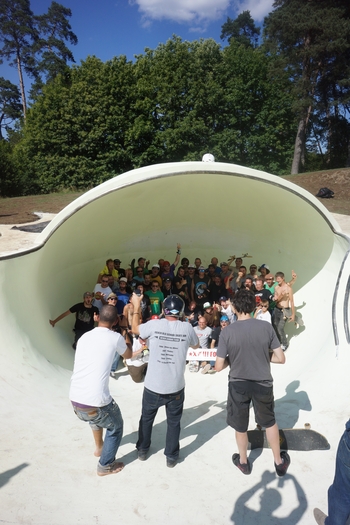
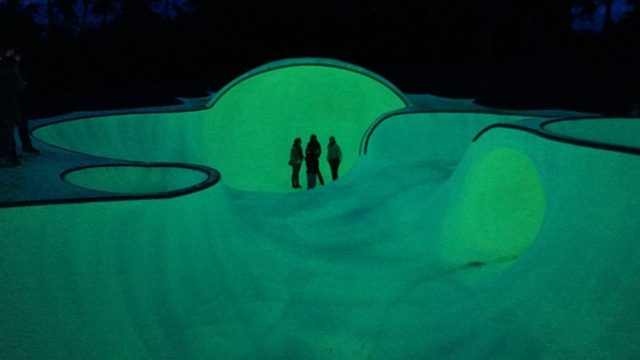
We all like when art means having fun, don’t we? How about then if you could skateboard on a sculpture and even better glow-in-the-dark skate park? Yes you would or at least you would support the concept.
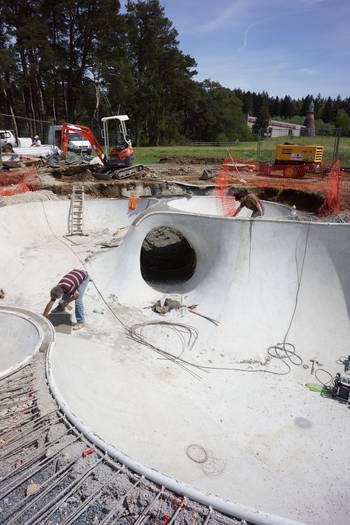
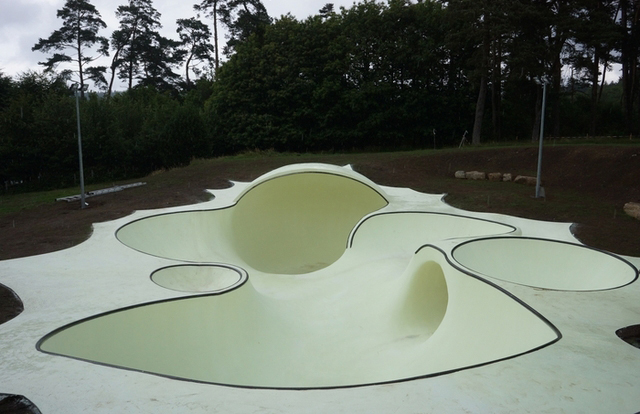
The concept is out there in fact and in France precisely. Korean artist Koo Jeong-A has come up with a solution. The structure is called Otro, and is made from green phosphorescent concrete (how cool is that) so it gives off a radioactive glare at night. It is composed of different bowls, a cradle and three tunnels. See pictures below.
Koo Jeong-A invites anyone to share the physical and sensorial experience of her sculpture/skatepark. With OTRO, Koo Jeong-A tries out the fragile visibility of the artwork, its discrete appearance that tests our perception, obliging you to discover with patience the artwork’s essence. So if you are on holiday in France near Limoges, make a stop for Otro, you’ll like it.
We all use these days USB keys or also called Flash stick. It has become so easy now to carry data and in some cases quite a lot of data. In other words, the technology is here and well established and shall get better and better with more and more storage. Continue reading USB keys: not just for data, for your eyes too→

 “Where now? Who Now? When now?
 Whatever some may think about the



 We all like when art means having fun, don’t we? How about then if you could skateboard on a sculpture and even better glow-in-the-dark skate park? Yes you would or at least you would support the concept.