JBAK – artists collaboration from Berlin

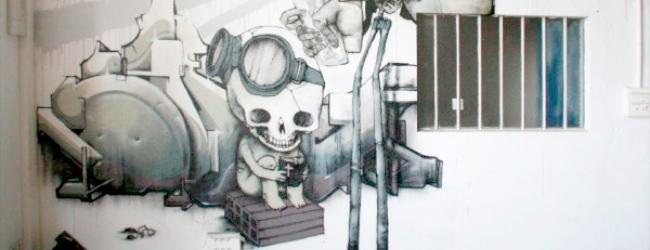
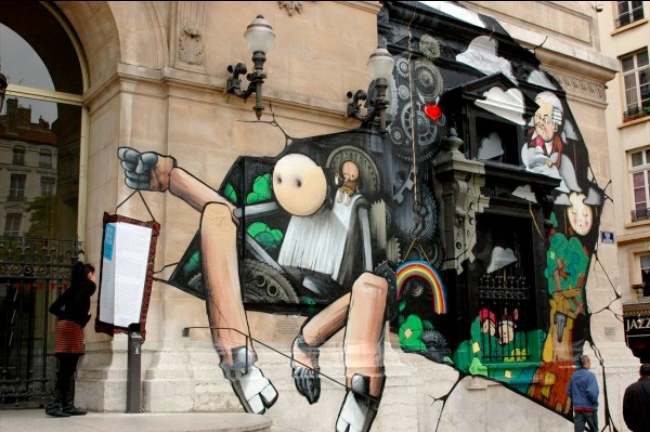
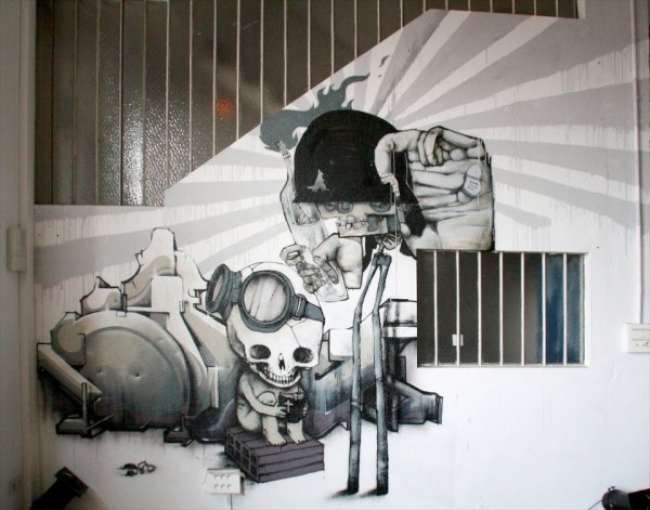
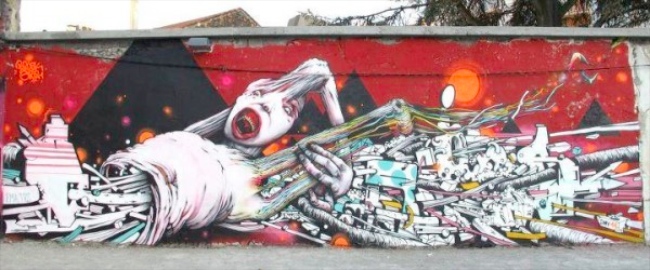
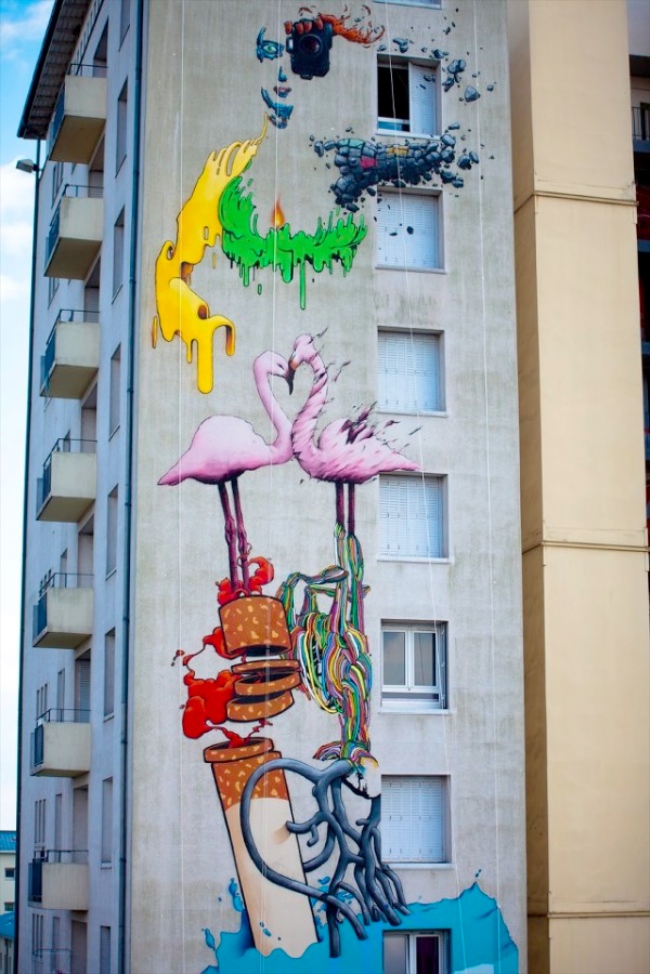
JBAKJames Bullough and Addison Karl are JBAK ans is a creative collaboration between two artists originally from Baltimore and Seattle respectively and hitting the walls of Berlin.

I could not describe better than Jennifer Weitman what JBAK is and is all about so here are her words. We particularly like the “Paintin Meryt’ piece which you can watch below

More about JBAK

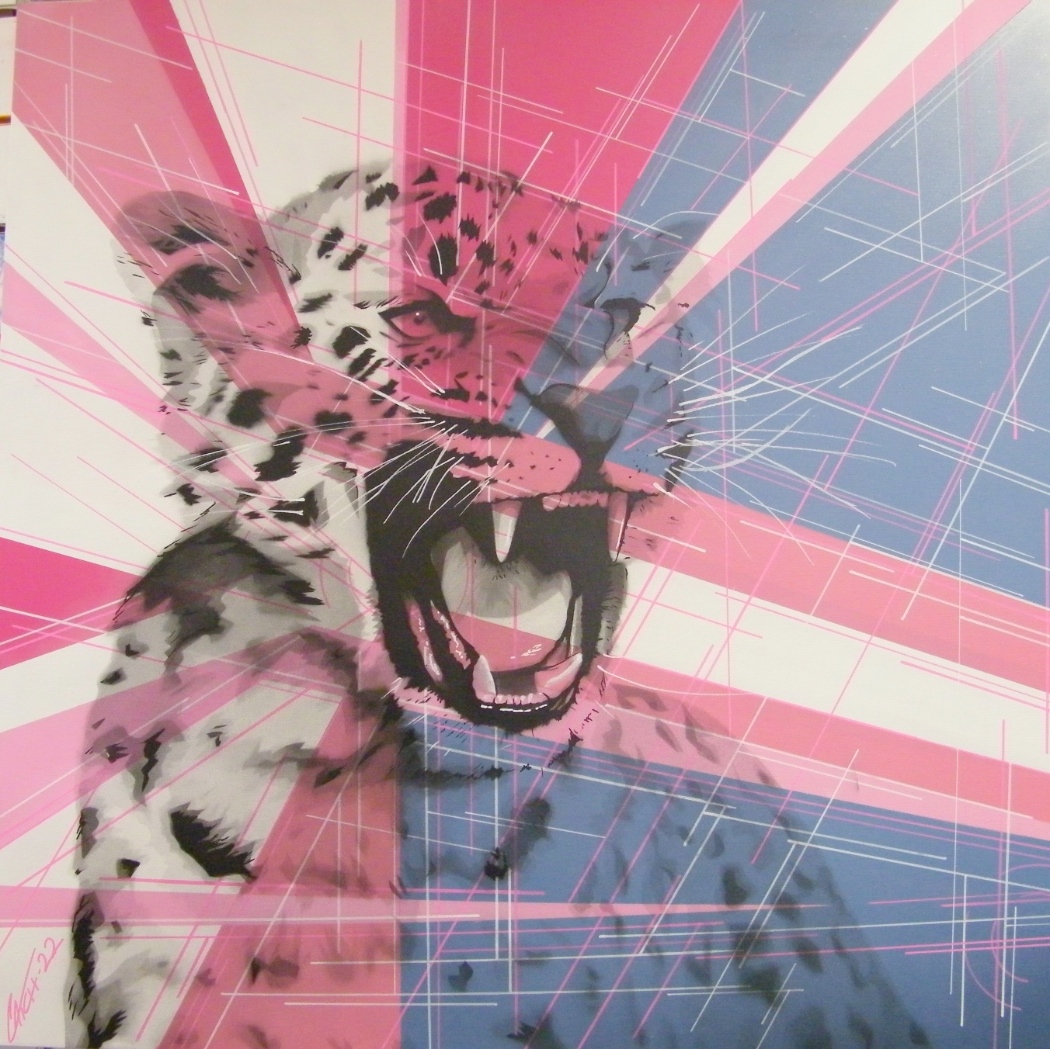
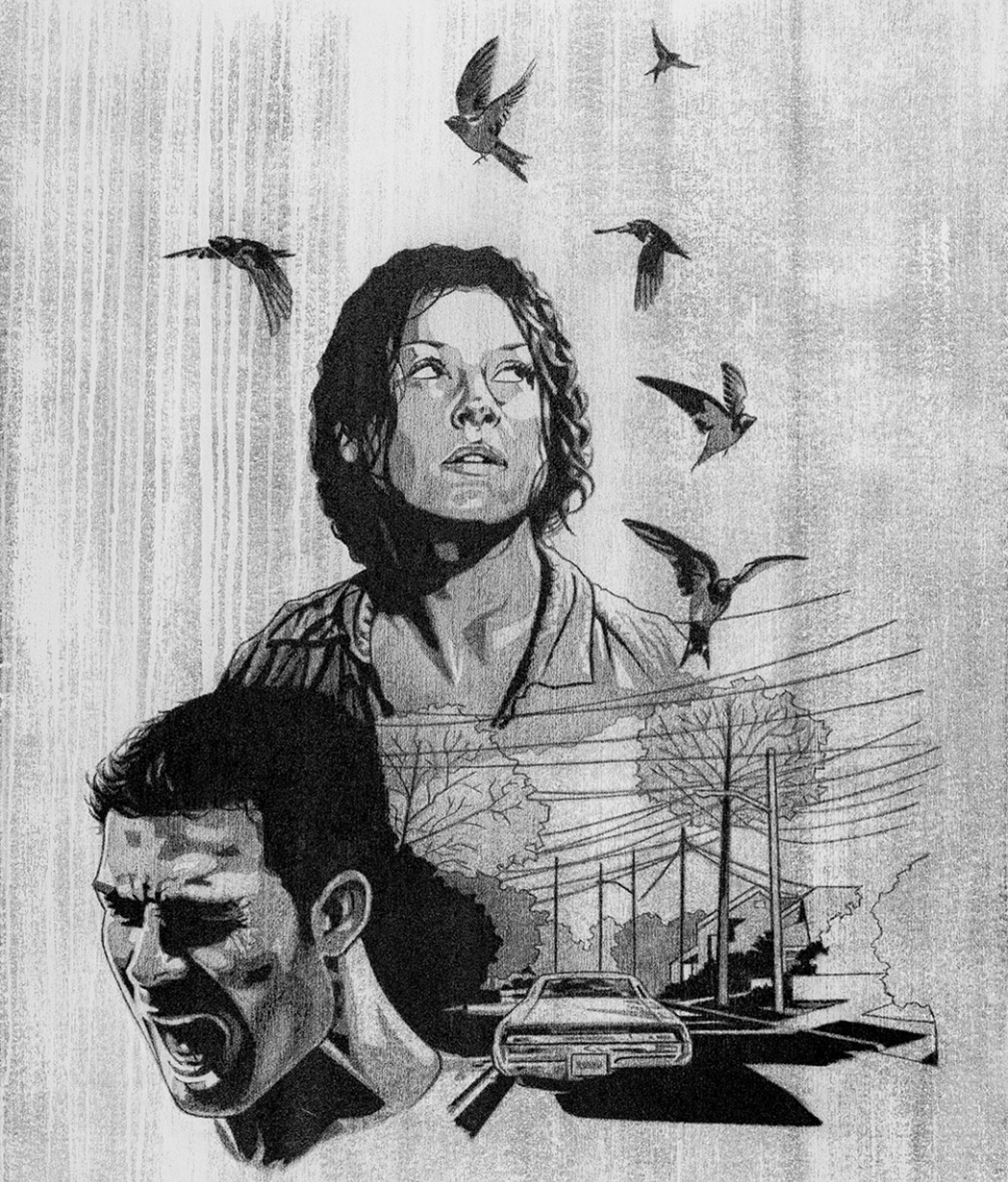
“Each artist brings his unique vision and style to their combined body of work. Bullough’s main focus is photo-realism, with attention to ambient and deep space, layers, and geometric forms. He combines contemporary street art techniques and materials with those of realist oil painters, creating pieces of vivid color and masterful detail. Conversely, Addison’s work is produced using a hatch drawing style, which utilizes fine lines and details to create fantastic illustrations of both diminutive and immense images and proportions.”JBAK

“JBAK have blended their contrasting styles into a mashup of antonyms: realism vs. illustrative, expressive vs. precise, hard vs. soft, black vs. a spectrum. The pair seeks desirable locations paying close attention to the space and the people that live and work within it. Their intent is not to disrupt but rather, to integrate their art into the existing environment, creating harmony, balance, and adding life to an otherwise colorless wall. Together, JBAK create large-scale murals, which highlight their differing design aesthetics while at the same time, reaching a common goal—to give people a reason to look up, around, and beyond themselves.”

Splash on cellophane, not walls

Should the thought of being arrested and possibly get a jail sentence for spraying on walls refrain you from expressing your creativity, look no further we have got a solution.

1. Get down to your corner shop or supermarket and buy cellophane rolls, loads of them.
2. Find two trees or pillars quite close to each other and start rolling the cellophane around one of them
3. Stretch the roll to the other tree and again roll it around
4. Tear off
5. Smile
6. Get your cans out
7. Spray.

We have included below shots from the collective CelloGraff who are keen “cellophane street artists” (<– just made that term up) as well as a video showing how they do it

Graffiti on cellophane by CelloGraph | Art-Pie

Graffiti on cellophane by CelloGraph | Art-Pie

First seen on Design Taxi

8-bitscapes prints now available: want one, defo.

I just love the concept and even more the outcome: a unique series of prints now available to purchase at Prescription Art

8-bitscapes is a collaboration between designer Jamie Sneddon and photographer Kevin Rozario-Johnson. The concept is simple: they use well-known classic video game characters such as pac-man or invaders and intricate them into real-life scenarios. The results is just ace. Continue reading 8-bitscapes prints now available: want one, defo.

FinDac, Mr Zero, Fat Heat and more & The Duke of Lancaster

Mr Zero
Mr Zero

The Duke of Lancaster, a decommissioned and abandoned cruise liner shipwrecked docked off the North Wales Coastline in Wales has become the home to a range of urban artwork murals.

Here are the latest pieces that came up : Mr Zero and Fatheat are part of Street Art Crew and Colored Effects Crew, a Hungarian Street Art Crew.

They have made the trip to North Wales from their native Hungary, to leave their own message about corruption on the 1950s cruise liner, with their works which are titled ‘The Prophets of Profit’.

This has been split into two separate portraits which are positioned either side of Bristolian Artist Bungle’s ‘Face of Authority’ piece.

Mr Zero has created a 12 x 7m pig character. Notably he has included the council’s own logo on the pig’s hat and incorporated provocative wording: ‘Greed’, ‘Power’ and ‘Corruption’ in the character. This message is further reinforced by his partner, Fatheat’s, 12 x 9m mural, which depicts a monster character.

Mr ZERO 

Mr Zero

This grotesquely includes human faces buried within the character and money surrounding it. Fatheat comments: “The faces represent the people affected by the Prophet’s corruption and how they have been swallowed up and used against their will.”

In direct contrast to these characters and the other artworks on the ship, Irish artist Fin DAC has created a beautiful image, depicting a Geisha Character. Titled ‘Mauricamai’, this painting is tucked away around the hull side of the ship.

FIN DAC 

Fin Dac

It has been purposefully positioned so it can’t be seen from the coastal path – it can only be seen if the ship’s dock is opened to the public.

The ship is now home to 8 pieces of artwork, with artists travelling from all over Europe to leave their mark on this historic vessel.

FAT HEAT
Fat Heat

Fat Heat

Words from the peeps at duddug.co.uk

Metazoa, a new show by ROA

ROA | Art-Pie

Belgium, the country where Roa is from, must be a far away from what this artists get to travel to. I remember seeing a few years back the first street art pieces from ROA across London and thinking: what this guy does is quite fresh.

Now, look what he is up to: a show in New York city at the Jonathan Levine gallery. Nice one.

Then, when I heard about that show, I thought it is going to be the same shit: wildlife subjects, 2 colour artwork (black and white) on some wooden panels which can be manipulated by viewers to reveal the inside of the depicted animals.

ROA | Art-Pie

Guess what? Bang on. However, I noticed that the quality of the paintings is sharper and that the artist uses in a bolder way, the red colour to emphasise the inside of his painted animals.

A friend actually sent me a link to that show and when I said to him, ‘You know what, I am sure I have seen it before’, he replied that accomplished artists have a style of their own, a signature and if people like it, and I am sure you are all like it, why change it. He, like of all us, need to fill his pockets with money so if what he does, sell, then be it.

Point made and agreed. Yes I have seen it before but I would fly to New York right after I finished writing up this post just because seeing ROA’s stuff is always enjoyable and fun.
ROA | Art-Pie

The show runs until the 2nd May 2015.

Lucky enough to live in New-York and actually planning on checking it that show? We would love if you could share your pics and thoughts about it so get in touch today!

What – “Metazoa”, a solo show by ROA
Where – “Jonathan Levine gallery, 529 West 20th Street, Gallery I, New York (USA)
When – until the 2nd May 2015

ROA | Art-Pie

ROA | Art-Pie

ROA | Art-Pie

ROA | Art-Pie

First seen on Mashkulture

Leonardo Da Vinci: Painter at the Court of Milan

Virgin of the RocksThe much hyped Leonardo Da Vinci exhibition opens at the National Gallery from today with a seven room exhibition. The display is ideal for those who adore the technicality of the line and the workings of an artist , with many drawings and paintings by Leonardo and his pupils on display.

Its build up has been felt for many months, ever since its advance booking opened in May 2011 – a long seven months before its actual opening day.

With its future opening date released then came the capped visitor numbers announcement, with the gallery saying it would restrict visitors due to an, ‘unprecedented demand’. Today (9 November) The Evening Standard has reported how the tickets have sold out until mid-December. The pressure for this display to deliver to its global audience is immense.

The exhibition brings together an impressive collection of international loans never before seen in the UK, from the Queen, America, Poland, France, Scotland and from Art Fund acquisitions.

One difference with this exhibition from others is it the first to be dedicated to Leonardo’s aims and techniques as a painter. Don’t expect reams of glorious huge paintings, though there are a few pretty ladies, curly haired men and angels.

The whole display focuses on Leonardo as an artist, his technical skills and his teaching skills, showing how his works were often finished or copied by his pupils, and in some cases edited. In particular it concentrates on the work he produced as court painter to Duke Lodovico Sforza, in Milan in the late 1480s and 1490s.

As well as finished pieces, each room is peppered with Leonardo’s preparatory and experimental sketches.

The final part of the exhibition, a few mintues walk away in the Sunley Room features a near-contemporary, full-scale copy of Leonardo’s famous ‘Last Supper’, on loan from the Royal Academy. Seen alongside all the surviving preparatory drawings made by Leonardo for the ‘Last Supper’ it makes for an interesting viewing,  but seems rather ‘tagged’ on to the exhibition.

Pieces to stop by:

The Musician (1486-7) Room 1 – An unfinished portrait demonstrating Leonardo’s skill in positioning of the face creating a life like portrait with depth.

Portrait of Bianca Maria Sforza (1493) Room 2 – Get your fill of opulence with this lavish picture showing a traditional Milanese style dress, with Leonardo’s profile technique on full view.

Portrait of Cecilia Gallerani (Lady with the Ermine) © Princes Czartoryski Foundation

The Lady with an Ermine (1498-90) Room 2 – This piece is centre stage of the room and shows off Leonardo’s portraiture and colour skills. The lady almost leaps out of the canvas due to her 3/4 turned pose and the black back background, giving her a 3D quality that soon become sort after by Leonardo’s pupils.

Studies of the Nervous System (1485-8) and Studies of the Human Skull (1489) Room 3 – This is one of many anatomical studies in this room, and they took my breath away. He’s used hints of shadow and light to depict tiny features of the human body. The skull looks perfect in minature form and these observations were no doubt the ground work for his future paintings, making figures seem as real as possible. It astounds me how these delicate sketches are over 500 years old.

The Virgin of the Rocks (1493) Louvre and Virgin of the Rocks (1491/2-9 and 1506-9) National Gallery Room 4 – These pieces are obviously the focal point for this room and essentially a key point for the exhibition. They are on show together for the first time and are intended to show Leonardo’s difference in style and views of  painting and art. The earlier piece is very rich in colour and could easily fit into a church altar piece. The second is restrictive in its colour palette and the figures are more sculptural with a porcelain quality.

The Burlington Cartoon ( 1499-1500) Room 6 – This lively large piece in charcoal seems to move as you move around it. The unfinished aspect of the piece almost makes it work more, it stands out in this room. The figures are fluid and contemporary, it’s a break away and step up from Leonardo’s meticulous anatomical studies.

Two drawings of the boney structure of the head, 1489
Two drawings of the boney structure of the head, 1489 The-Royal-Collection-©-2011

Room 7 in the Sunley room has a handy time line of Leonardo’s artistic career, with significant events and works. This would of been suited to have at the beginning of the exhibition, putting this display into context even more, especially for those less familiar with his pieces. The room feels tagged on, an afterthought. It’s interesting to see the workings that may have gone into this work, and then the copy of the Last Supper is astonishing to see in its grand scale.

Head along to this exhibition for a peek into Leonardo Da Vinci’s undoubted skill as a technical drawer and creater of astonishing life like works, which capture humanity and idealised beauty in all its forms. He perhaps saw himself as a creator and observer of humanity, what’s key from the exhibition is that he was always striving for improving his skills and thankfully we get to see these still today in this exhibition.

‘If the painter wishes to see beauties that enamour him, he is the master of their production, and if he wishes to see monsterous things.. he is their lord and god.’

The exhibition is open now:  09 Nov 2011 – 05 Feb 2012 Mon – Thu, Sat, Sun 10:00 AM – 6:00 PM; Fri 10:00 AM – 9:00 PM Closed Christmas Eve, Boxing Day, Christmas Day.

http://www.nationalgallery.org.uk/whats-on/exhibitions/leonardo-da-vinci-painter-at-the-court-of-milan

8 Famous Artists who Gained Appreciation After Death


Before you dive into this article, let us introduce to you Aces Of Green, our new art project focusing on producing visual art & educational material to stimulate conversations & awareness for environmental issues such as Climate Change or Plastic Pollution.

More about Aces Of Green >

When you buy art from us, we give away at least 2 pounds to our JUST ONE TREE fund so trees get planted across the world.


Who would you say are the most influential artists of all time? Vincent Van Gogh? Cézanne? Monet? It’s surprising to think that, despite these artists’ worldwide fame and appreciation, they weren’t really recognised as masters until after they had died.

Here are eight famous artists who gained appreciation after death:

Vincent Van Gogh

Van Gogh is renowned the world over. There can’t be many people who haven’t, at some point, seen a representation of his sunflowers paintings or his own self portrait. Van Gogh was a prolific painter – he produced more than 900 paintings during his lifetime – but they were often criticised for being too dark and lacking in energy. It was Van Gogh’s sister-in-law who, after his suicide in 1890, preserved his works to be appreciated at a later date.

'Self portrait', Van Gogh | Art-Pie
‘Self portrait’, Van Gogh | Art-Pie

Paul Cézanne

Cézanne is widely touted as the essential bridge between the Impressionist art of the 19 th century and the Cubism of the 20 th century. Many young artists revered Cézanne during his lifetime – Picasso and Matisse referred to him as “the father of us all” – but his work was consistently rejected by the official Salon in Paris and made fun of by art critics. Just a year after his death in 1906, Cézanne’s artworks were given the exposure they deserved in a retrospective at the Salon d’Automne.

Pyramid of Skulls - Wikipedia
‘Pyramid of skulls’ from Paul Cezanne

Claude Monet

Monet’s waterlily paintings are surely amongst the most famous in the world. Yet during his lifetime, his unique form of painting – choosing nature and landscapes as subjects and using short brushstrokes to create a sense of movement – were rejected by the art world of the time.

By Claude Monet | Art-Pie
“Soleil levant” By Claude Monet | Art-Pie

Paul Gauguin

Another artist who pushed at the preconceived limits of his craft and went largely unappreciated during his lifetime was Paul Gauguin. His deeply colourful Post-Impressionist paintings influenced many famous 20 th century artists, including Picasso and Matisse, and now sell for millions of dollars.

Gauguin Autoportrait à l'idole

Henri Toulouse Lautrec

Maybe it was Toulouse Lautrec’s unusual painting style or his less than respectable subject matter that saw his work underappreciated in his lifetime. He painted the gaudy world of brothels, prostitutes and can-can dancers in 19 th century Paris. It was only after his death in 1901, that Toulouse Lautrec’s mother began to promote his art and it began to receive acclaim.

Henri de Toulouse-Lautrec 059

‘Selfportrait’,Henri Toulouse Lautrec

Domenikos Theotokopoulos “El Greco”

El Greco was born in 1541 and spent much of his life in Spain. The painter, sculptor and architect only became properly appreciated four centuries later. During his own lifetime he was described as a “mad painter”, one who didn’t work within any of the recognised artistic schools and was criticised for his antinaturalistic style.

Georges-Pierre Seurat

Seurat, a French Post-Impressionist, is perhaps most famous for his painting A Sunday Afternoon on the Island of La Grande Jatte . The painter is also responsible for bringing pointillism to the world. The term pointillism was actually invented by art critics of the time who used it to mock Seurat’s work.

Johannes Vermeer

Dutch painter, Vermeer, painted domestic scenes and portraits. Paintings like Girl With a Pearl Earring demonstrate a masterful use of light. However, Vermeer painted few works during his ​lifetime and left his family in debt when he died. It’s only with the passage of time that Vermeer has been recognised as one of the most influential Dutch painters of all time.

It’s incredible to think that these artists were ridiculed for their artworks and didn’t sell much at all during their lifetimes. Experimenting with new techniques and unorthodox subjects, they were ahead of their times. They inspired generations of artists to come and rightly deserve the posthumous appreciation they have all now gained.

Look Damien Hirst, I bet you have not done that

Damien Hirst must be used to getting all sort of good and bad criticism by now and although he has got simultaneous show all over the world right now and therefore is regarded as a major player in modern art, I can’t help to think that his latest spots series does not deserve all the fuss currently going about it.

What best to describe how I feel that this street art piece “lazy”. No need to say more.

Photo by Laurence Billiet
Seen on Vandalog

LAZY

STREET ART ENCOUNTERS