MIX a show curated by Incandescent artists

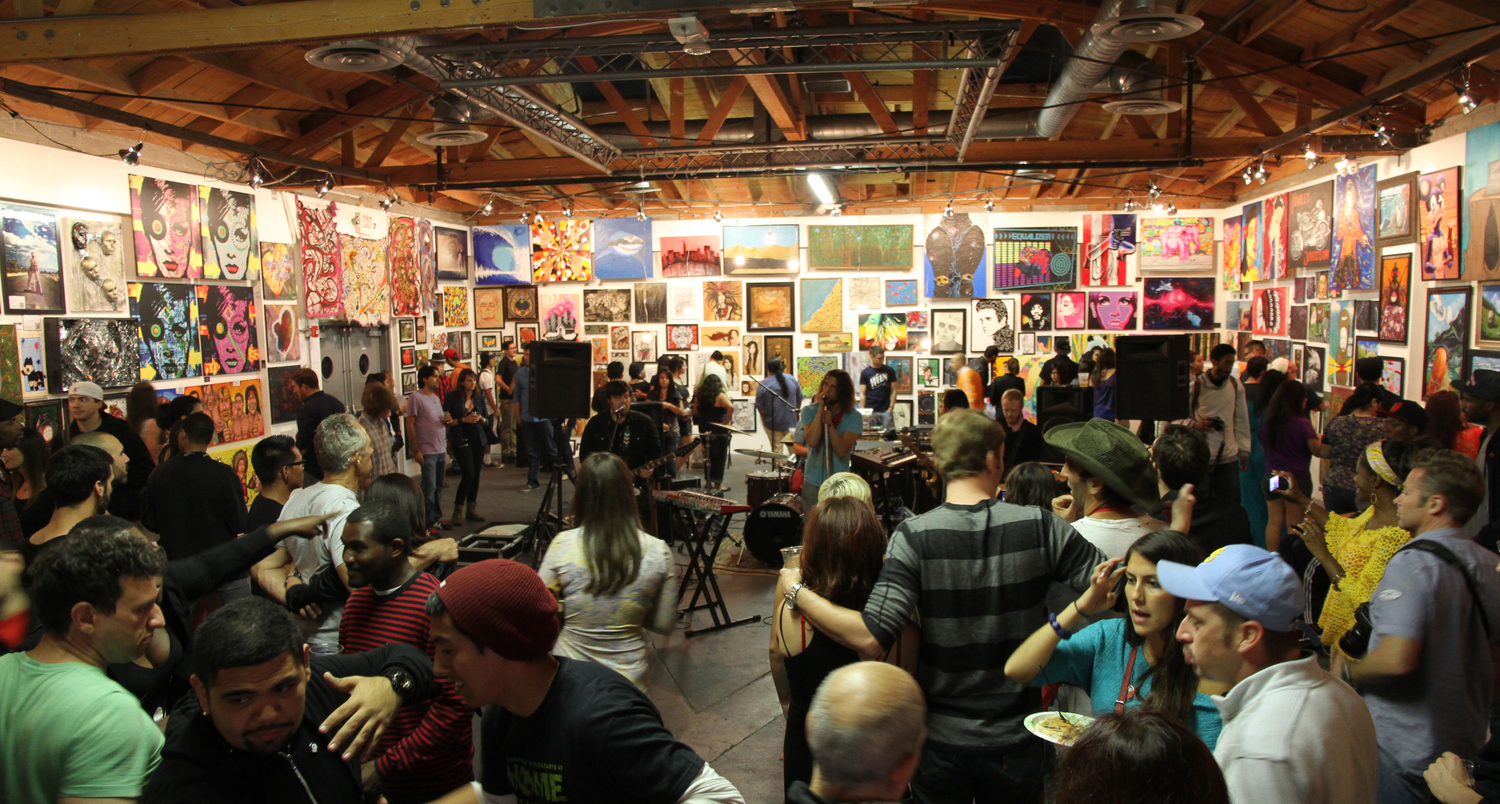
Our friends over at Incandescent Artists are back with what looks like a promising show. ‘MIX’ is opening this Friday 28th August at Underdog gallery. The preview is on the 27th August – see below for details.

_________

'MIX' at Underdog gallery | Art-Pie

ABOUT MIX show at UNDERDOG GALLERY

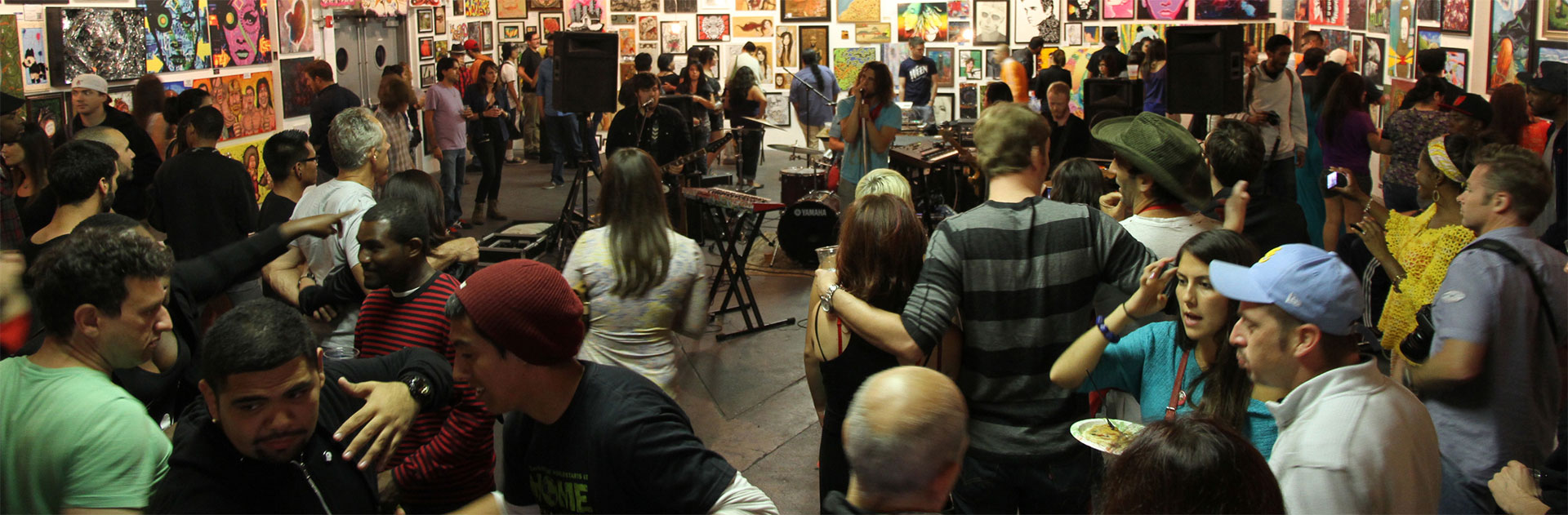
This event is a creative ‘MIX’ of heavyweight established talent and exciting emerging artists. Our events always engage with an enthusiastic, creative crowd of people, a good ‘MIX’, friends are made, ideas are born. This time we’re at the trendy The Underdog Gallery in London Bridge, just a short 5min walk from The Shard.

Artists on display:
Damien Hirst – Banksy – Sir Peter Blake – DRAN – Invader – Rich Simmons – Ben Eine – Jimmy Galvin – Juliette Clovis – Elmo Hood – Josie Jammet – Hannah Adamaszek – Grafeeney – Mark Petty – Simon Freeborough – Julie Bloom – DS – Jive

To launch this event we have teamed up with The Creative Bubble to supply some of London’s best Spoken Word artists and singers to give you that verbal creative slap in your face, something to wake you up.

Live Performers on Private View Night:
Rhythm of Men – Dan Hunt – Holly Flo Lightly – Rommell Wallace – Beadyman – The Game Cat – Asabi Hawah – Marika and hosted by the fabulous E.S.T.

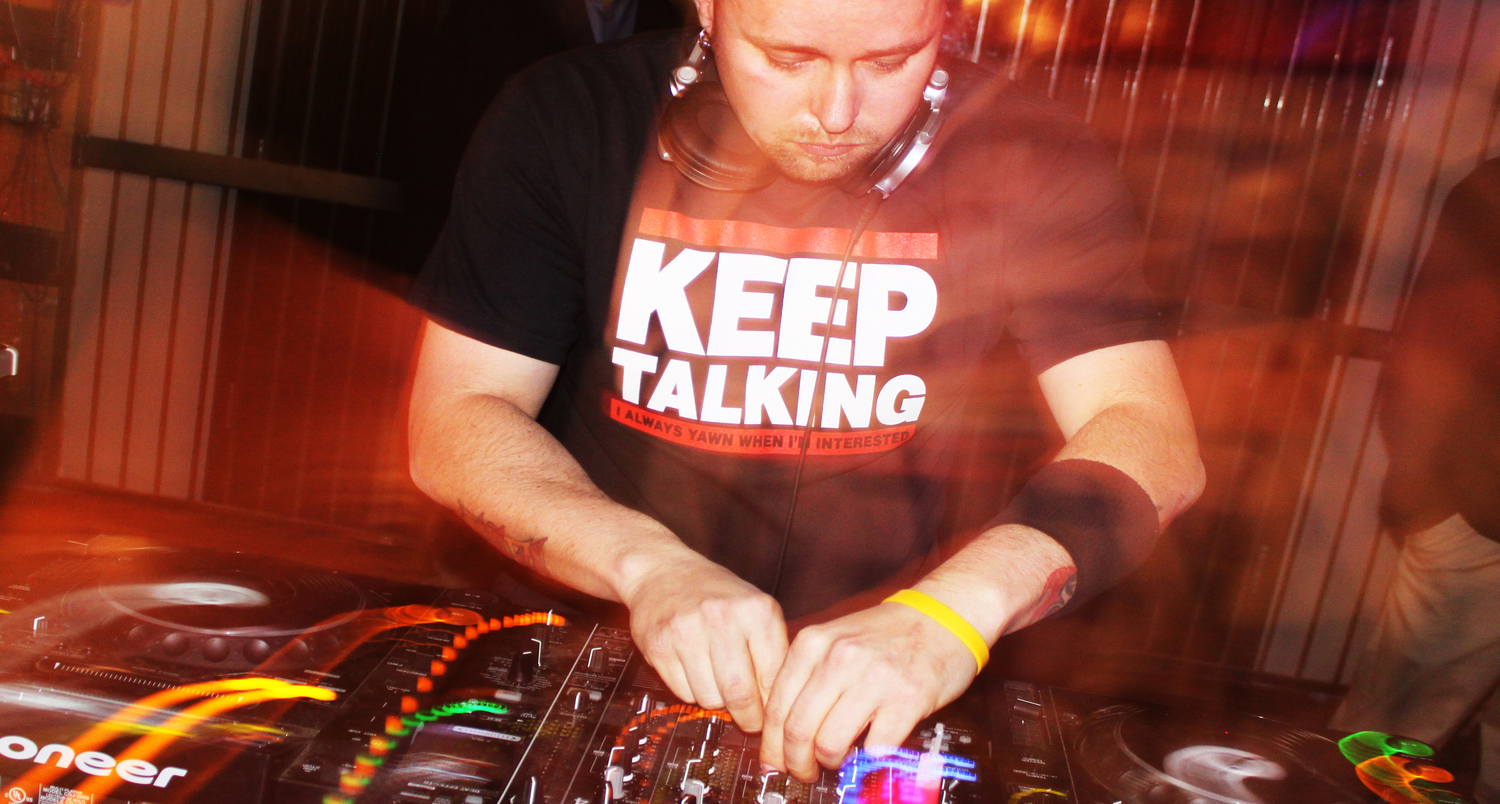
PLUS: DJ Deeper C playing “laid back, deep, funky house” from 9pm

Drinks reception from 6pm
Licensed Bar til 11pm
Private View starts at 6pm
Live Performers from 7:30pm (PV only)
DJ Deeper C playing from 9pm (PV only)

Private View is STRICTLY GUEST LIST ONLY

Join the Facebook event or email – info@incandescentartists.com

Confronted with Castration: Edward Kienholz’s "Five Car Stud"

Edward Kienholz’s Five Car Stud depicts a horrific scene of racial violence during the civil rights era. Actually, the term horrific does nothing to illustrate the nauseating effects of this life-size interactive work currently on display at the Los Angeles Contemporary Museum of Art.

The piece is set up in a darkened room with a sandy dirt floor.  Five cars form a circle, illuminating the focal point of the work with their headlights.  Life-sized, white male figures stand next to their cars menacingly wielding batons and other weapons.  One man holds a shotgun at his side.  Clown-like masks and sagging skin cover their faces. The eyes are hollow and insipid, yet smirk at inflicting pain upon another human.

The sense of entitlement emanates not only from their facial expressions, but also from the positions of the bodies and the looming presence of each of these men.  Garbed in jeans with the ruddy faces of moonshine alcoholics, they abuse and castrate another man, lassoing his foot like cattle, simply due to the color of his skin.

The victim lies in the center of the scene flanked by two men gripping his arms.  Instead of casting an entire figure, Kienholz installs a rectangular trough in place of his torso.  He filled the trough with water and six wooden alphabet blocks, two of the same letter, floating around, and leaving the viewer to piece together their meaning.

Kienholz spent three years working on this project between 1969 and 1972 during the height of civil rights era when activists had reached some victories for desegregation.  However, through his depiction viewers realize that prejudice and unfounded bias continue to infiltrate society.

Kienholz is best known for using found objects to create jarring sculptures that comment on social issues within the United States.  He created this work shortly before he relocated to Germany where it first appeared publicly.  A private collector acquired the work and for 40 years it remained in storage.  Los Angeles County Museum of Art is the first to display the work in the United States.

I do not exaggerate the gravity of this work. Guards stand at the doorway advising parents against allowing their children to witness it.

The pictures cannot convey the deeply unsettling feeling evoked by the piece. Perhaps it is the blatant intolerance, the flagrant violence, or simply the knowledge that things have not changed enough.  Whatever the reason, whatever the effects, Kienholz has created a penetrating work that shocks viewers with its content but awes with the undeniable skill and ingenuity it took to mastermind.

Digital media: a Skullphone project

Digital Media, the new solo exhibition by Skullphone, aims to bring the playfulness, obsession, irony and anxiety of the Los Angeles-based artists’ renowned street installations into the Subliminal Projects space.
In Digital Media, Skullphone examines the contradictions inherent in outdoor digital signage, demonstrating cause for both wonder and concern over the increasingly ubiquitous medium. The artist explores advertising, government and private enterprise signage, and the California landscape on which outdoor media proliferate, making permanent on panels what is removable and reprogrammable in outdoor space.

Although of the same spirit as his past work, Digital MediaIthink marks a distinct visual departure for the artist. His use of mirror-polished, black-painted aluminum panels is a cold and slick leap from past works on found wood, weathered metal, and wheat-pasted paper. Skullphone’s painting technique employs a deliberate dot grid system, and his painted color is expanded to a limited palette of red, green and blue. This shift corresponds to the artist’s recent inspirations and exploits with outdoor digital media. Through painted pointillism, the imagery dislocates as the artwork is approached.

N.B: The words above have been taken from the website www.subliminalprojects.com

Watch below the preview of the show which is currently running until the 2nd July 2010 at the SUBLIMINAL PROJECTS GALLERY, Los Angeles, USA.

ART-PIE

Anamorphic art

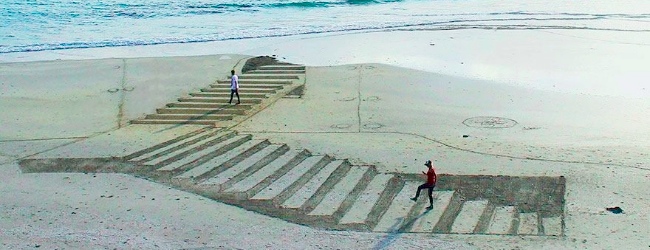
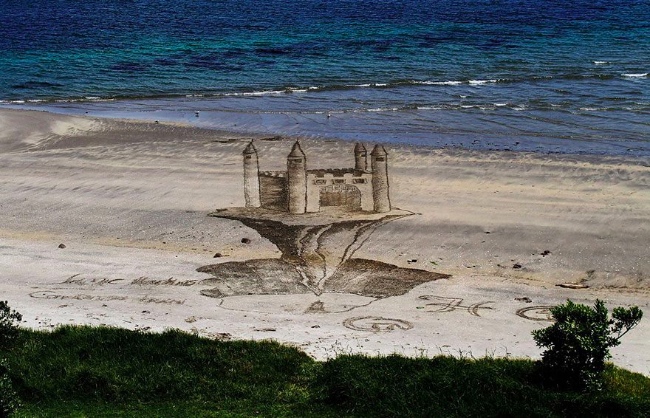
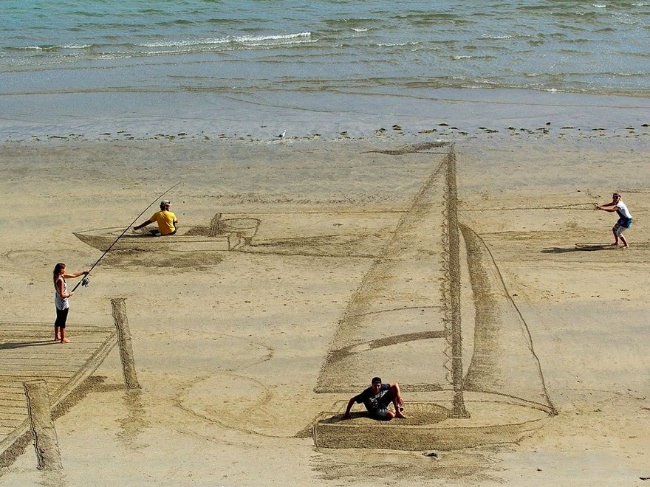
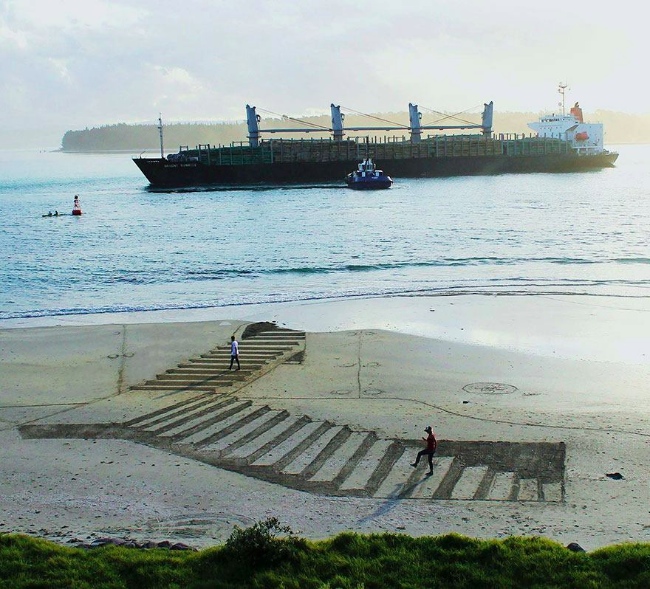
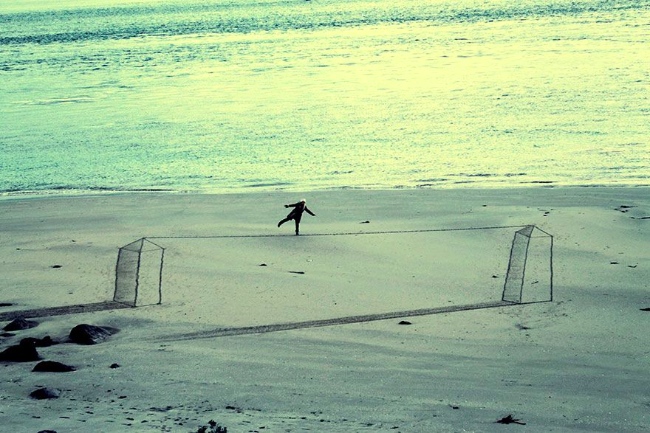
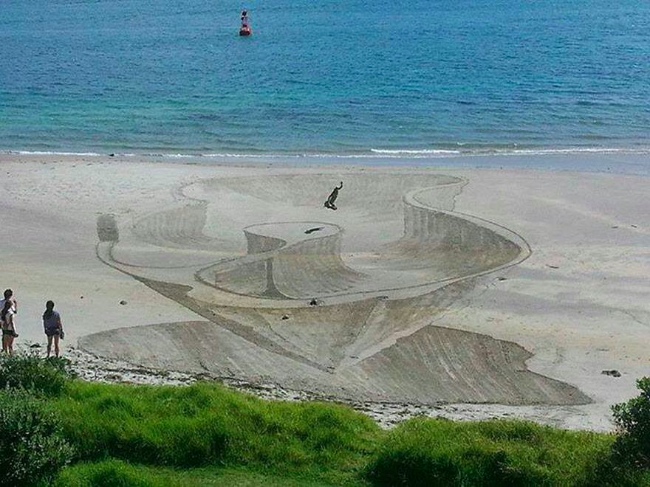
We have all seen these street artists colouring our pavements without could not put the finger on what the piece actually represent. It is because you are not looking at it at the right angle. We are talking here about anamorphic art which has recently flourished all over the world.

But some artists take this form of art to the next level making it methodical and magical. Located in the factory hosted by Sub Urb Art based in Torino (Italy), Medusa, figure from the Greek mythology, has taken the patience, attention to detail and talent of two artists, Ninja1 and Mach505.

The number of surfaces used is phenomenal and make the task daunting. It took 35 hours to paint the whole lot. It was achievable by projecting the outlines of an existing Medusa drawing on those surfaces and paint over them.

“Also, tracing a projection might seem simple, but at a distance of 20 meters the pixels are the size of your head, and hardly visible at all because of other lights, so you do need to check what you’re doing from the viewpoint every once in a while. “

Read the full interview on Modernet

From certain angles

Medusa

MedusaMedusa

The end result

Medusa

Tribute to David Bowie

Sadly, musical legend David Bowie has passed away.  For 5 decades Bowie defined himself as a singer, songwriter, record producer, painter, and actor.  A fashion and style icon with his unapologetic style and experimental flamboyance, Bowie is a true British legend.

As a tribute we have collected a few street artworks from around the globe and presented them below.

This illustration by Helen Green ombined her illustrations of Bowie’s different looks into an animated gif and have been widely shared on social medias

David Bowie's many looks | Art-Pie
__________

James Cochran, aka Jimmy C, did this mural back in 2013 in Bowie’s hometown in Brixton(South London). The wall has quickly become a memorial.

David Bowie wall in Brixton | Art-Pie

Street Artist Sonni created this animation merging Ziggy Stardust into one of his own unique characters.

Sonni Stardust from Sonni on Vimeo.

DAVID BOWIE FOREVER

That’s the message painted in huge letters along Queen Street West by street artist Victor Fraser, one of many Torontonians mourning the British musical icon’s death on Monday.

A Toronto street artists painted this tribute to the late David Bowie on Queen Street West, near Spadina Avenue.

David Bowie by David Flore Art in Wynwood Miami, United States

David Bowie | Art-Pie

David Bowie by Eduardo Kobra, Barcelona

David Bowie | Art-Pie

Brett Amory at Lazarides Rathbone London

Lazarides is pleased to present Internal Dialogue, a new series of works by American contemporary artist and BP Portrait Award 2016 exhibiting artist Brett Amory.

Corresponding with his critically acclaimed ‘Waiting’ series, the works in Internal Dialogue are concerned with everyday life, places, and people, yet this new body of work explores the time in which we live and how we make sense of the information that surrounds us.

Internal Dialogue explores the disjointed snapshots that make up our everyday life, and how our unconscious mind assembles these abstract, nonlinear events to attempt to fuse together a logical, linear explanation of our surroundings.

Brett Amory Internal Dialogue Lazarides Rathbone | Art-Pie
Click to enlarge

This new series of works is also concerned with the human habit of viewing the world through screens. People in today’s society are attached to their devices; we view the world through our phones, our TVs, our computers, and complete the gaps of the surrounding world through our unconscious mind, as if what we see now is framed by what the world looks like on screen.

With each painting in Internal Dialogue, Amory allows the viewer to tap his or her unconscious mind to create their own meaning of what they are viewing. The viewer will be able to rely on their own memories, dreams, thoughts and universal archetypal symbols to create their own interpretation of the painting.

In the same week as his exhibition at Lazarides Rathbone, Brett Amory’s work for the prestigious BP Portrait Award will be unveiled at The National Portrait Gallery. His entry, selected out of 2,557 competing artists, will be one of 53 works shown at the iconic art institution from 23 June – 4 September 2016. Amory has also been shortlisted for the BP Travel Grant.

Ludo, a street artist by nature

LUDO is a French Street Artist who is enjoying enjoyed a very successful first solo show in Zurich at the Starkat Gallery.

LUDO’s style is very particular and his pieces always depict ominous and imaginary plants which always seem to want to grab you as you walk past them. His street art series is actually called Nature’s Revenge which he has been focusing on for the past two years or so. A way perhaps to warn you all about the irreversible force of Dame Nature.

The show is on until the 7/05/2011

LUDO took the opportunity while in Zurich to splash a few of his mighty plants. Photo © Roman @ Starkat Gallery

Internal Objects and the Objectified Self

“Lacan revises and enriches the myth of Narcissus, so passionately in love with his image that he plunges into the water and is drowned.”[1]

Maurice Merleau-Ponty

Bathroom, (c)2011 Hayley Harrison

The mirror holds peril. Revealing truths unwanted or enticing the loss of the self to an objectified world. The creation of our self-identity begins with how we respond to our image in the mirror in infancy. We either recognize the ‘other’ and begin the process of socialization or we retreat to find the maternal object and become locked in the death wish.[2] Psychoanalytical theory is of course more complex and involved than that simple description. But the significance in the simplified description is the relationship of self to object. We begin to understand we are an object which occupies space, distinct from others or we seek the comfort and reassurance of objects to satisfy our longing, beginning to see everything as an object available to satisfy us.

In Kleinian theory, the ‘internal object’ is “a mental and emotional image of an external object that has been taken inside the self. The character of the internal object is coloured by aspects of the self that have been projected into it. A complex interaction continues throughout life between the world of internalised figures and objects and in the real world…the state of the internal object is considered to be of prime importance to the development and mental health of the individual.”[3]

Her, (c)2011 Hayley Harrison

We are bound to objects as a means to understand the world, ourselves and the complex relationships we have throughout life. Any kind of exploration of self and identity must perforce include a discussion of objects. This ‘Me’ of Mine has delved into several aspects of this ‘object relationship’, through the work of Kate Murdoch and memory association with personal identity development, Annabel Dover and the complex personal codes and emotions imposed on objects, Cathy Lomax and objects which represent self-image and emotional states and now with the work of Hayley Harrison and her use of objects as an expression of an inner self:

“I think we have to be in the ‘right’ place both internally and externally and that’s when a conversation occurs. For me self-recognition through the external is experienced in its ‘purest’ form when we are here, now, rather than through our pasts or futures.  We can be taken off guard by something, something perhaps poetic that throws us into the present. Whatever that something is, we just have to come into relationship with it.  When we experience one of these rare conversations between the internal and external I believe we come back to ourselves, much like Jacques Lacan’s famous discourse with the sardine can. Ultimately within these moments we are looking into a mirror.”

Read more of my interview with Hayley, Speak Me Many Times .

Read past interviews with Kate Murdoch, Annabel Dover and Cathy Lomax.


[1] Roundinesco, Elisabeth, “The Mirror Stage: an obliterated archive” from The Cambridge Companion to Lacan, edited by Jean-Michel Rabaté, 2003, Cambridge University Press, accessed online  at: http://artsite.arts.ucsb.edu/~arts1a/outlines/The_Cambridge_Companion_to_Lacan.pdf , 25 June 2013

[2] Ibid.

[3] Melanie Klein Trust, http://www.melanie-klein-trust.org.uk/internal-objects ,accessed 25 June 2013

Chen Wenling’s farting bull

When we first noticed Chen Wenling’s “What You see Might Not Be Realsculpture, we immediately wanted to find out more about the artist and his work. This is not the name which jumped at us but the rather amusing look of the sculpture – yes it a farting bull!

Here is what Zhu Qi says about Chen Wenglin’s sculptures

Chen Wenling’s sculptures represent the spirit of collective imagery that defines China after her entrance into consumerist society. His work uses a mythological form that encompasses the spiritual insemination that overtook a generation with materialism in the 1990s, as well as the self-awareness and post awareness era everyday spirit of Chinese after the 1990s.

"What You see Might Not Be Real” (or the Farting Bull)
“What You see Might Not Be Real” (or the Farting Bull)

Zhu Qi adds –

Two main themes are prevalent in Chen Wenling’s sculptures, the first being an expression of the extreme human condition, the latter being an expression of the spiritual imagery of a consumer society.

The “farting bull”, we will refer to the work above using this – so much more fun, is a reflexion ab about the infamous global financial crisis.

The man getting crushed by the bull is Bernard (Bernie) Madoff who is an American fraudster and a former stockbroker, investment advisor, and financier. He is the former non-executive chairman of the NASDAQ stock market, and the admitted operator of a Ponzi scheme that is considered the largest financial fraud in U.S. history.

Chen Wenglin’s “farting bull” has also been used in several other sculpture works. We included below a few examples of these as well as more about the “What You see Might Not Be Real” sculpture – the piece first described above

"What You see Might Not Be Real” (or the Farting Bull) | Art-Pie"What You see Might Not Be Real” (or the Farting Bull) | Art-PieChen Wengling | Art-PieChen Wengling | Art-PieChen Wengling | Art-PieChen Wengling | Art-Pie Chen Wengling | Art-Pie

STREET ART ENCOUNTERS