Spacing techniques by the guys at www.mileswickham.comwww.mileswickham.com
Bauhaus: Art as Life
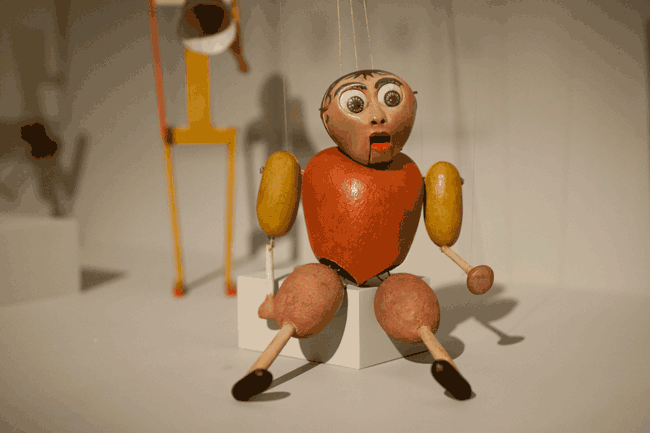
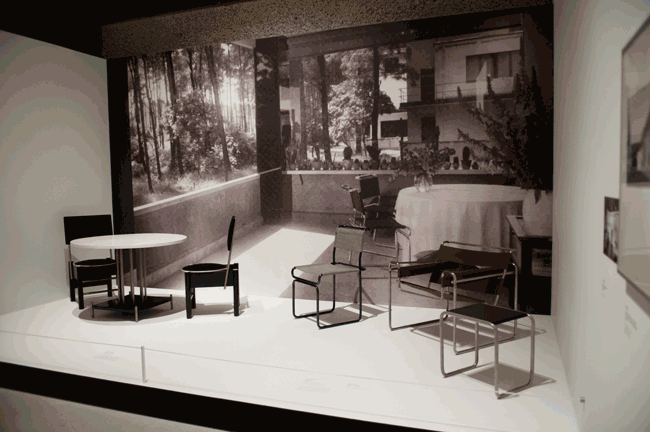
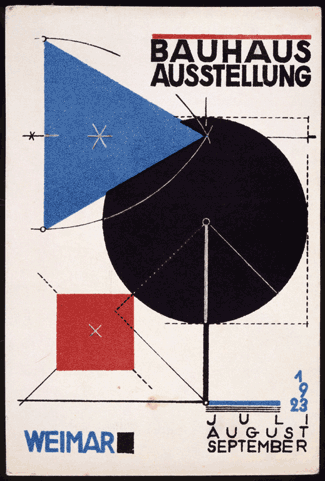
 Last week The Barbican Centre opened its doors to a major exhibition about the highly influential Bauhaus movement. The show explores the German art and design school that ran between 1919 and 1933 and made a profound impact on our contemporary world by uniting art, craft, design and technology. Bauhaus: Art as Life brings together over 400 works and highlights the scope of the Bauhaus vision. Throughout the exhibition are examples of architecture, paintings, film, sculpture, furniture, costume design, photography, children’s toys, typography and textiles from names including Paul Klee, Ludwig Mies van der Rohe, Josef Albers and Oskar Schlemmer. Nothing it seems was too ambitious or insignificant for the Bauhaus masters to tackle, from redesigning teapots and ashtrays, to creating vast housing estates and design manifestos that aimed to change the world they lived within.
Bauhaus: Art as Life is displayed in a loosely chronological order, starting with Walter Gropius founding the school in 1919 by merging of the Arts and Crafts school and the Academy of Fine Art, a radical move that incorporated the disciplines of art, craft and technology. Having lived through the horror of the First World War, this collective of artists and designers were keen to use their creativity to herald a brighter future and you get a sense of the optimistic, utopian force behind the work. However the Bauhaus was not just about high design for the greater good, the students and teachers were also having a good time behind the scenes. The Bauhaus group put on events that could have rivaled Warhol’s infamous art happenings. Gropius actively encouraged socialising between the masters and students and this took the form of spectacular themed parties with a Bauhaus band, elaborate costumes and performances. Included in the exhibition are photographs documenting this playful side of the movement and party invites.
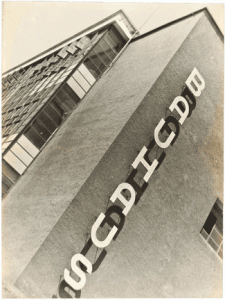
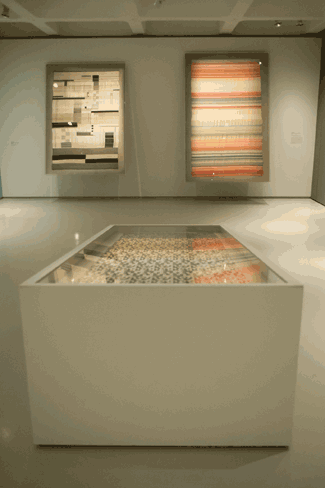
By the mid 1920’s we see architecture, advertising and photography added to the curriculum and the school started to become commercially successful by partnering up with manufacturers. There was a focus on branding and a unified approach to typography and layout, as we can see in the ‘instruments of communication’ section. Pioneered by Laszlo Moholy-Nagy, the Bauhaus had started to produce its own promotional material to communicate with a larger audience and this bold style has since become highly influential to the world of graphics. Elsewhere in the exhibition we also see Gunta Stolzl become the first female master at the Bauhaus, raising the profile of the crafts with her beautiful woven wall hangings. Josef and Anni Albers take a graphic slant on textiles, with simple geometric shaped patterns created from cotton and silk. As many of the Bauhaus group were on the political left, they came under pressure from the Nazi government and following pressure from the Gestapo, decided to close their doors in 1933. However as the students and masters emigrated, the principles behind the Bauhaus movement spread internationally and became the driving force behind Modernism as we know it.

The Barbican is embracing the experimental spirit of the Bauhaus by hosting a diverse series of events and workshops relating to the exhibition. They have done a good job in making the links between the Bauhaus and its relevance on our everyday lives. The schedule includes guided walking tours around the Finsbury area looking at the Bauhaus influence on local housing estates and a tour of the City of London focussing on the relationship between the Bauhaus and commercial architecture. The Barbican will also host an experimental two-week ‘Art School Lab’ where a chosen group of artists will collaborate to create work that contributes towards social change. To be considered you must apply via the Barbican website.
If you are looking to take home a slice of Modernist design, head to the Barbican Gallery Shop where there is a great selection of iconic designs, in keeping with the Bauhaus philosophy that design should engage with production. These including geometric plates hand woven rugs, DIY Paul Klee puppet kits and an exclusive range of Bauhaus inspired jewellery from the BA students at Central Saint Martins.
Bauhaus: Art as Life . Barbican Art Gallery, London, 3 May – 12 May 2012. http://www.barbican.org.uk/
Review by Zoey Goto, freelance art and design writer and PR. www.zazzipr.com
More photos of the exhibition below
This is England 2010: quirkiness on Bayswater road

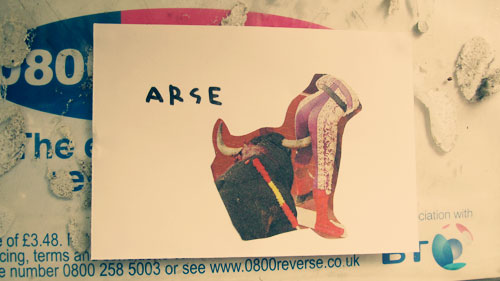
Creativity is something to promote whenever you can, quirkiness is always something that will please the eye and mind of someone looking for something different. Takeshi Mazdakes is certainly one of these artists pushing the boundaries and being after something unique. He might just be achieving this with his exhibition ‘This is England 2010’. Continue reading This is England 2010: quirkiness on Bayswater road
Amar Stewart X Lava Gallery
Amar Stewart steps up to the Lava gallery for his first solo show of 2011.
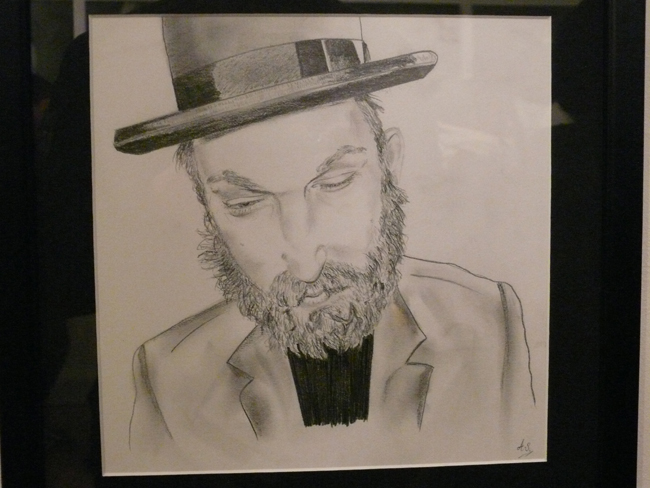
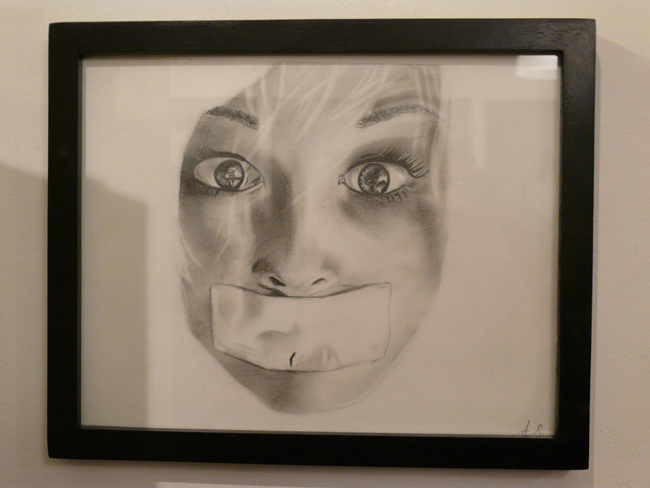
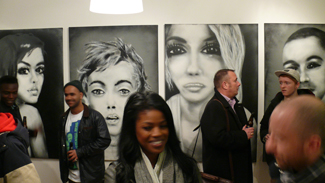
We first viewed Amar’s work in the East Gallery in early 2010, the show had dark undertones, accented with sections of colour, A mixture of spray paint and acrylic. A different approach has been taken this time, the entire gallery almost devoid of colour, a series of large canvases featuring Black and white photorealistic portraits.
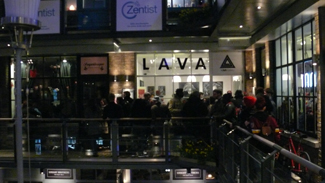
This was a understated approach for show early in the year and to be honest, a welcome one. It is easy to feel bombarded when you attend opening nights, peering through crowds to look at large canvases. Lava gallery is only a small space located on the first floor of Kingly Court, just off Carnaby Street.
Amar and the Lava crew did a great job laying out the space, taking a simplistic approach with the arrangement going with white walls and monochrome artworks. It had a overall relaxed vibe, even with droves of friends and fans, it was easy to move around and check out all the work.
Amar’s progression in portraiture is developing a rapid rate and we look forward to seeing what he has to offer in the future.
Check out a the rest of the pics here: Amar Stewart at Lava gallery by Chasinghosts on Flickr
Joan Miro at Andipa gallery
Andipa Gallery is delighted to announce a selling exhibition of unique works and rare graphics by Joan Miro.

Taking place from 7 April to 7 May 2011 the show coincides with the first major London retrospective of Miro’s work for almost 50 years, The Ladder of Escape at the Tate Modern, and will offer a rare opportunity to acquire some of the finest original works by this master of 20th Century art.
The exhibition will show rare works on paper, including some of Miro’s 1965 Le Courtisan Grotesque series. Works described as displaying “the most genuine Miro, the one of the astral signs (and) symbolic objects… who uses his own mature language, without hesitations.” Daniel Giralt-Miracle (art critic and historian).
Miro’s most iconic and admired engravings, lithography and etchings will also be on display. Pieces will include the original lithograph Montroig 2, named after the Catalan village to which Miro felt a deep connection, returning to throughout his life, and which inspired some of his most seminal works. These highly sought after brightly coloured pieces make up an integral part of the artist’s oeuvre and demonstrate Miro’s expert use of carborundum to produce richly textural pieces that reflect the original qualities of painting.
Miro was among the most prominent of modern artists, developing a unique Surrealist language that expressed freedom and energy through its fantastical imagery, vibrant use of colour and free use of paint, often splattered across his canvases creating an explosive effect. The more political side to Miro’s work reflects the turbulent times of the Spanish Civil War and repression under the Franco regime. His works express and react to conflict, protest and political upheaval. In our current instable and uncertain times, perhaps this more restless and anxious aspect of Miro’s practice is at its most resonant.
Words from Andipa gallery
Thomas Allen at Foley gallery
Foley Gallery is very pleased to present Thomas Allen’s solo exhibition Paint by Numbers.
Inspired by a View-Master and “pop-up” books as a child, Allen became interested in recreating these three-dimensional experiences by using old books and pulp fiction paperbacks as still life subjects.
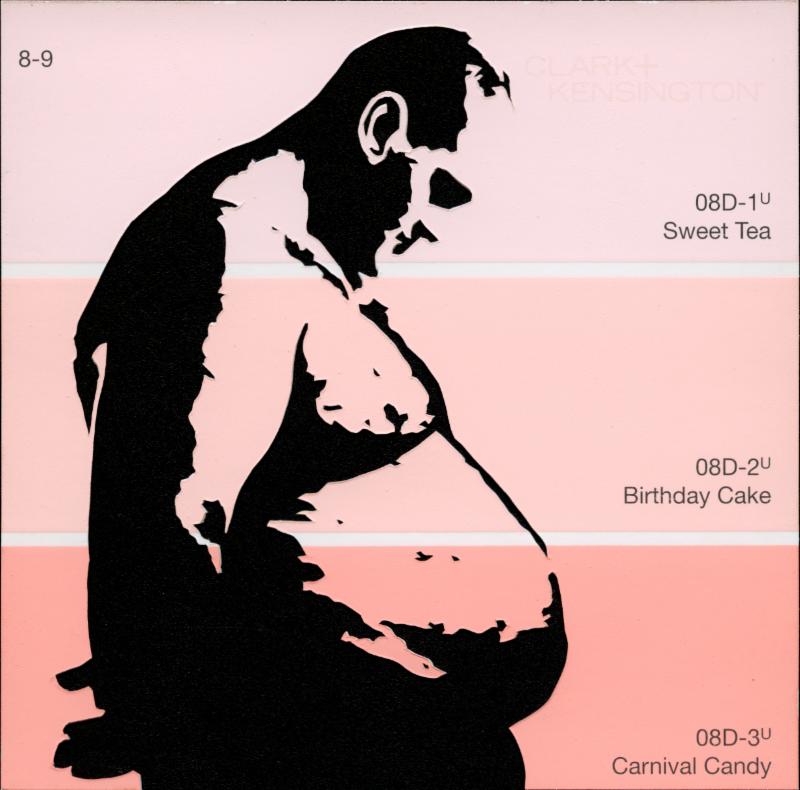
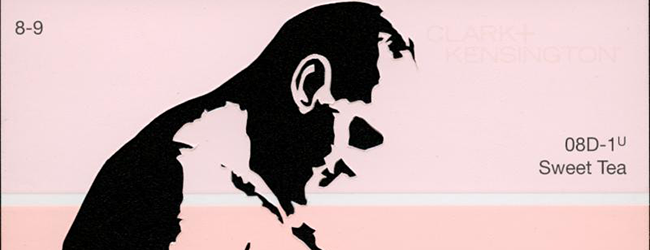
In producing his new series of photographs, Paint by Numbers, Allen has gone to the hardware store and has selected standard paint swatches to use as his primary generative medium. As announced at Allen’s 2009 solo show Epilogue at Foley, Allen has parted ways with his signature use of cutting from book illustrations.
Utilizing wit to illustrate titles such as Birthday Cake, Carnival Candy, and Sweet Tea, Allen playfully employs the idea of color with historical and cultural associations. Titles offered in the paint swatches are implicative: his deftly cut figures reference popular subjects, each of which are enlisted by the name of the paint sample they are carved into.
Allen selects figures such as Donald Trump or Gene Wilder, subjects able to perform the lexicon of narrative titles like Blowfish and Golden Ticket. In the process of assemblage, Allen is able to create narratives that reveal the constructed nature of images and incorporative aspects of collage, photography, and montage.
What – “Paint numbers” by Thomas Allen
Where – Foley gallery 59 Orchard Street, New York, NY 10002
When – Until 24/01/15
Markus Kiebel at Arch402 – Inside Complexity
The first London solo exhibition by German artist Markus Keibel sees a continuation of his interactive site-specific installations, as featured in PORTIZMIR 2 (2010), the triennial of contemporary art held in Izmir, Turkey. Exploring semantic roots and the poetry of materials, Keibel’s work brings to surface enigmatic, abstract forms.
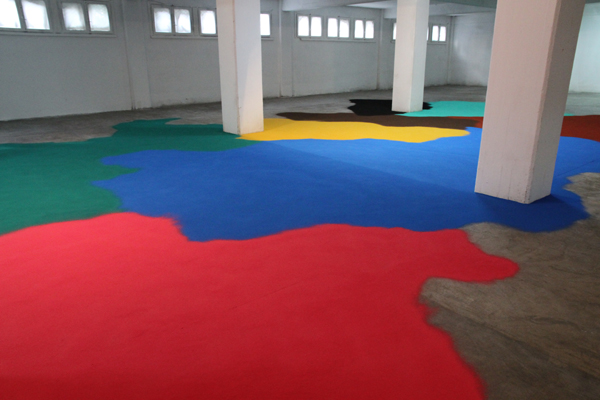
Since 2005, the Berlin-based artist has not only developed conceptual site-specific installations, but also an abstract idiom using different forms of human traces. The perception of viewers is the issue addressed by Keibel, whose current work investigates how colour interacts with viewers. His sculptures, paintings and works on paper draw their elements from simple materials, often using pigmented glass and acrylic colours to modify their mode of operation.
Created on-site especially for the Arch 402 Gallery, Inside Complexity will reveal a large-scale floor sculpture, designed for viewers to walk over and leave traces as they move. Characterized as an ever-changing form, the four concentrated circles—created using different coloured pigment powders—shift and disperse throughout the exhibition venue, causing the colours to lose their intensity. As part of the exhibition, the transformation of Keibel’s ever-changing floor sculpture will be captured both in a time-lapsed video and on canvas.
In order to create these final works, the gallery space will be closed the day following the Private View (11th Feb) when Keibel will use the transformed pigment areas to create big canvases (170 x 280 cm), revealing the transcribed traces of human movement.
Keibel’s interactive installations are less focused on how interaction with the work evokes feelings in the public, but rather, with how these feelings act on given materials, as the pigments ultimately seem to reveal a sentimental beauty. Rendering the pigments in his own specific mode of representation, Keibel not only prefigures subjectivity in the abstract but also his own subjectivity, from a viewpoint that questions the prescriptive experience.
Words from Necmi Sonmez
Where – ARCH 402 GALLERY | Cremer Street, E2 8HD | Tue-Fri 11-6
When – 12 February – 18 March 2011 / Private View 10 February 6-9pm
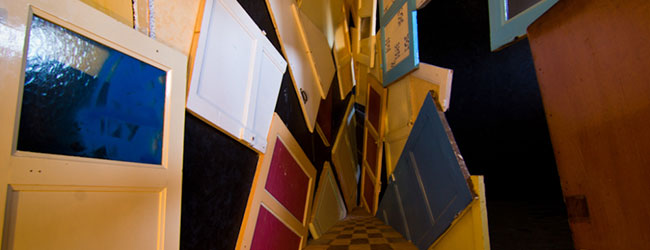
Tour 13, the biggest street art display ever
There is something beautiful in urban decay when you can imagine how it used to be, how it has been and there was but it might be even more beautiful when something on the verge to vanish forever, is given a last moment of glory.
This is what exactly happened to a massive ten-story building in a low-income housing district of eastern Paris. The site has become one of the largest venues displaying street art ever.
“Tour 13”, as it is called took seven months to complete and iover 100 artists from around the globe had a go at it. Unfortunately the site is now closed and the tower is set to be demolished in the next few days so we wanted to give a a last homage to this ephemeral yet awesome project.
If like us you did not manage to go to Paris to check this out, there is still the Tour13 website to visit as well as the teaser video below as well as the few pics we have included after the fold.
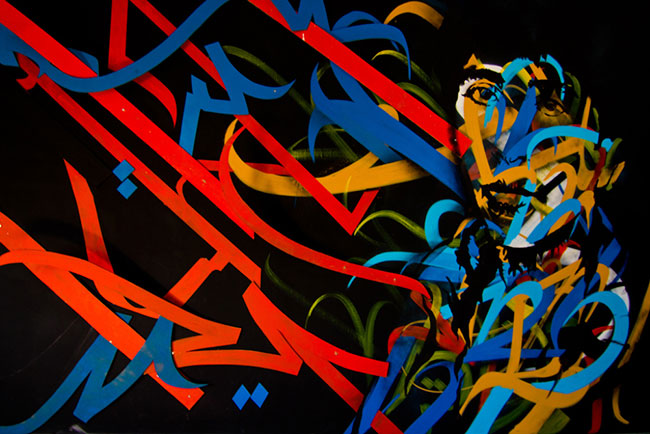
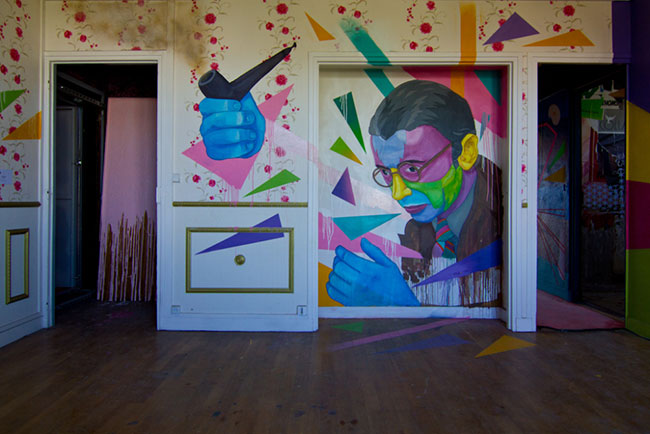
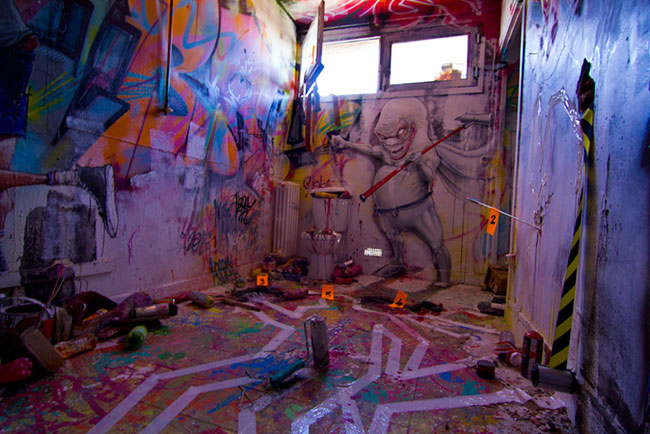
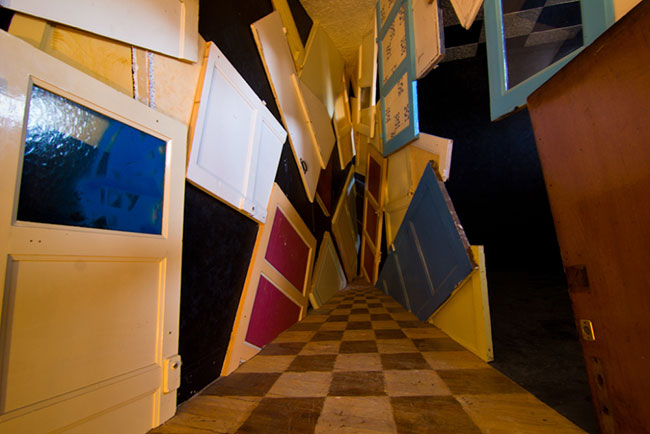
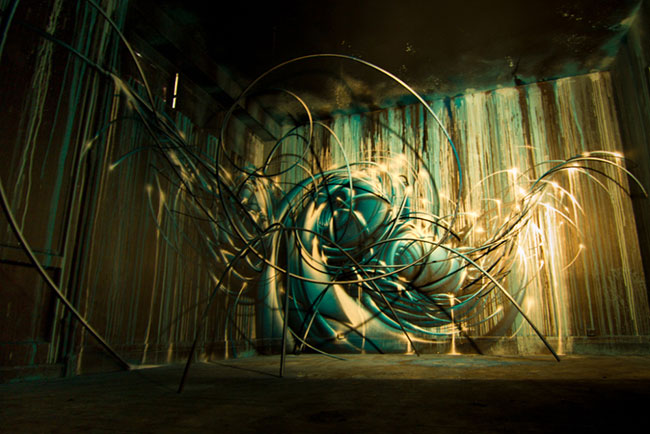
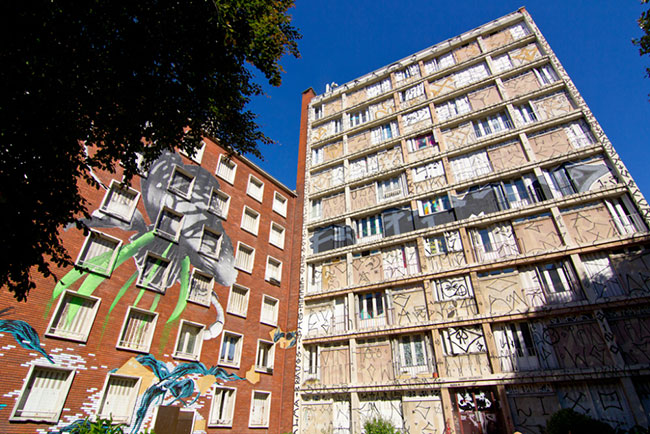
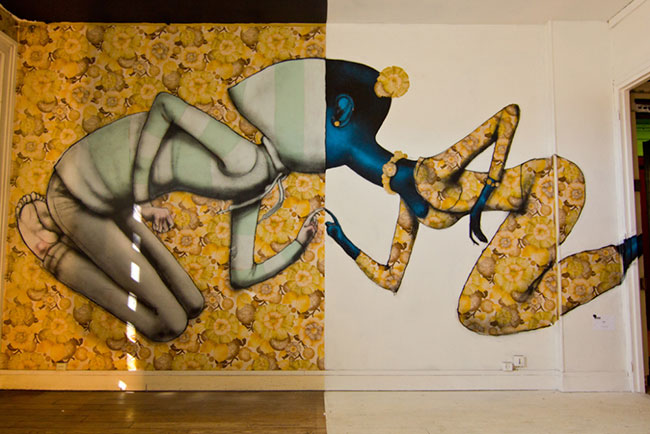
All images from Le Mag De Poche
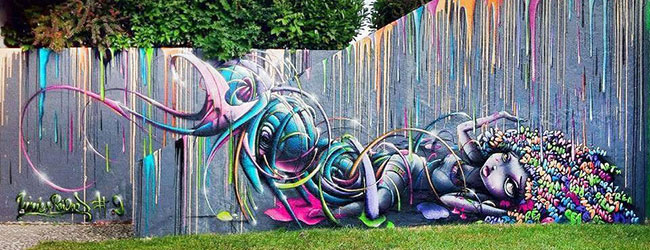
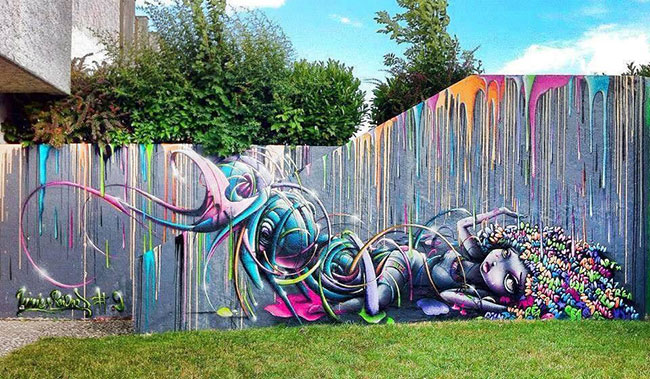
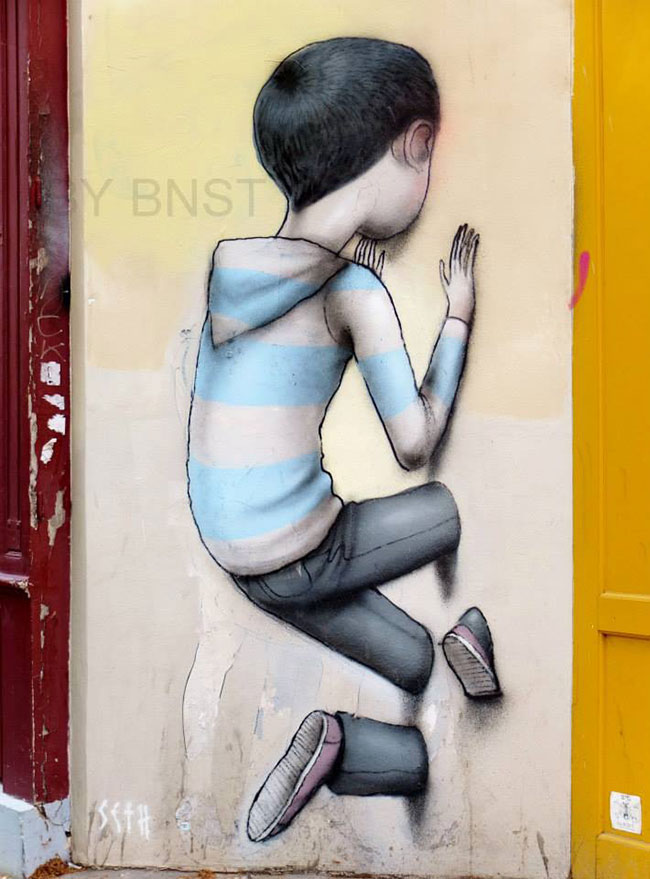
Bordalo II, Vinnie x ReaOne and Seth street art
Part of our 3 street art works series you should see today. Bordalo II, Vinnie x ReaOne and Seth.
Bordalo II
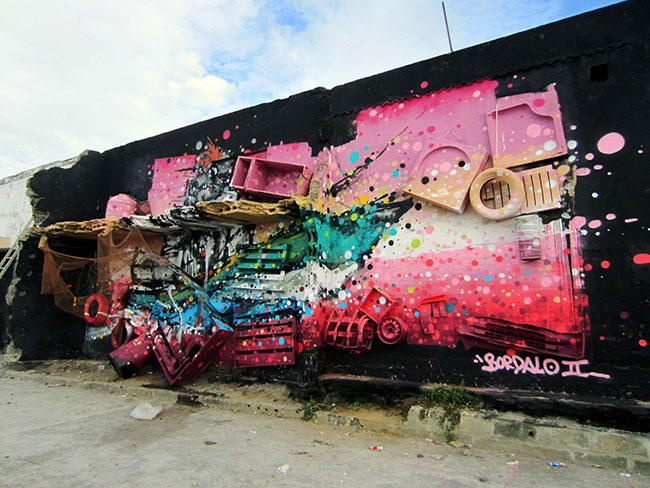
Vinnie x ReaOne
Seth – located in Paris
Teufelsberg (Devil’s Mountain) – street art in a forest
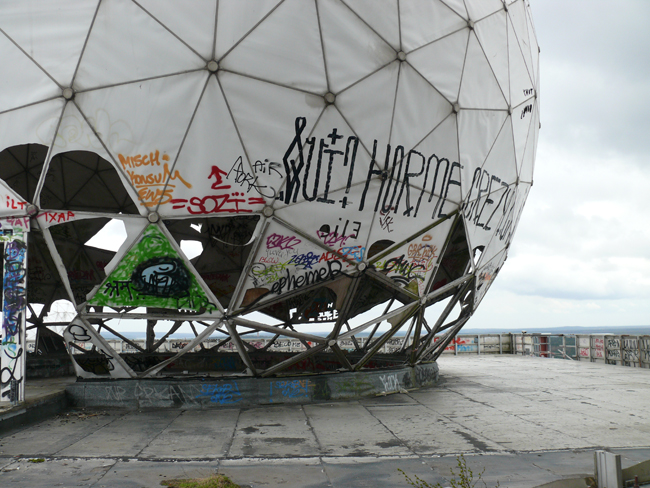
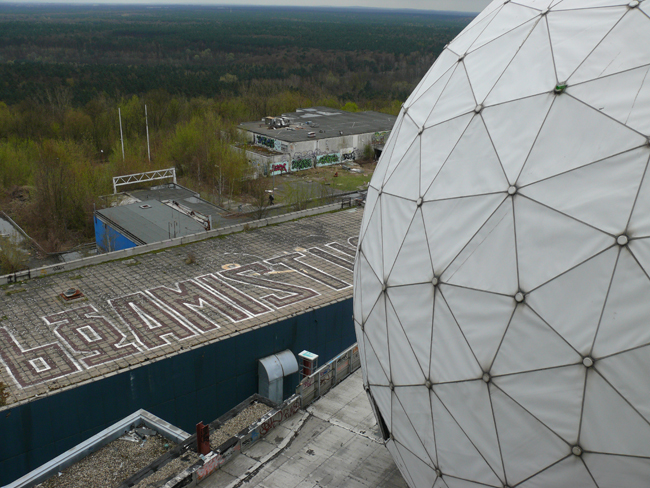
In the centre of Grunwald Forest in the former West Berlin is an artificial mountain, Teufelsberg, made by man using the rubble from approximately 400,000 buildings that were destroyed in WWII. The structure that sits on top is ‘The Listening Station’ built by the US National Security Agency to spy on the Soviet’s. .
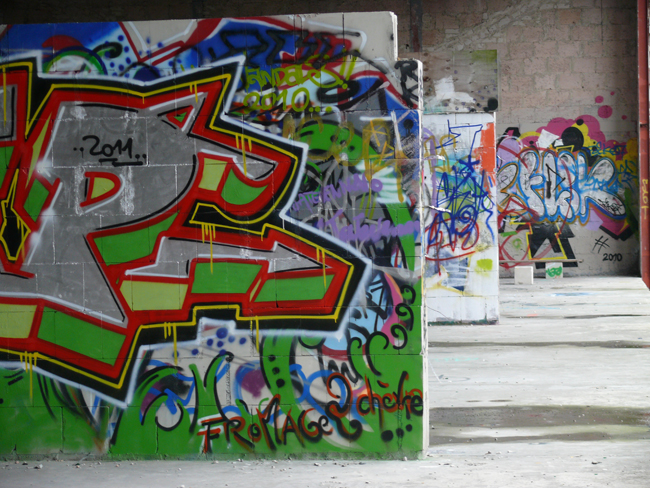
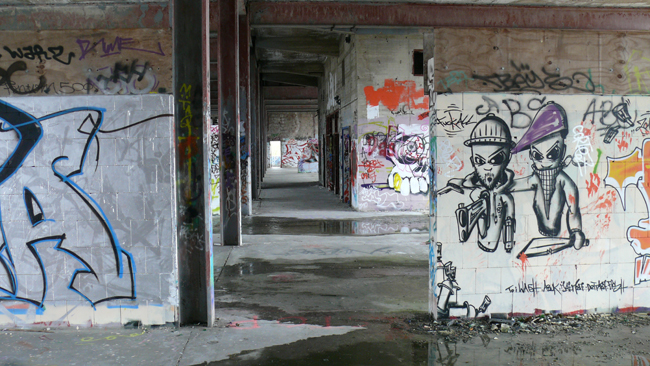
The listening station was decommissioned at the end of the cold war. There were many plans for it’s use in the future, all of which fell through. With that, over the years it has attracted the likes of vandals, youths, graffers and urban explorers. Amongst the broken glass from all the smashed windows and beer bottles, the collapsing stairwells, the gaping holes from the dilapidated flooring and the pitch black hallways, a diverse collection of pieces, dubs, tags, paste ups and stencils can be found.
See the full set of photo’s here: http://www.flickr.com/photos/chasingghosts/sets/72157626450243676/