This is simply amazing.
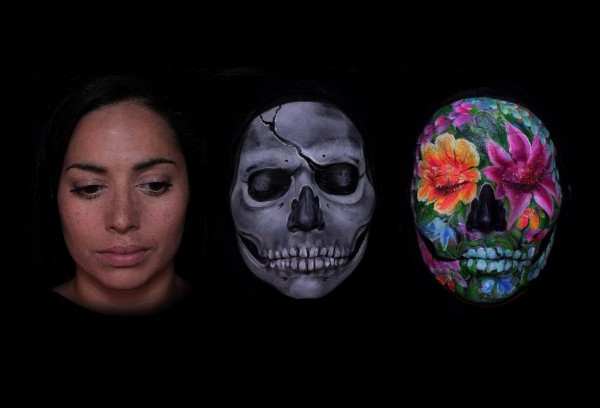
London-based artist Emma Allen uses face paint to show herself aging, dying, and being reborn. It took her five days of face painting to make all the frames for the animation.
The stop motion animation is called “Ruby”

This is simply amazing.
London-based artist Emma Allen uses face paint to show herself aging, dying, and being reborn. It took her five days of face painting to make all the frames for the animation.
The stop motion animation is called “Ruby”
I am so glad that the show got extended since although it has been on all summer, I did not manage to go down before last week end. I meant to go for ages but busy was my schedule or was it really? I don’t know but now I went and came across artists I need to tell you about.
I have to point out before I get going that the dude behind the mac was well a dude, but not engaging for a bit when I tried to talk to him. Shame but lucky enough that the line up of art is so worth it that I got distracted quickly enough to actually liked the dude, let me mention though that photographs aren’t allowed – meh, but this show has got some substance.
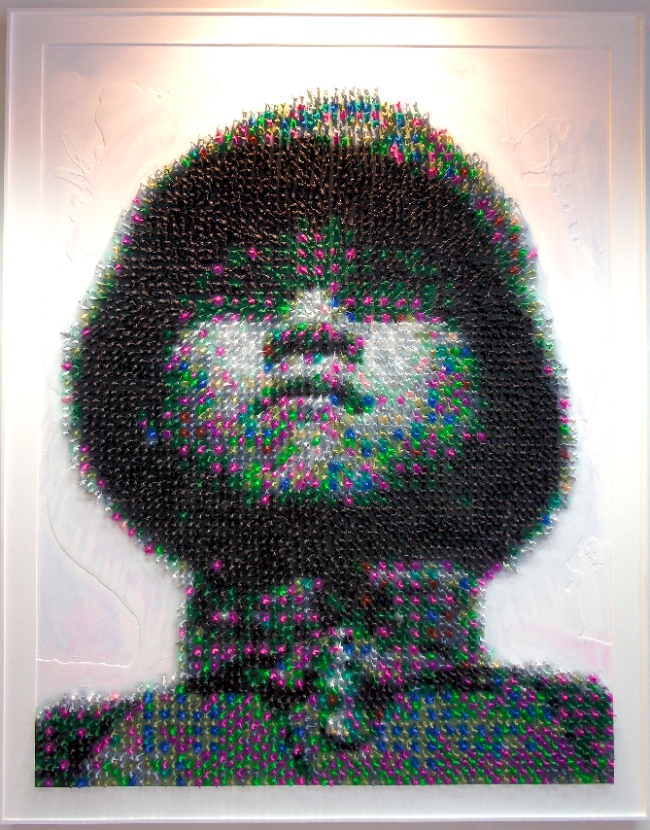
My first distraction took me to look at Joe Black’s work from the UK and in particular his “made in China” large piece made of little soldiers toys put together and painted so when you look from far enough, you do not even realise what is made of. Great “trompe l’oeil” technique that is. Choose the right coloured soldier and when needed, apply a very generous stroke of black or white and the whole thing is visually pleasant to the eye.
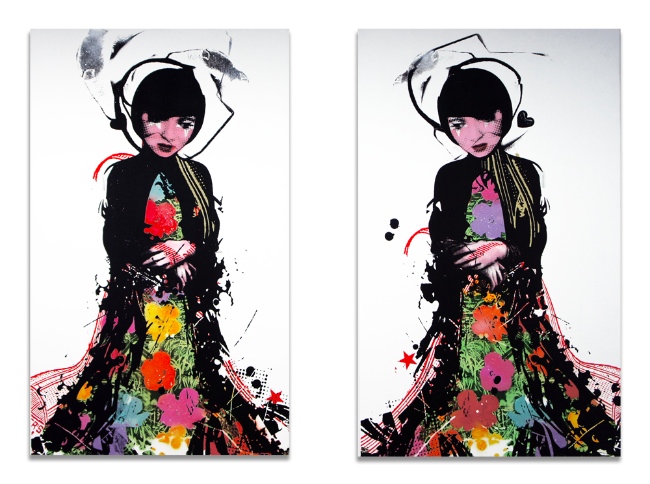
I will then mention here “Miss Bugs” series of paintings which are most definitely what I enjoyed the most but which only made to the wall of the gallery that most people would miss. Great mixed medias (mainly acrylics) pieces such as “Silence” – See below
Two more artists I need to mention are Finn Stone and Ryan Hadley. Respectively, a great sculptor artist with a few great pieces scattered around the venue. Who wouldn’t fall in love with his “Voodo child”? Then you get Ryan Hadley and his amazing stencil like piece made from a rusty plate – I wish I could show you a picture of it but unlike the dude said “All works are on the website”, I could not find that piece, not even on Ryan Hadley’s website. As a result, I’ll mention the work from Bomk entitled “La limite”, a complete surreal encounter.
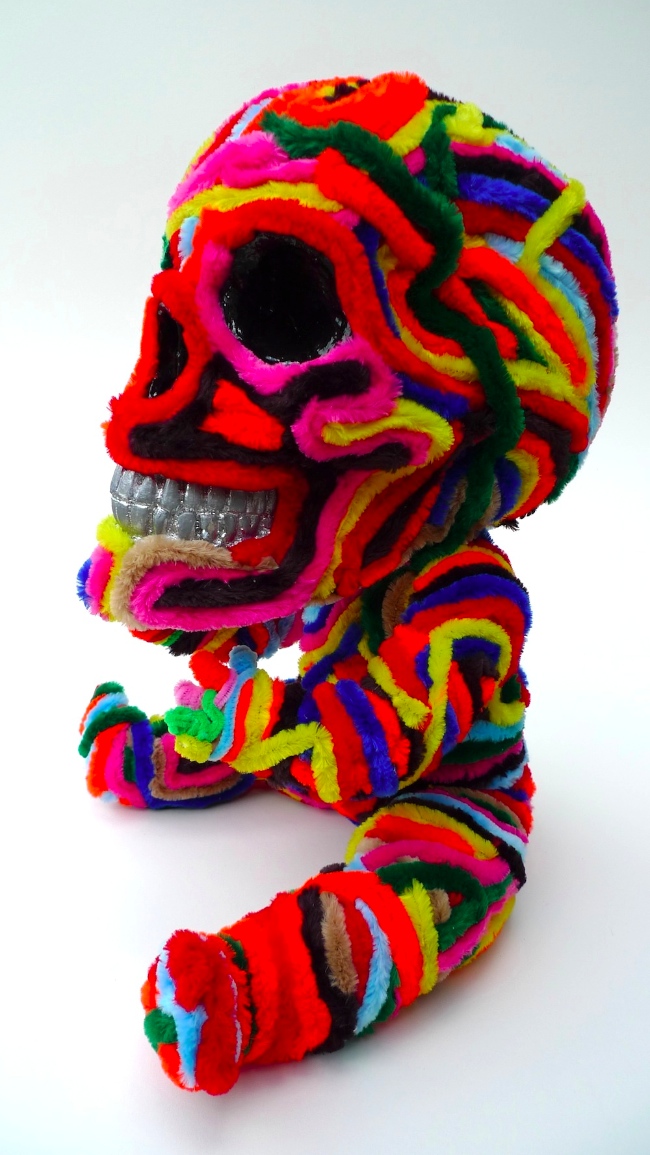
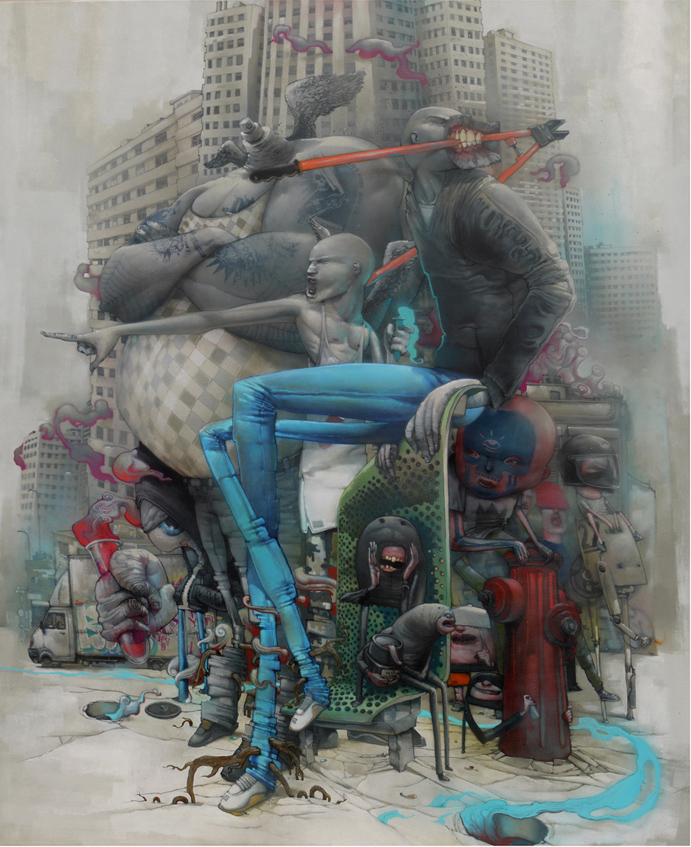
Whatever the dude is all about, he’s got a fine collection of must-see artists works so go and get a peak at this show which runs until the 30th September 2011.
The APART 2011 London Summer Show
55-57 Great Marlborough Street, W1F 7JX
Giclee print on 310gsm Hahnemühle paper..
Print size: 42cm x 59.4 cm (A2)
Edition size: 10
Wow, it really feels like we have been going on about Barcelona forever, not only it one of our favorite places to visit, yet there is always some much content to gather.
Fasim is some what of a local legend, being active on the local and global street scene for over 12 years. This show focussed on a more contemporary style. If this show was placed in any other gallery you would be hard pressed to find any link to a self taught graffiti artist, something we found very interesting.
This show was not so much about subject matter and more about the exploration of texture, with the use of heavy layering and scored paint to create depth. you really needed to view the works from all angels to get a complete feel for what Fasim was attempting to create.
This show was a easy on the eyes and set in a simple and welcoming gallery.
View the full set of shots here: http://www.flickr.com/photos/chasingghosts/sets/72157626702607658/
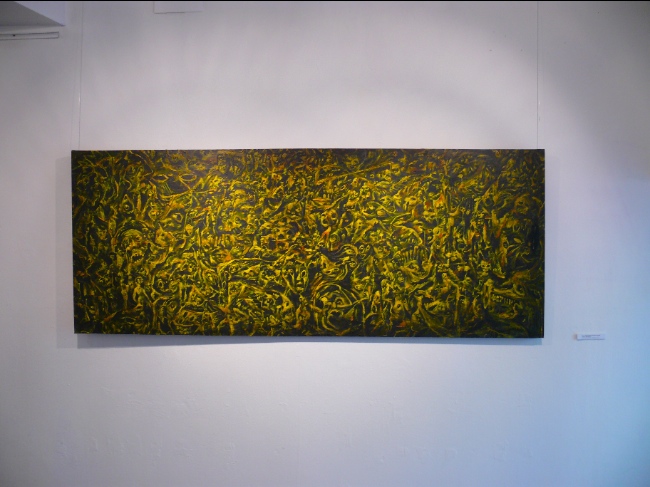
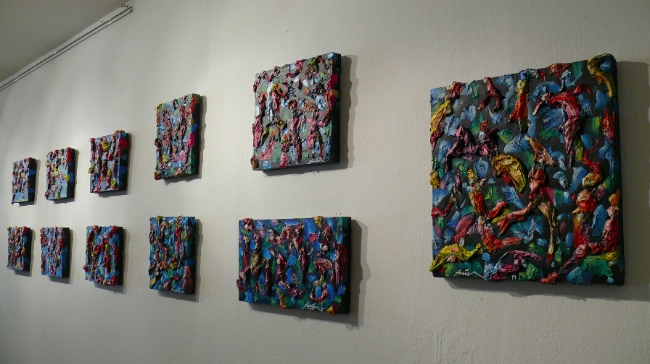
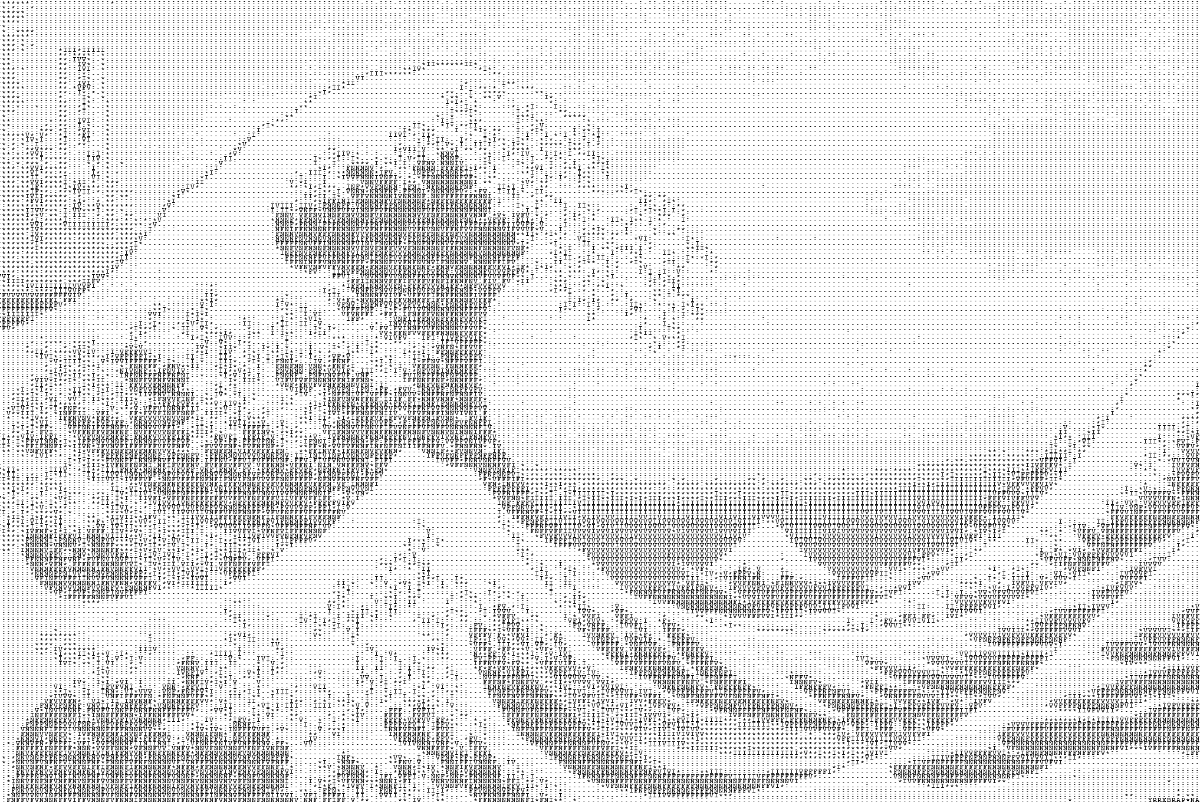
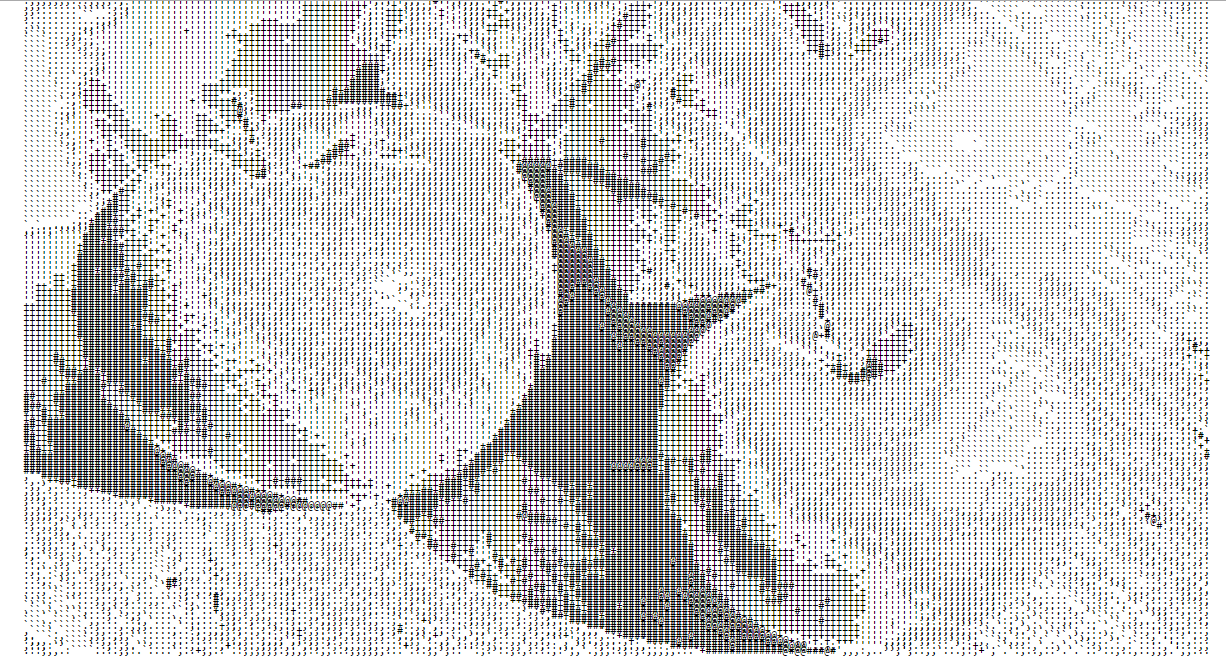
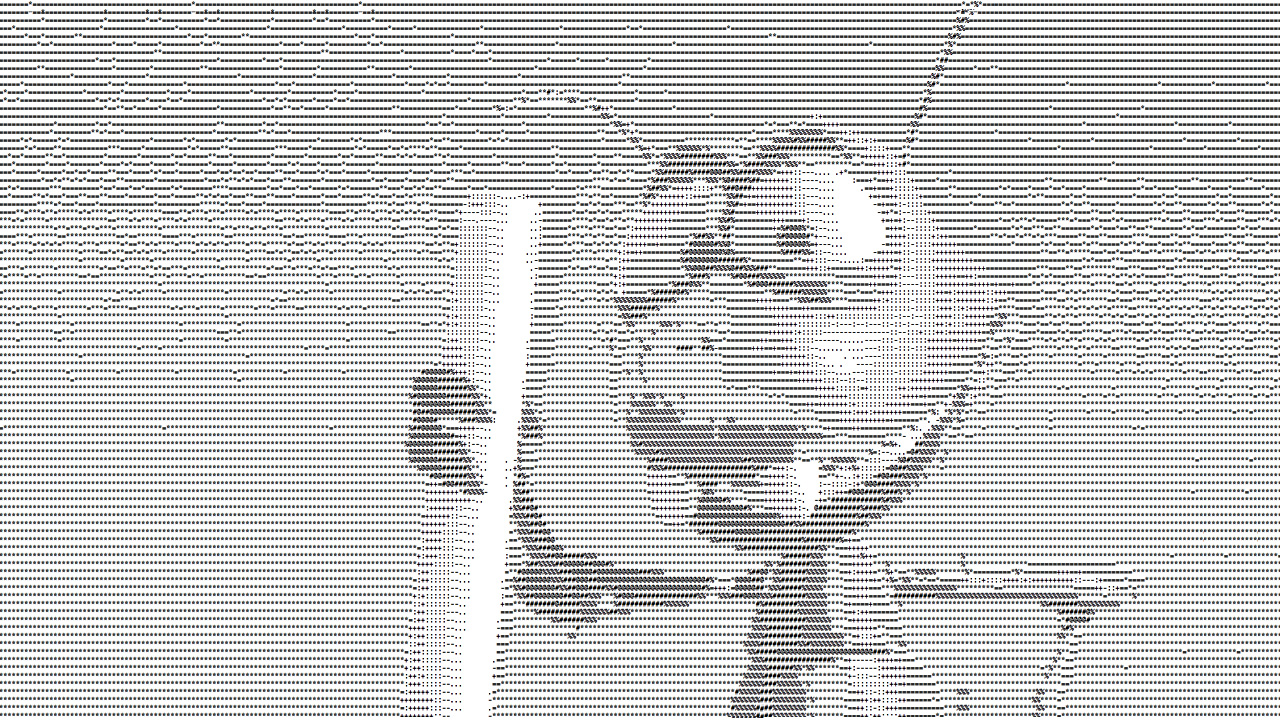
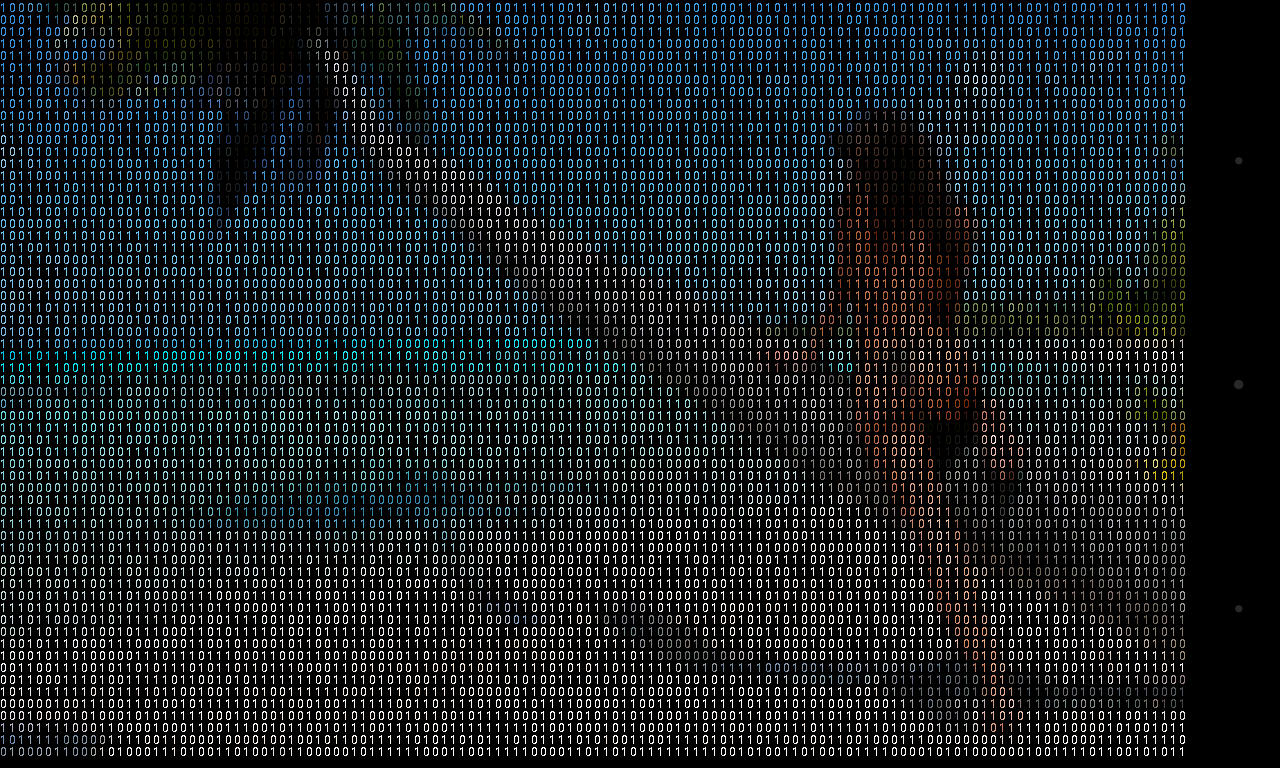
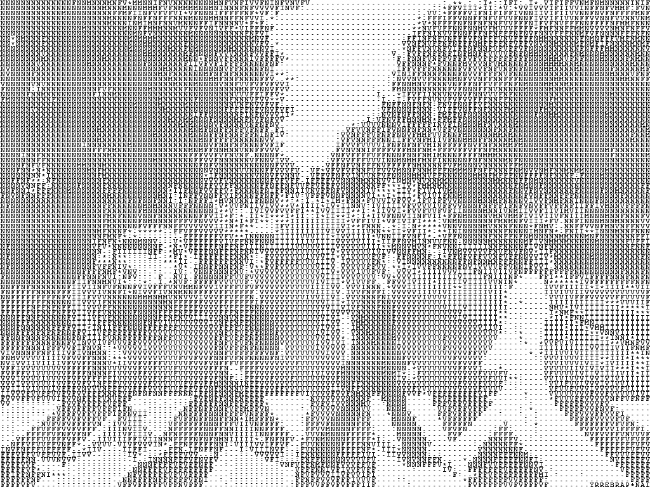
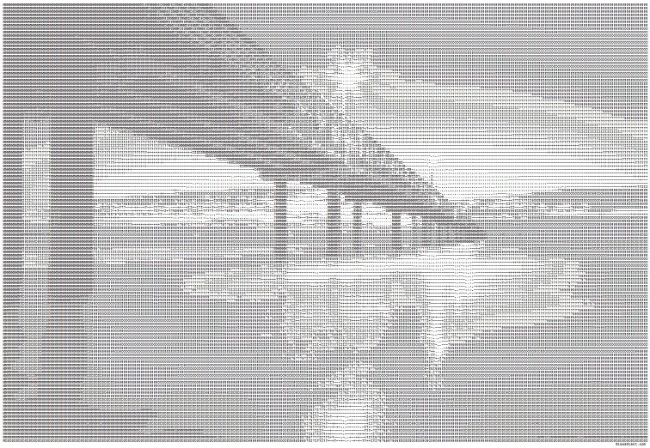
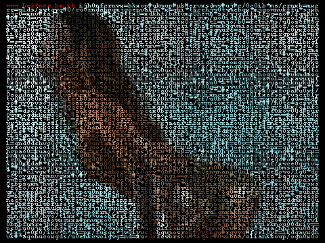 I do not know for you but 2 of my hobbies or 2 of the things I spend most of my time doing, are typing on a computer and looking at, reading, writing or producing art so the so call ASCII art could just be the form of art I have been looking for.
ASCII art is a graphic design technique that uses computers for presentation and consists of pictures pieced together from the 95 printable (from a total of 128) characters defined by the ASCII Standard from 1963 and ASCII compliant character sets with proprietary extended characters (beyond the 128 characters of standard 7-bit ASCII).
Long story short – they are numbers, letter and characters.
What is remarkable about this art, beyond the fact that serious artists out there produce stunning pieces, is that, one of the main reasons behind the emergence of this technique, was because early printers often lacked graphics ability and thus characters were used in place of graphic marks (pixels will then take over printing).
We have included some of the best ASCII art we found on the web. Remarkable right?
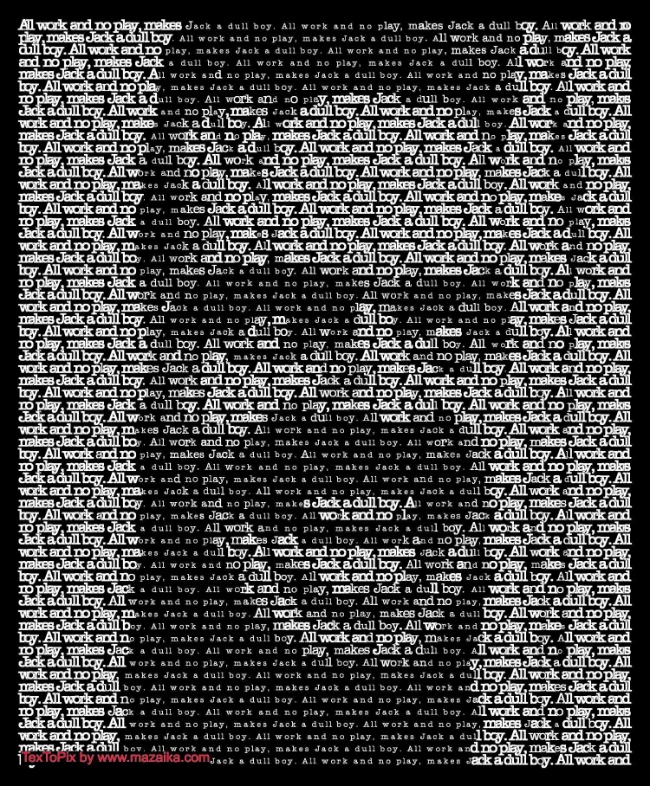
Click any picture to start the slideshow and let us know your favourite in the comments below. Ours is the Jack Nicholson one depicting of course a scene and the cover of Stanley Kubrick‘s movie – The Shinning
Light Of Soho, London’s leading light art gallery is pleased to announce their next show in collaboration with Lee Sharrock, Contemporary Vanitas, a look at vanity and mortality.
Featuring 16 contemporary artists, the exhibition, which launches 26th May, will showcase the artists own interpretations of the Vanitas – is a category of symbolic works of art, especially those associated with the still life paintings of the 16th and 17th centuries in Flanders and the Netherlands – and features iconic memento mori symbols such as skulls, butterflies, and fruit, as well as more abstract interpretations in the form of celebrity portraiture and the written word in the form of neon.
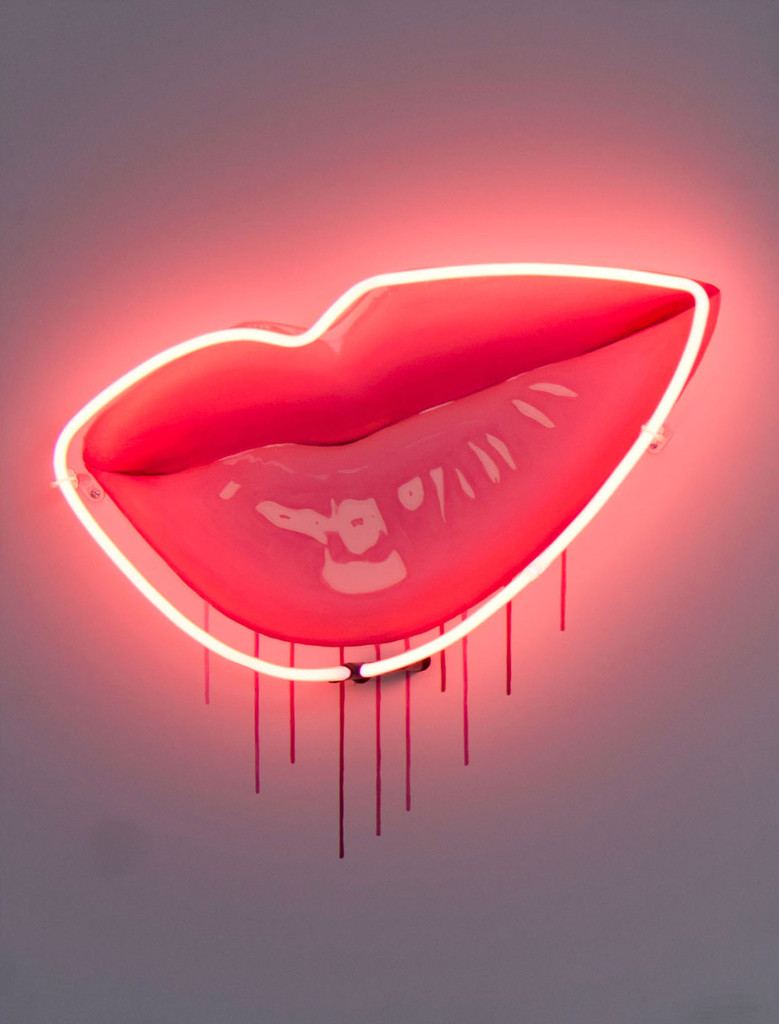
Vanitas artworks were common in the 16th and 17th Century Dutch and Flemish still life painting, and were often created as metaphors for human achievements, as well as serving as reminders of human mortality. Memento Mori symbols of death, materialism, spirituality, earthly pleasure, temptations and corporality often featured.
Here is what Lee Sharrock had to say about the show –
I’ve always had a macabre fascination with the Vanitas paintings of the 16th and 17th century, and was intrigued to see how contemporary artists would interpret the enduring themes of mortality and vanity.
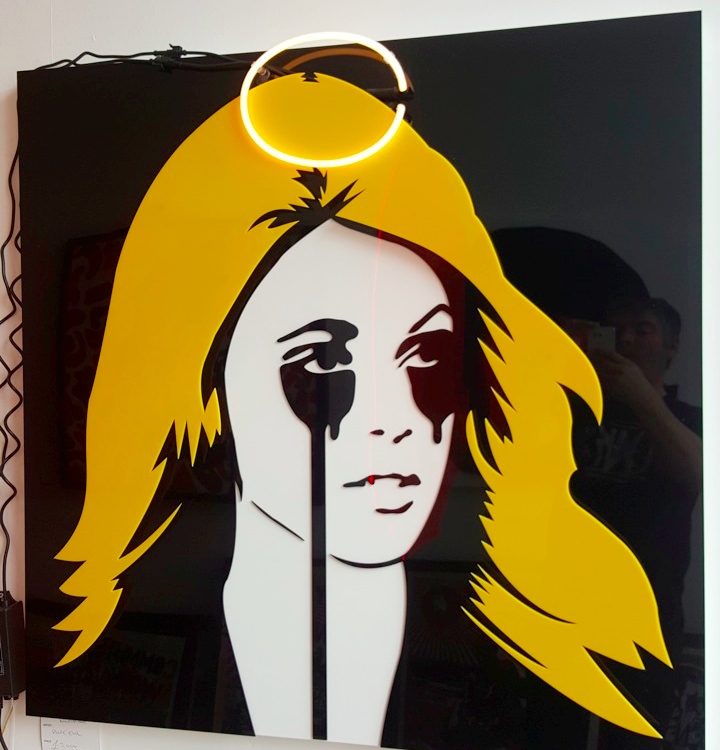
Each artist’s contribution provides an individual interpretation of the Vanitas theme, such as Pure Evil’s new ‘Angels Never Die’ portraits of departed screen idols crowned with neon halos is inspired by Marlene Dietrich.
Pure Evil commented:
After 1945, Marlene Dietrich’s attitude towards her native Germany remained shaky and it was not until after the fall of the Berlin Wall that she began to warm again to her homeland and especially her home town, Berlin. Shortly before her death, she expressed her desire to be buried in Berlin, in the very same cemetery as her mother. Her funeral, on 16 May, 1992, broadcast live on German television, was attended by thousands of fans. Her grave overflowed with flowers and wreaths from fans and admirers from all over the world. One of these wreaths, given by Wim Wenders, the director of Wings of Desire read, “Angels Never Die.
Other artworks also on display are Alexander James’ beautiful C-Type print evokes Old Master Vanitas still life paintings. or Alt-Ego has created a bespoke skulls series reflecting upon mortality and vanity.
Artists featured includes: Alexander James, Alt-Ego, Derrick Santini, Hannah Matthews, Jeroen Gordijn, Jimmy Galvin, Kalliopi Lemos, Lauren Baker, Nancy Fouts, Paul Broomfield, Pure Evil, Rebecca Mason, Sara Pope, Soozy Lipsey, Tom Lewis and Toni Gallagher.
 Sculpture is a fantastic form of art and here, at Art-Pie, our interest is growing every day.
Especially when you see what a bit of imagination and craftsmanship can do.
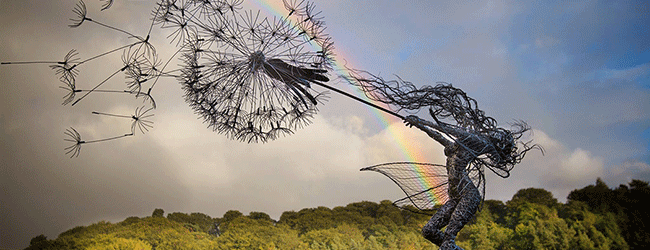
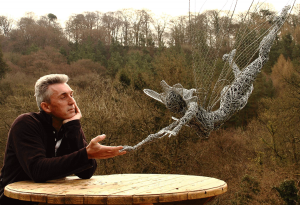
Meet Robin Wight, artist based in Staffordshire (England) who has taken wires sculptures to the next level.
Here is what he says about how his interest for wires fairies sculptures came about. You will indeed notice that the artist has a keen interest in depicting fantasy characters, like fairies, in his sculpture work.
“In 1920 two little girls photographed fairies at the bottom of their garden and created a news sensation. As we know, the photographs were fake, but the story captured the imagination of people who wanted to believe.
A couple of years ago, while trying out my new camera, I took the picture (right) in the woods at the bottom of my garden. It was only later when looking at the results that I spotted the figure in the tree (above). Its obviously a trick of the light coming through the trees. What else could it be?
Whatever it is, it captured my imagination and inspired me to use the idea in my sculpture.”
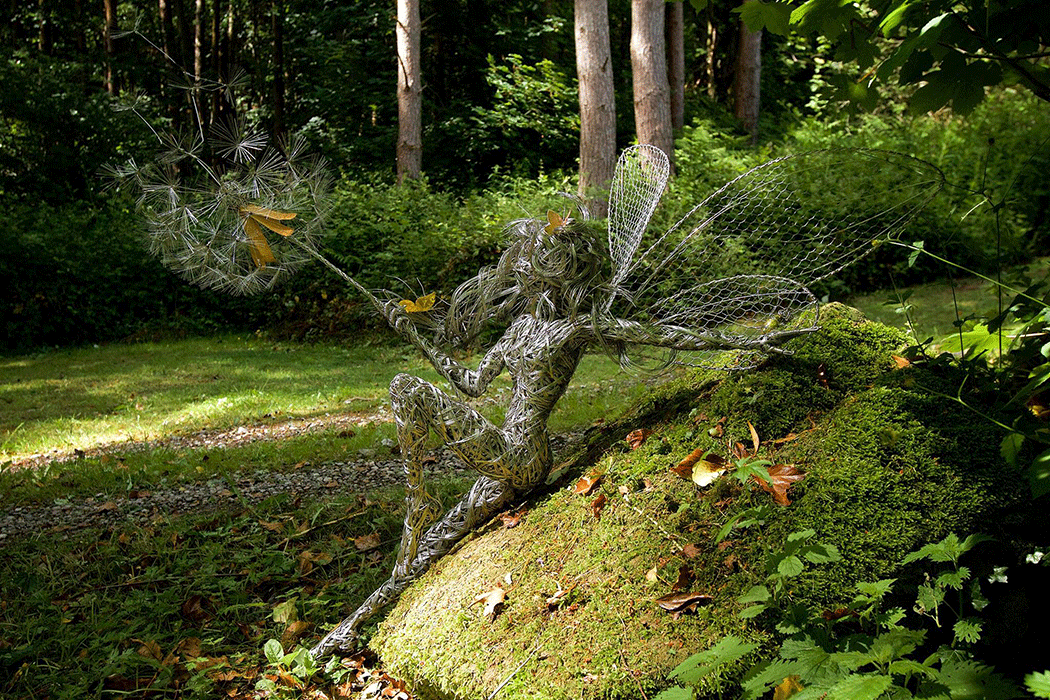
We understand that Robin Wight only started making Fairies sculptures recently and while it is still a hobby, he hopes to make a living out of it. We do not see why people would not pay for the artists’s creations as they will enhance any garden or parks.
“I only started wire sculptures about a year ago. I’ve been refining the quality and technique and I’m now happy to start doing commission work (before my garden turns into a theme park). Its currently a hobby which I’d like to make a career, but let’s see how much interest there is first. Every fairy is a handmade sculpture uniquely crafted to your desired pose and installation requirements.”
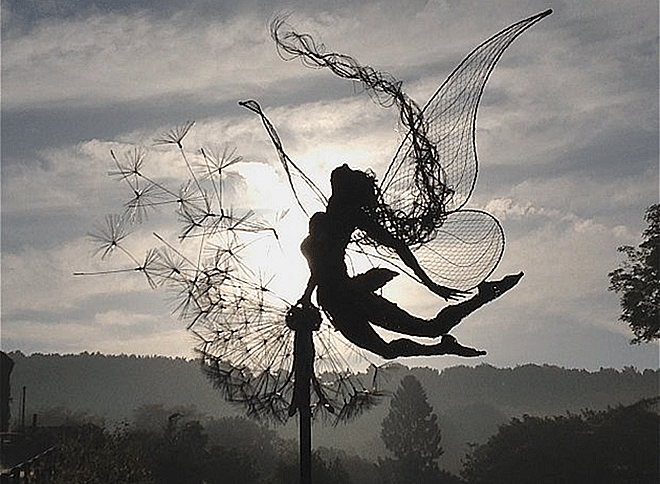
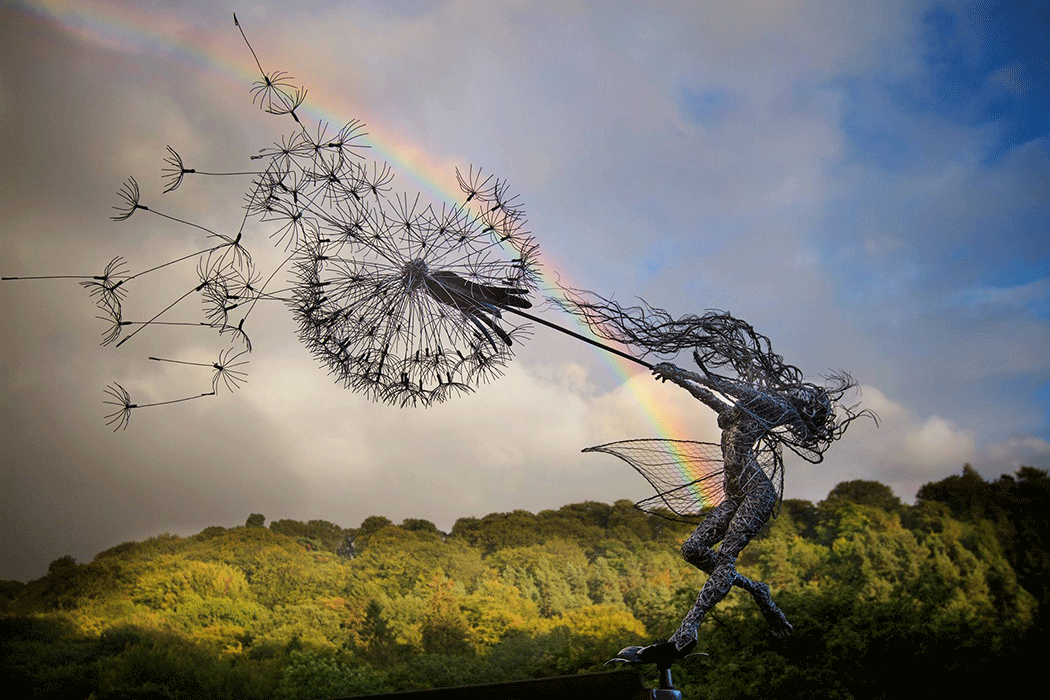
If you are interested in how Robin Wight makes up his wires sculptures, you can head onto his website and read his detailed step-by-step section. I did not imagine how tedious, it would seem, such creations take.
Even better you can even download your FantasyWire Starter Kit
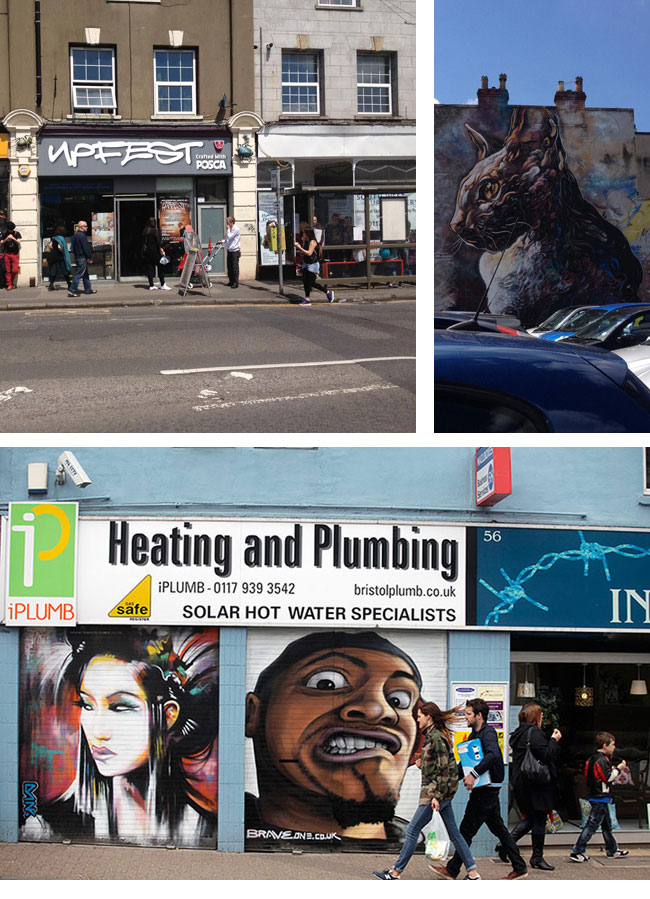
The facts
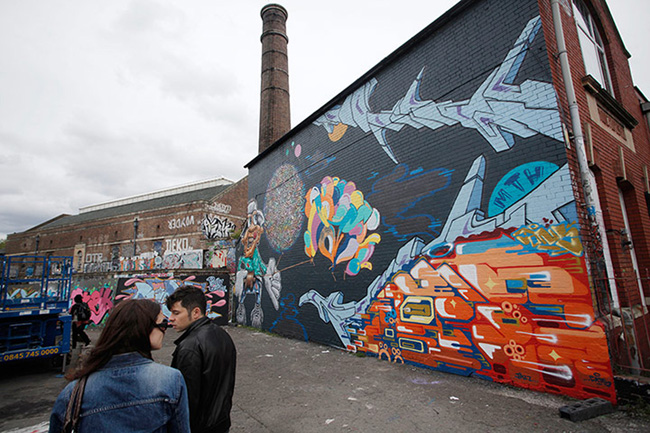
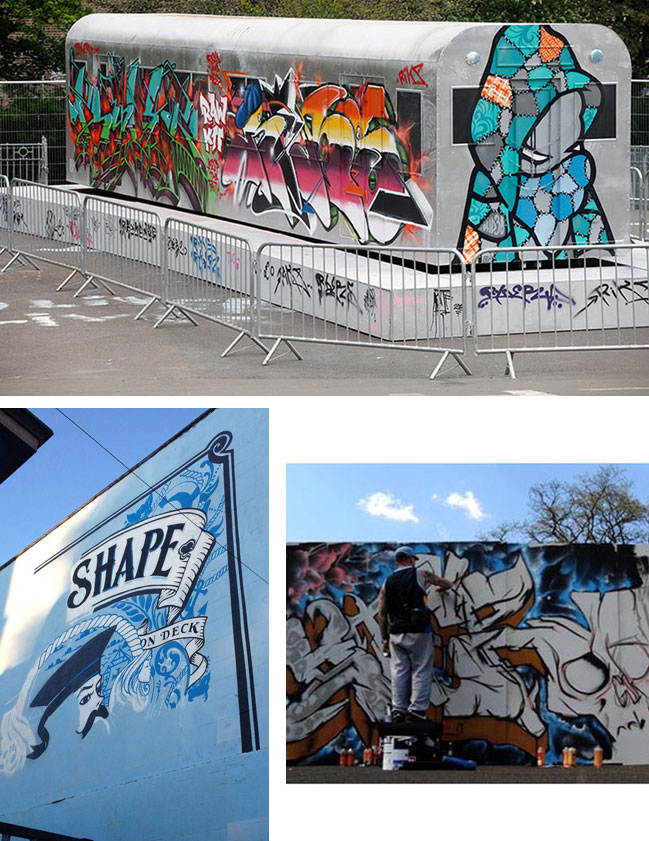
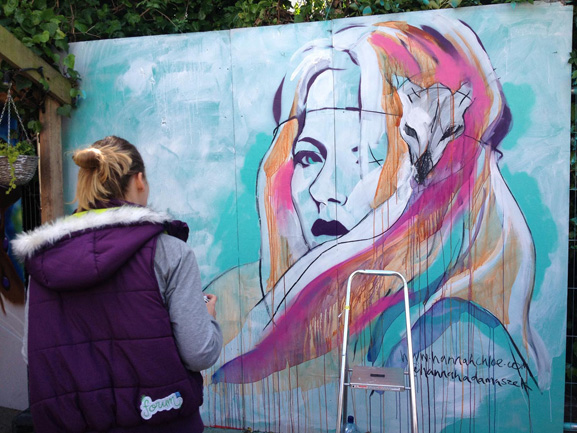
250 Artists | 20,000+ Visitors | 3 Colour Filled Days
The date
Bank Holiday Weekend | 25th – 27th of May
The place
North Street – Bristol
Photographs by Ruthie Penfold
 “Where now? Who Now? When now?
Unquestioning. I, say I. Unbelieving. Questions, hypotheses, call them that. Keep going, going on, call that going, call that on. Can it be that one day, off it goes on, that one day I simply stayed in, in where, instead of going out, in the old way, out to spend day and night as far away as possible, it wasn’t far. Perhaps that is how it began. You think you are simply resting, the better to act when the time comes, or for no reason, and you soon find yourself powerless ever to do anything again. No matter how it happened. It, say it, not knowing what. Perhaps I simply assented at last to an old thing. But I did nothing. I seem to speak, it is not I, about me, it is not about me. These few general remarks to begin with. What am I to do, what shall I do, what should I do, in my situation, how proceed? By aporia pure and simple? Or by affirmations and negations invalidated as uttered, or sooner or later?
Generally speaking. There must be other shifts. Otherwise it would be quite hopeless. But it is quite hopeless. I should mentions before going any further, any further on, that I say aporia without knowing what it means. Can one be ephectic otherwise than unawares? I don’t know. With the yesses and the noes it is different, they will come back to me as I go along and how, like a bird, to shit on them all without exception. The fact would seem to be, if in my situation one may speak of facts, not only that I shall have to speak of things of which I cannot speak, but also, which is even more interesting, but also that I, which is if possible even more interesting, that I shall have to, I forget, no matter. And at the same time I am obliged to speak. I shall never be silent. Never.”
Opening paragraph to The Unnamable by Samuel Beckett
Contemporary philosopher Alain Badiou asks if we can name a truth, anticipating and forcing into knowledge all the elements contained in that truth, risking a totality of knowledge related to it; a problem, for example, in politics where this turns to totalitarianism. He says, “The construction of a truth is made by a choice within the indiscernible…But the potency of a truth depends on the hypothetical forcing…The problem is to know whether such a potency of anticipation [hypothetical forcing] is total…My answer is there is always, in any situation, a real point that resists this potency.
I call this point the unnameable of the situation. It is what, within the situation, never has a name in the eyes of truth. A term that consequently remains unforceable. This term fixes the limit of the potency of a truth. The unnambeable is what is excluded from having a proper name, and what is alone in such exclusion. The unnameable is then the proper of the proper, so singular in its singularity that it does not even tolerate having a proper name. The unnameable is the point where the situation in its most intimate being is submitted to thought; in the pure presence that no knowledge can circumscribe. The unnameable is something like the inexpressible real of everything a truth authorizes to be said.”
Alain Badiou from Infinite Thought
The unnameable is something I have personal experience with. The secret and the truth. I’ve held both of these things, safeguarding, I thought, others and myself. Both secret and truth can be destructive if kept silent. But it has been my experience that once spoken, the unnameable is an agent of transformation; it comes in facing what’s real.
Read more of my interview, When Context Takes The Game, conducted by Becky Huff Hunter for This ‘Me’ of Mine.
——————————-
Beckett, Samuel, Three Novels Molloy, Malone Dies, The Unnamable, Grove Press, New York, The Unnamable, originally published under the title L’Innommable, copyright © 1953 by Les Editions de Minuit. Translation copyright © 1958 by the Estate of Samuel Beckett, pp. 285-6.
Badiou, Alain, Infinite Thought, Continuum International Publishing Group, London, New York. Trans and ed by Oliver Feltham and Justin Clemens, 2005 – 2011. “Philosophy and Truth”, pp. 43 to 51, originally titled “The ethic of truths: construction and potency” quote p.49.
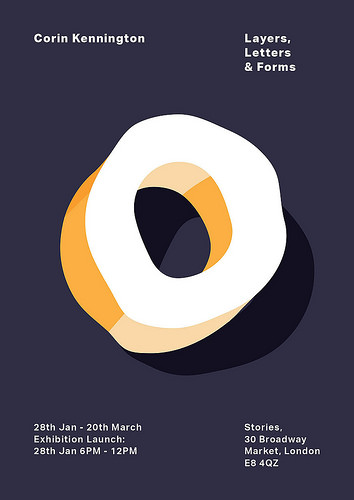
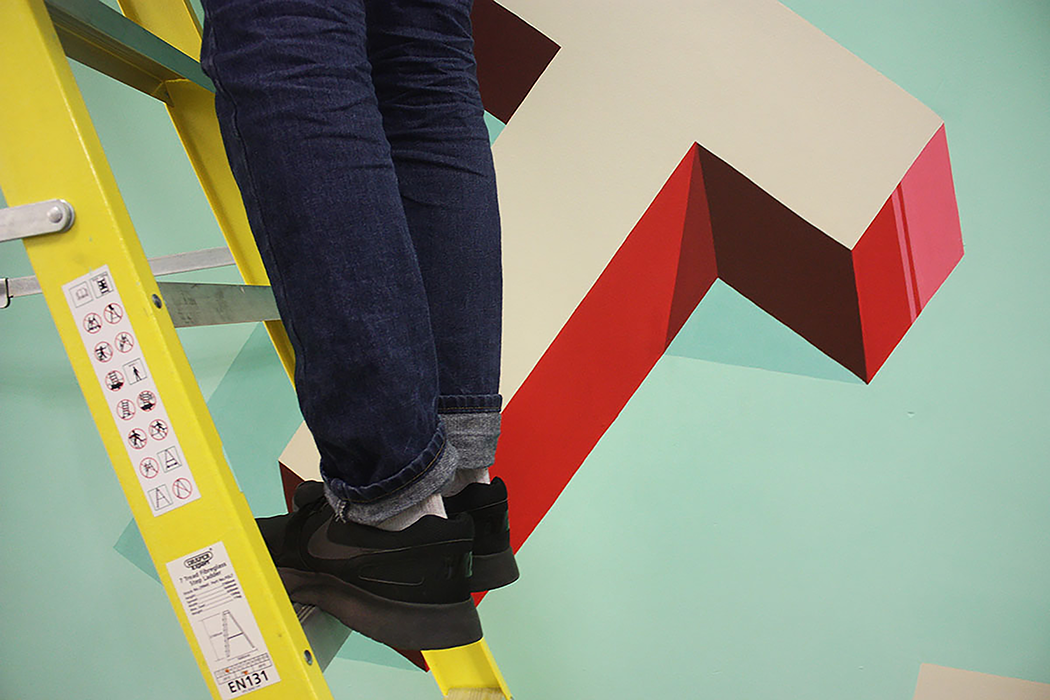
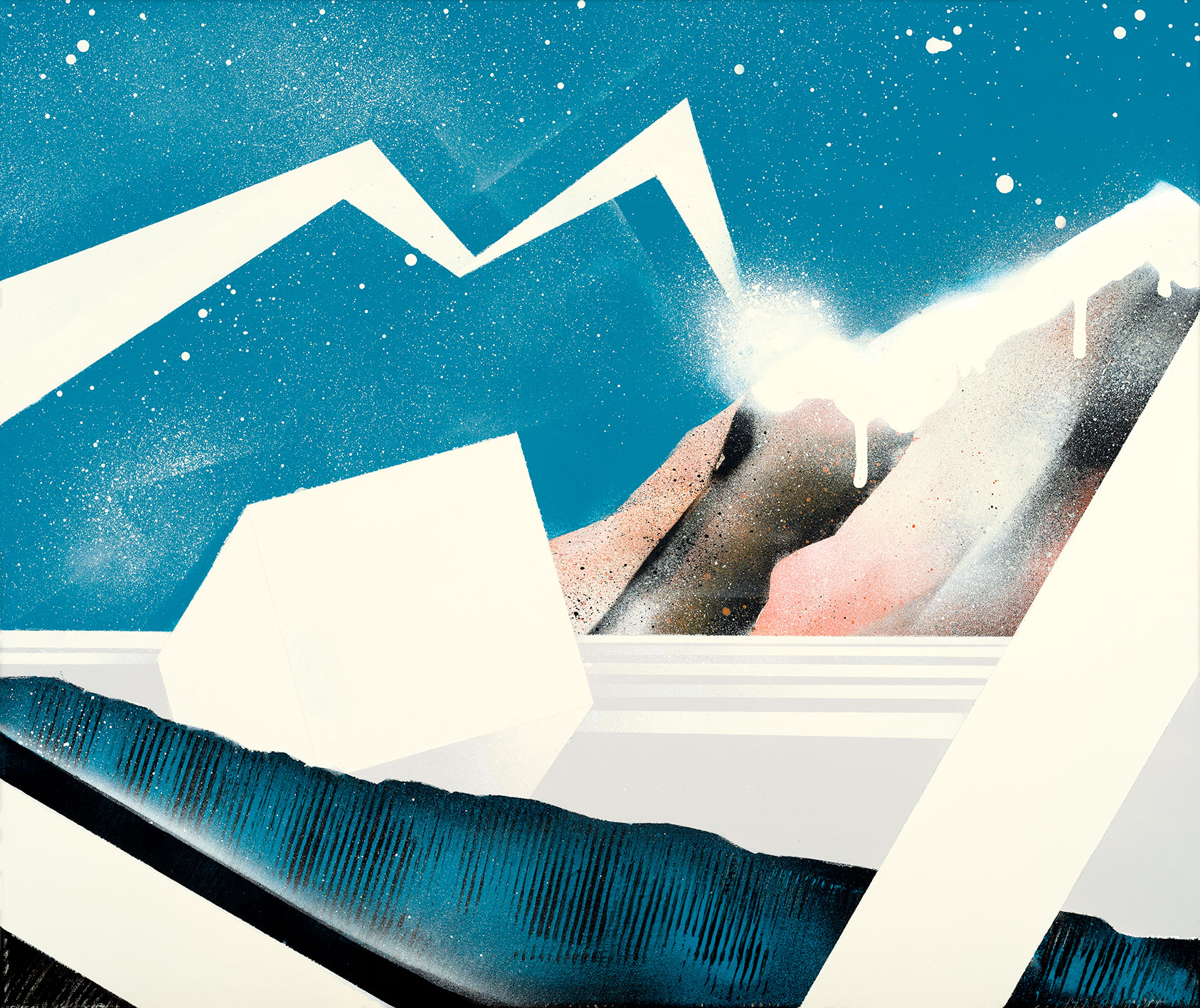
Recent LCC graduate Corin Kennington’s first solo show, Layers, Letters and Forms is a visual exploration into the aesthetics and processes of typography.
Focusing on the physicality and hand-made elements of traditional methods, Corin’s work is created using a range of techniques such as letterpress, screen printing, risograph and hand painted letterforms.
His recent body of work explores the journey of creating an image through the combination of old and new processes, and developing ways of unifying digital aesthetics and systems with traditional methods of print and execution.
Throughout Layers, Letters and Forms, Corin uses typography as a visual form as opposed to a language or tool of communication.