Chinese Art has been pushing its way through Europe and America lately and many movements and talents are starting to emerge from it. One of this very skilled and inspiring artists is Chen Yingjie (aka: Hua Tunan) who lives in the coastal city of Foshan, China.
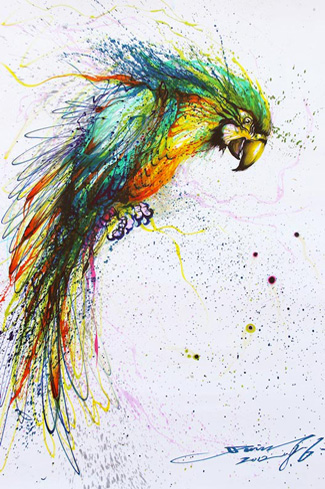
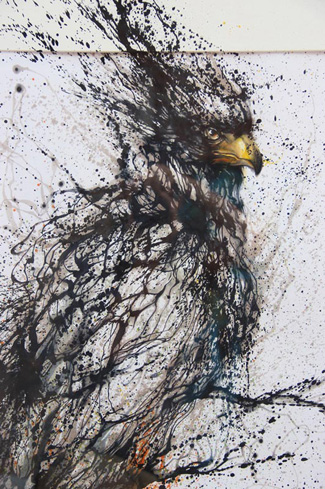
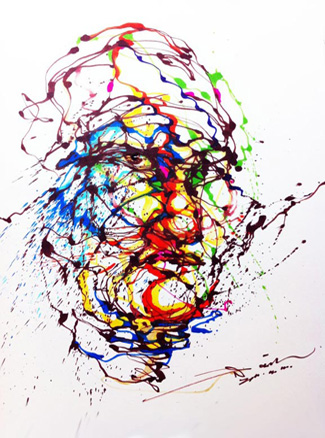
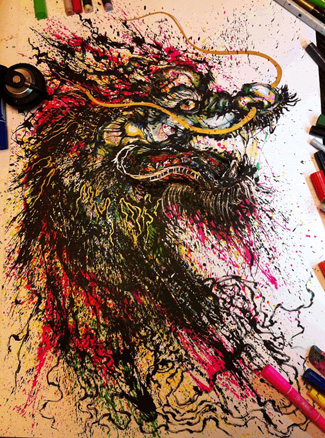
With a background of classical Chinese painting and illustration, Hua Tunan has diverged into a remarkable and unique street art style. His art is a perfect example where two radically different styles – Classic Chinese painting v. Western Graffiti are married to give eye watering results. Hua Tunan would use ink painting, drum rhythms and a variety of cultural symbols.
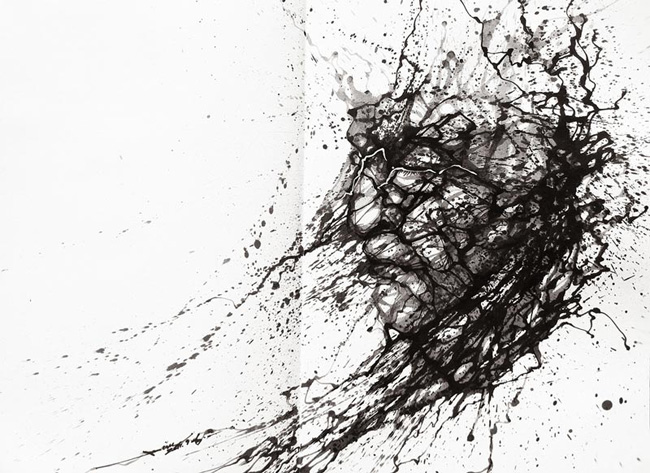
Pictures of the ‘splatter’ portraits series are shown below. Look closer and what might appear as a splash to you actually reveal a face or shapes. The color palette is another remarkable thing in Hua Tunan art. Thumbs up all round.
Time to show some support and also to expose the polluted water issue that is happening right now in China.
“Not only is China one of the world’s twenty most water deficient countries, but irresponsible corporations and slack government has made water pollution highly prevalent in China. Today, as much as 70% of all rivers, lakes, and reservoirs in China are affected by water pollution, and with each passing day the situation only gets worse.”
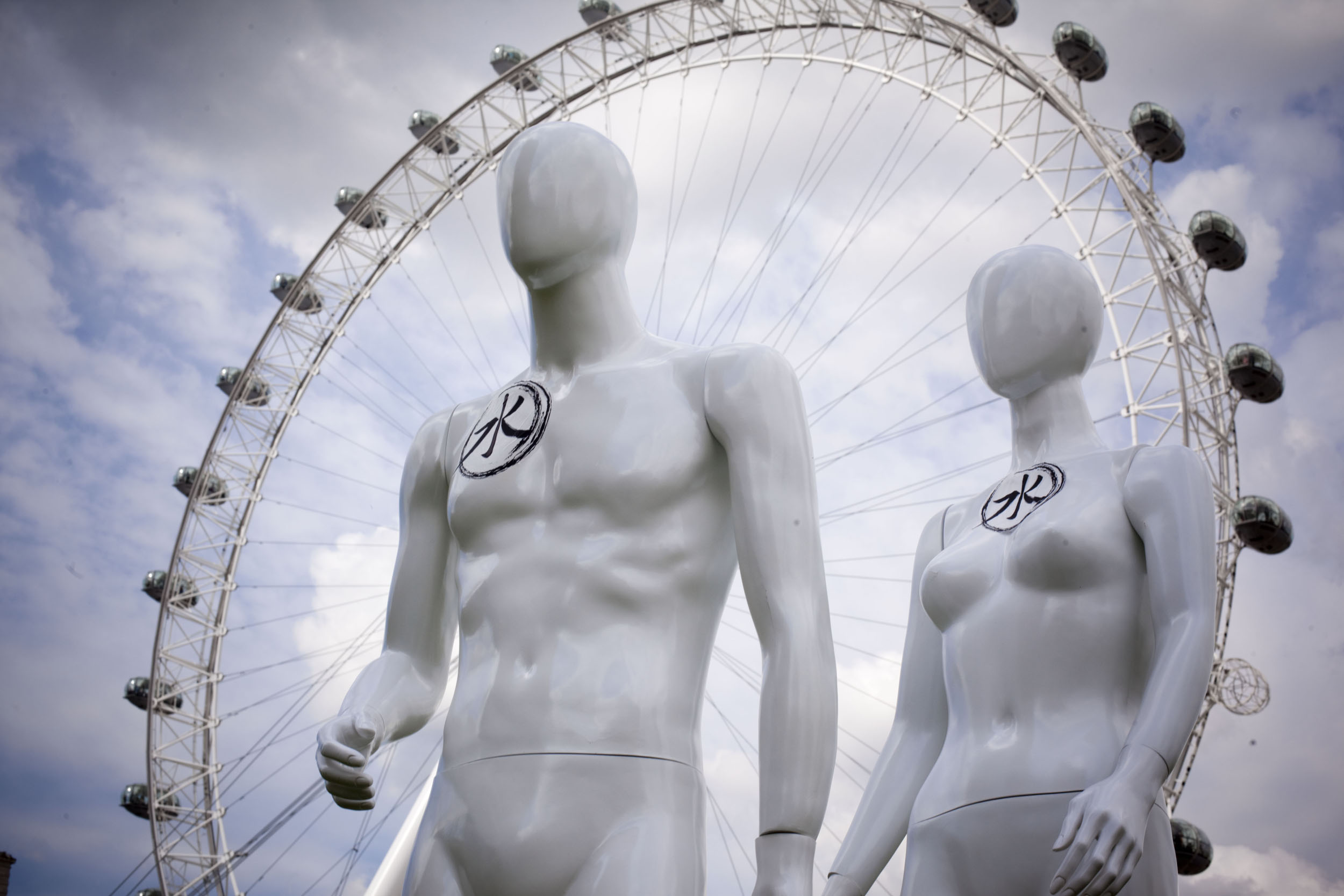
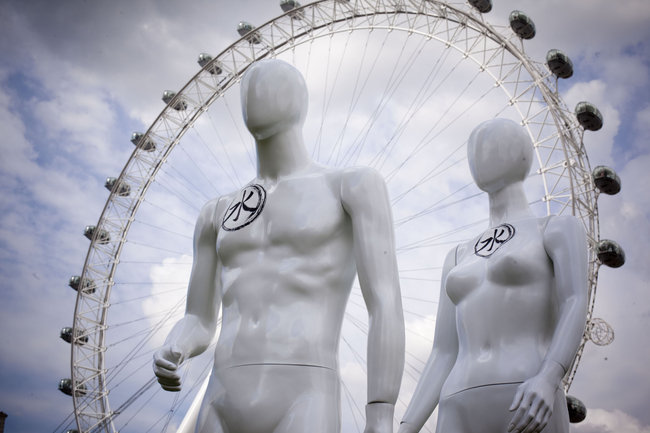
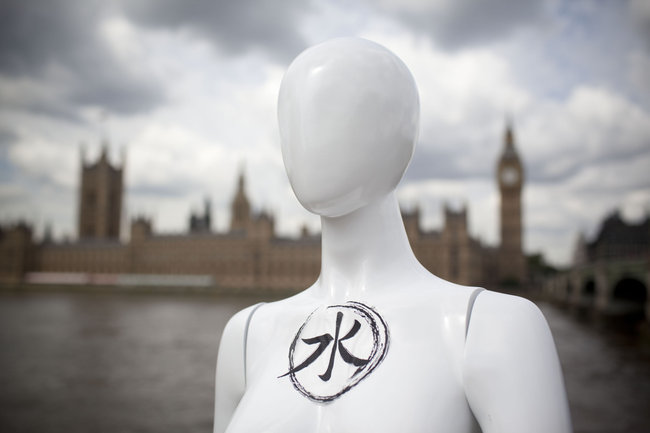
Greenpeace is using what can called ‘street art’ and has launched a campaign by some creative street installations across the globe recently – mannequins bearing the Chinese symbol for water – ? ‘Shui’
Some have been spotted in London, see the pictures below.
I recently posted the opening clip for the cult movie Paris, Texas, directed by Wim Wenders and written by Sam Shepard, on the RECURSIVE blog in response to something I read from Difference and Repetition by Gilles Deleuse,
“For it is perhaps habit which manages to “draw” something new from a repetition contemplated from without. With habit, we act only on the condition that there is a little Self within us which contemplates: it is this which extracts the new – in other words, the general – from the pseudo-repetition of particular cases. Memory, then, perhaps recovers the particulars dissolved in generality…It is in repetition and by repetition that Forgetting becomes a positive power while the unconscious becomes a positive and superior unconscious (for example, forgetting as a force is an integral part of the lived experience of eternal return).” (p.8-9).
I find this compelling and very true in the sense that normal forgetting moves information into the subconscious where it ruminates and comes back out in a creative interpretation. At least, that has often been my experience with a forgetful mind. As an artist I don’t want to copy the work of others, but I can’t help absorbing the visual stimulation of other’s influence. I rely on my ‘forgetting mechanism’ to make something new – at least I always hope it does.
But in a film like Paris, Texas, the forgetting is a looping trap that neither removes pain nor finds relief. It is not a positive force, but a negative destruction. That’s why repetition is a double-edged knife, both positive and negative, and why Nietzsche’s ‘Eternal Return’ contains the unending and unbroken circle of experience, passing through pain to find salvation.
I’m disturbed by reading of huge increases in prescription pain killer use and a rise in heroine deaths in the US. What would Nietzsche and Deleuse say about that I wonder?
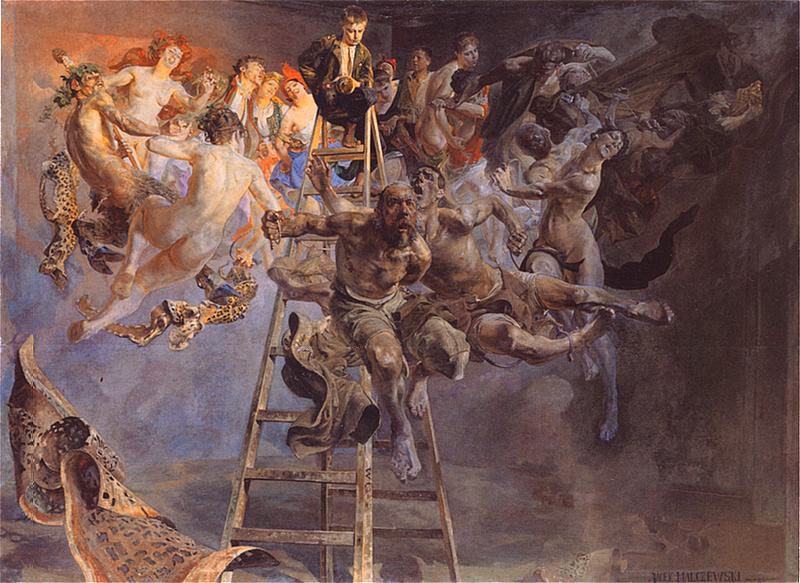
[Image: Bledne kolo (Vicious Circle) by Jacek Malczewski]
Before you dive into this article, let us introduce to you Aces Of Green, our new art project focusing on producing visual art & educational material to stimulate conversations & awareness for environmental issues such as Climate Change or Plastic Pollution.
When you buy art from us, we give away at least 2 pounds to our JUST ONE TREE fund so trees get planted across the world.
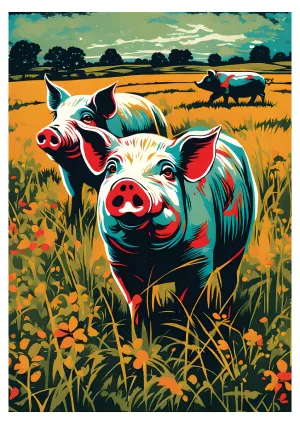
CHIMP IPIGS I
Who would you say are the most influential artists of all time? Vincent Van Gogh? Cézanne? Monet? It’s surprising to think that, despite these artists’ worldwide fame and appreciation, they weren’t really recognised as masters until after they had died.
Here are eight famous artists who gained appreciation after death:
Vincent Van Gogh
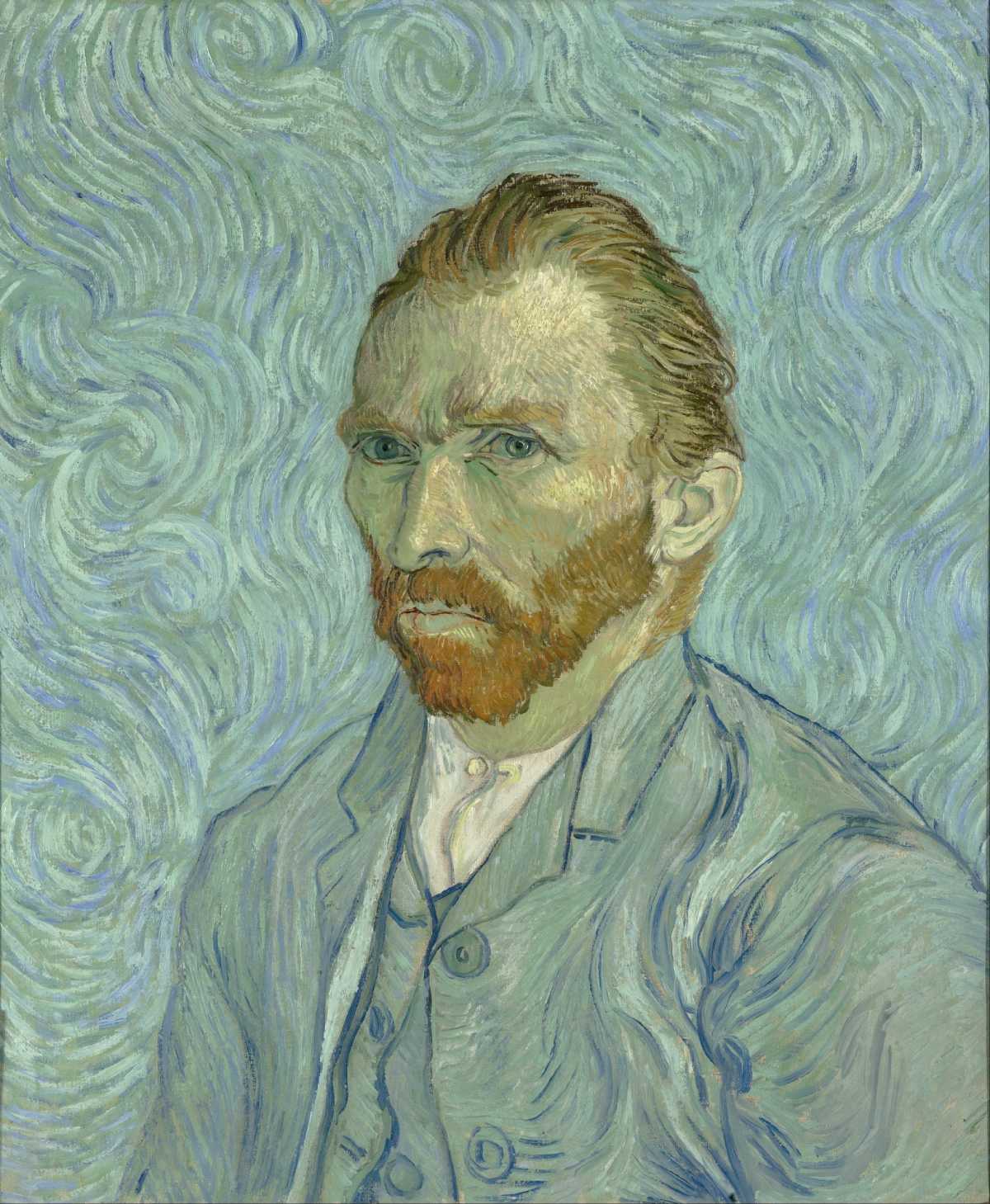
Van Gogh is renowned the world over. There can’t be many people who haven’t, at some point, seen a representation of his sunflowers paintings or his own self portrait. Van Gogh was a prolific painter – he produced more than 900 paintings during his lifetime – but they were often criticised for being too dark and lacking in energy. It was Van Gogh’s sister-in-law who, after his suicide in 1890, preserved his works to be appreciated at a later date.
‘Self portrait’, Van Gogh | Art-Pie
Paul Cézanne
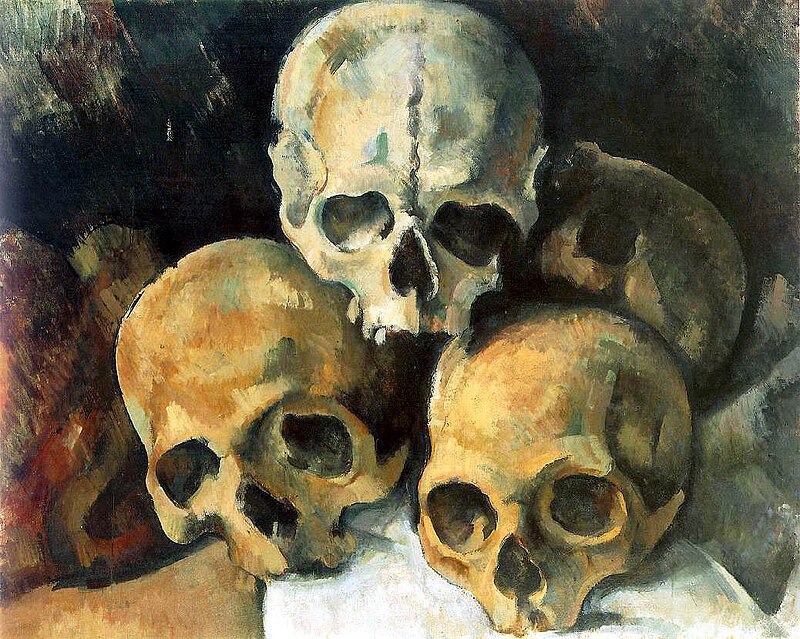
Cézanne is widely touted as the essential bridge between the Impressionist art of the 19 th century and the Cubism of the 20 th century. Many young artists revered Cézanne during his lifetime – Picasso and Matisse referred to him as “the father of us all” – but his work was consistently rejected by the official Salon in Paris and made fun of by art critics. Just a year after his death in 1906, Cézanne’s artworks were given the exposure they deserved in a retrospective at the Salon d’Automne.
‘Pyramid of skulls’ from Paul Cezanne
Claude Monet
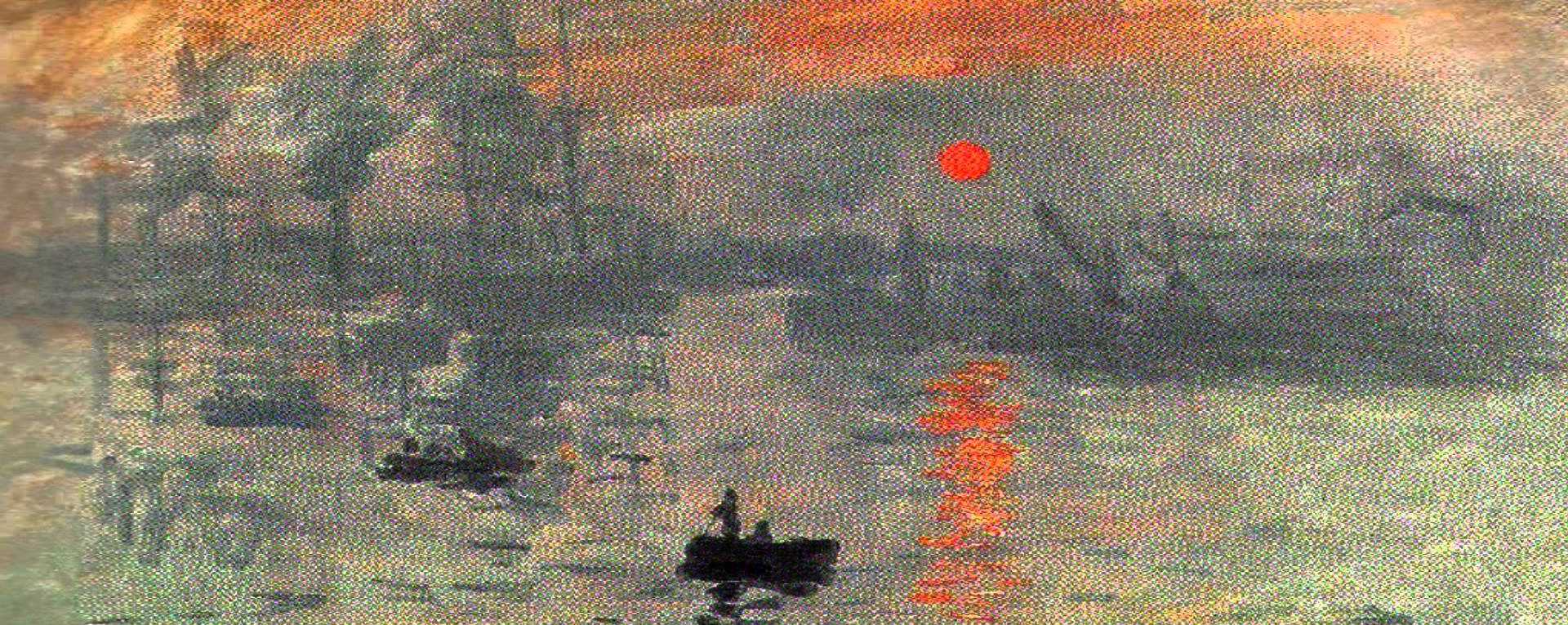
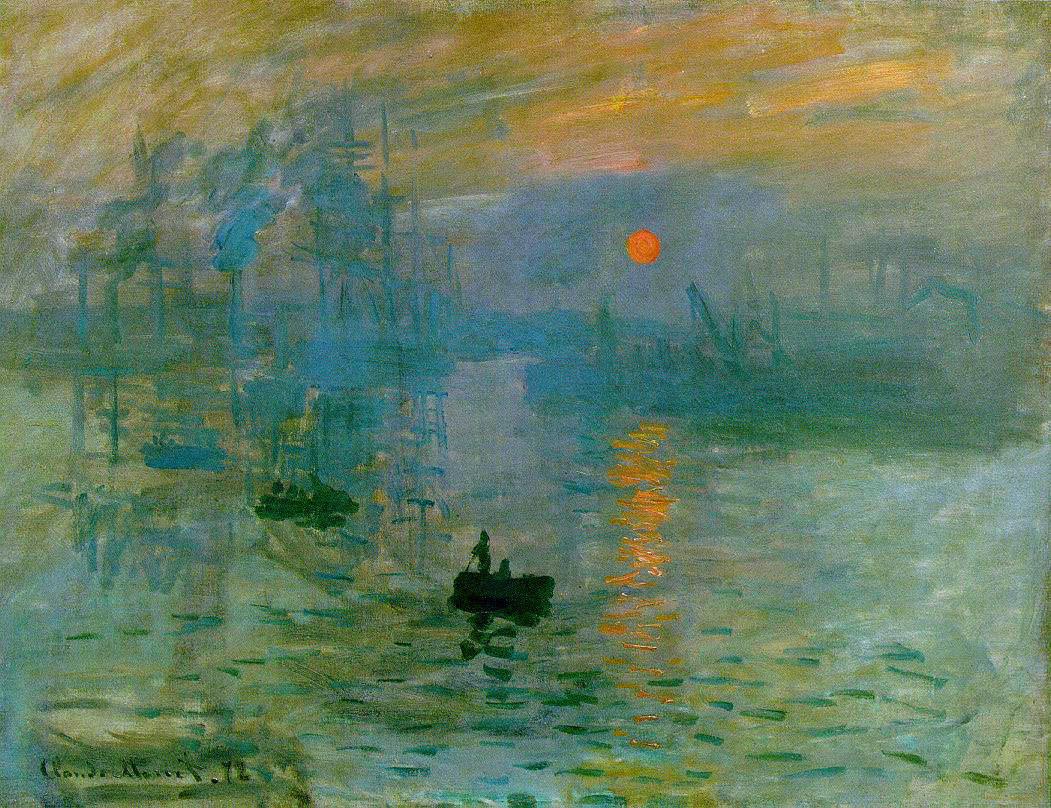
Monet’s waterlily paintings are surely amongst the most famous in the world. Yet during his lifetime, his unique form of painting – choosing nature and landscapes as subjects and using short brushstrokes to create a sense of movement – were rejected by the art world of the time.
“Soleil levant” By Claude Monet | Art-Pie
Paul Gauguin
Another artist who pushed at the preconceived limits of his craft and went largely unappreciated during his lifetime was Paul Gauguin. His deeply colourful Post-Impressionist paintings influenced many famous 20 th century artists, including Picasso and Matisse, and now sell for millions of dollars.
Henri Toulouse Lautrec
Maybe it was Toulouse Lautrec’s unusual painting style or his less than respectable subject matter that saw his work underappreciated in his lifetime. He painted the gaudy world of brothels, prostitutes and can-can dancers in 19 th century Paris. It was only after his death in 1901, that Toulouse Lautrec’s mother began to promote his art and it began to receive acclaim.
‘Selfportrait’,Henri Toulouse Lautrec
Domenikos Theotokopoulos “El Greco”
El Greco was born in 1541 and spent much of his life in Spain. The painter, sculptor and architect only became properly appreciated four centuries later. During his own lifetime he was described as a “mad painter”, one who didn’t work within any of the recognised artistic schools and was criticised for his antinaturalistic style.
Georges-Pierre Seurat
Seurat, a French Post-Impressionist, is perhaps most famous for his painting A Sunday Afternoon on the Island of La Grande Jatte . The painter is also responsible for bringing pointillism to the world. The term pointillism was actually invented by art critics of the time who used it to mock Seurat’s work.
Johannes Vermeer
Dutch painter, Vermeer, painted domestic scenes and portraits. Paintings like Girl With a Pearl Earring demonstrate a masterful use of light. However, Vermeer painted few works during his lifetime and left his family in debt when he died. It’s only with the passage of time that Vermeer has been recognised as one of the most influential Dutch painters of all time.
It’s incredible to think that these artists were ridiculed for their artworks and didn’t sell much at all during their lifetimes. Experimenting with new techniques and unorthodox subjects, they were ahead of their times. They inspired generations of artists to come and rightly deserve the posthumous appreciation they have all now gained.
Mediums you can use to paint are countless, it is only down to the artist to use them or not. Meet Erik Sommer and his very original and unique way of painting with cement. We talked to Erik to find out a bit more about him and his work.
ART-PIE: How did you come to use cement in your work?
Erik Sommer: I’ve been using cement in my work for several years. I like its urban grittiness, especially as I live in NYC and am surrounded by buildings and cement. My work is about the passing of time, and beauty and chance and control. It is about capturing the passing of time, and the beauty found within its accidental natural effects.
A-P: Most of the work I can see from your website are using mixed medias? What are they?
Erik Sommer: Most of my work is mixed medium on canvas. I use cement and plasters, acrylic pastes, gessos, some acrylic and oil pants. Most of the materials are home modeling materials which happen to be white, which make the most recent pieces white, although I do use colors as well. The various layers of material act as different stages of time. The work is very three-dimensional and comes off of the canvas. It is very industrial and physical.
A-P: What are your inspirations?
Erik Sommer: I like everyone from Rudolf Stingel, to Robert Ryman, Richard Serra, Andy Goldsworthy, Basquiat, etc.
Any upcoming shows?: I am represented in NYC by Rooster Gallery, and am beginning to work with Arch 402 in London as well. I have a piece in a group show/ auction with Arch 402 in April, and then hopefully will be doing more with them later this summer. My next solo show with Rooster in NYC will be next year.
We strolled through the London Art Fair for the fourth consecutive year and as always stumbled upon remarkable artworks from ever so talented artists.
In this series, we will tell you why we liked a particular piece from these artists as well as posting more works. We hope you will also enjoy it as we did.
Feel free to comment too at the end of this article. Let’s get started….
________________
Guy Allen
Click to enlarge
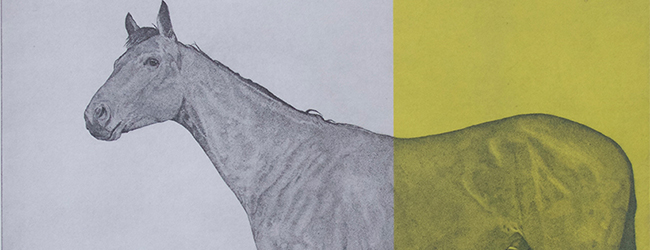
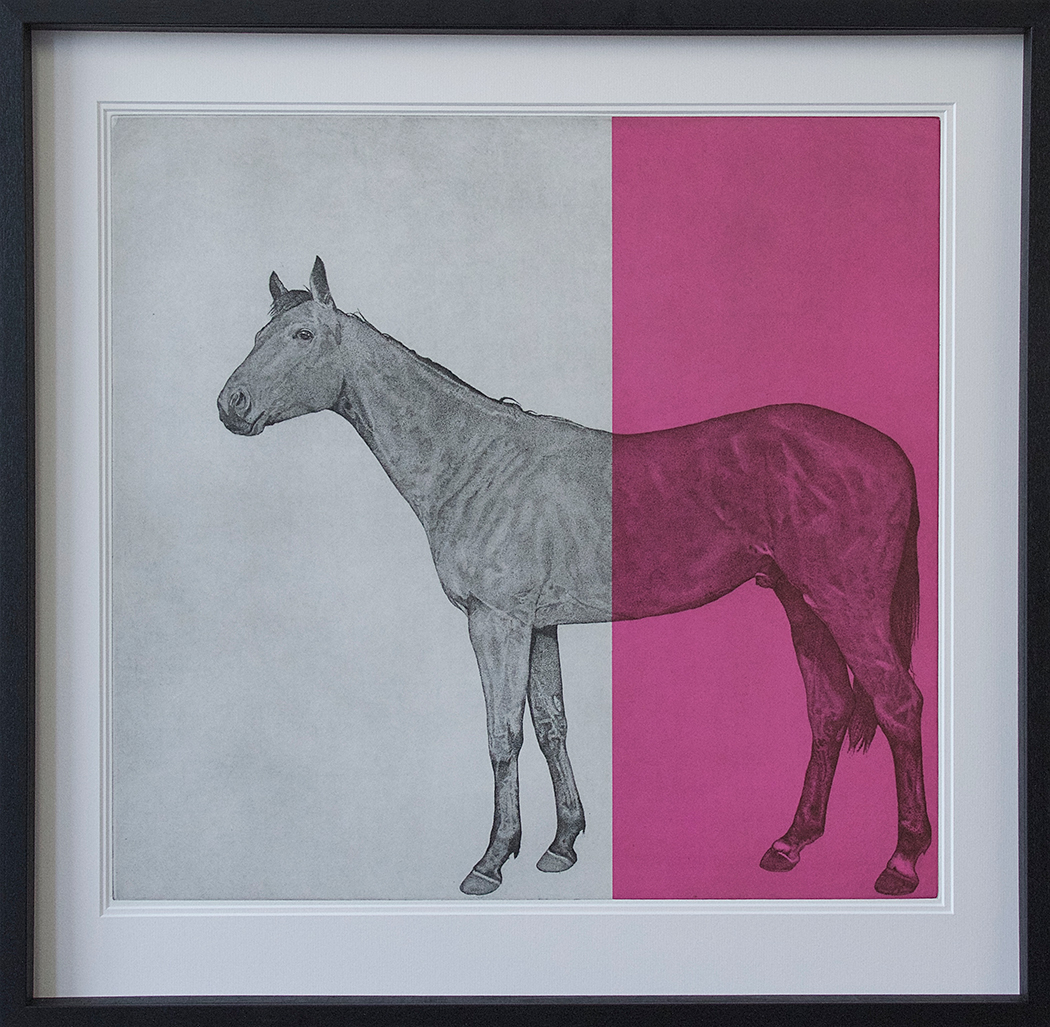
We stumbled upon the piece called “Horse Study Yellow” – etching, Aquatint with 1 colour screenprint and instantly got drawn to it. We like the contrast in this piece and when artists use 2 or 3 colours. Some may qualify this as minimalist art and this is fair enough. We think a grey on any colour is striking.
About the artist
British printmaker Guy Allen is highly skilled at drawing from the animal world. His limited edition etchings are beautifully detailed, and sometimes include abstract elements. He’s a graduate of Central St Martins who has also studied at École Nationale Supérieure Des Beaux-Arts in Paris.
He has worked with the highly respected Curwen Studios and now works out of London’s Artichoke Studios. Guy’s work has been included in the Royal Academy’s Summer Exhibition and is popular at London’s major art fairs including the Animal Art Fair.
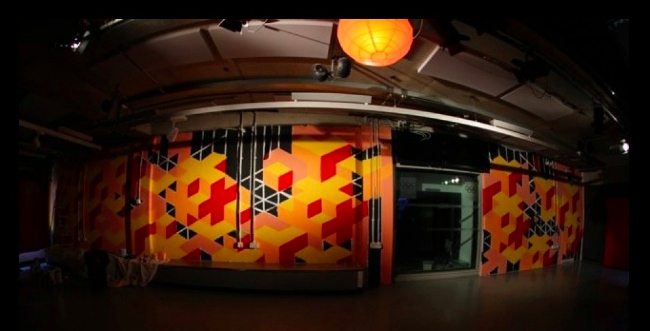
The Summer Season application received many exciting interpretations on the true values of Havana and the final winner was LXOne. See the finished Wall at Rich Mix (or the photo below) from now until August and enter for the final Wall Project to showcase your art between August and October
From LXOne: “I’ve used shapes and symbols that refers to my work and interpreted the brief using colour and movement. Orange is for the sun, red is for the passion and yellow is for the happiness – all characteristics I see in Cuban humanity. The geometrical patterns convey both accurateness but also spontaneity with my use of the arrow. The value of creativity can be seen in the finished product from submission to completing my work and†the whole creative process been something I have hugely enjoyed having the opportunity to do”
Entries for the final wall are submitted by e-mail to visualarts@richmix.org.uk, a selection will be posted on the Havana Club UK and Rich Mix facebook page to invite public feedback.
Entries must be submitted by:
Friday 5th August – with the winning wall design on show from August to October 2011
For further enquiries please contact Manuel Suarez manu@theneonhub.com or 0207 460 5359
I had never heard about the C4RD (Centre for Recent Drawing) before and was happily surprised to find out that Hand Joy, a group show of contemporary artists was actually happening a throw stone away from where I live in Highbury & Islington – art on your doorstep that is. Continue reading Hand Joy group show at C4RD: eroticism in Islington→
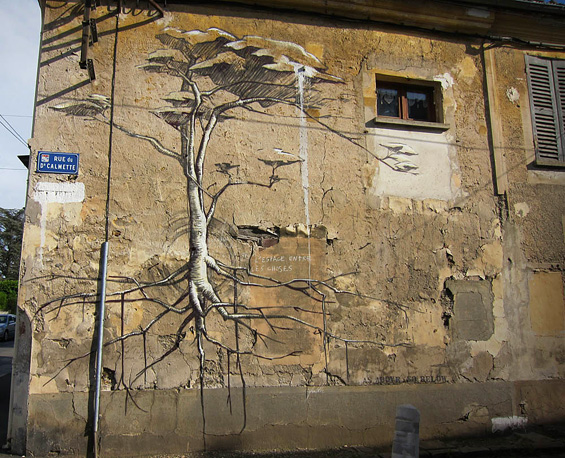
Below are two of the new work from the South African artist Faith 47. We particularly like “As Above So Below” piece which shows a tree and its roots floating on the wall. A great feeling of elevation!
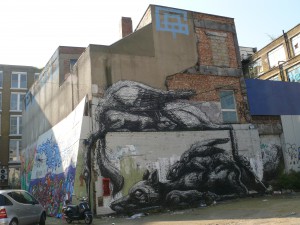
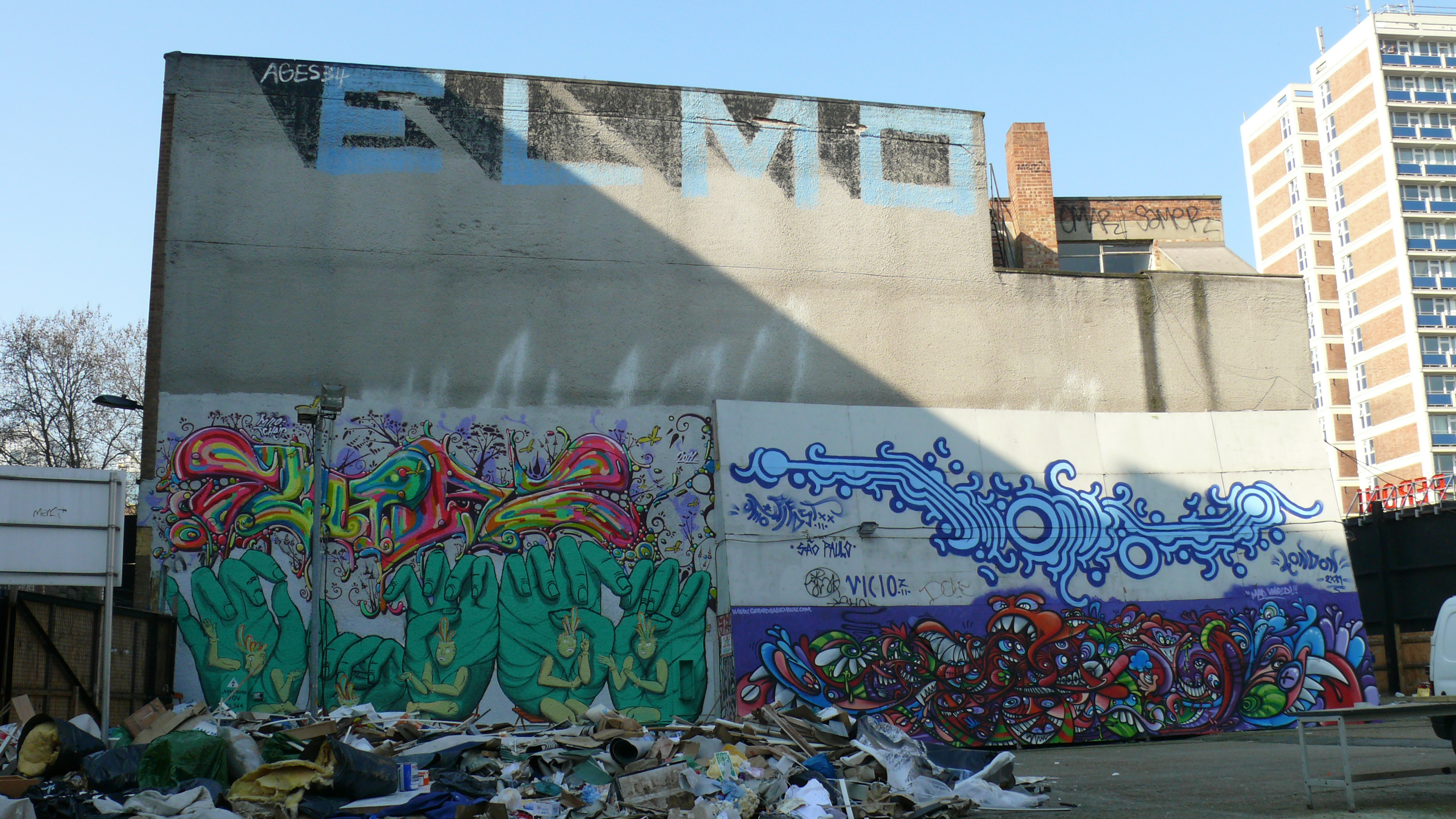
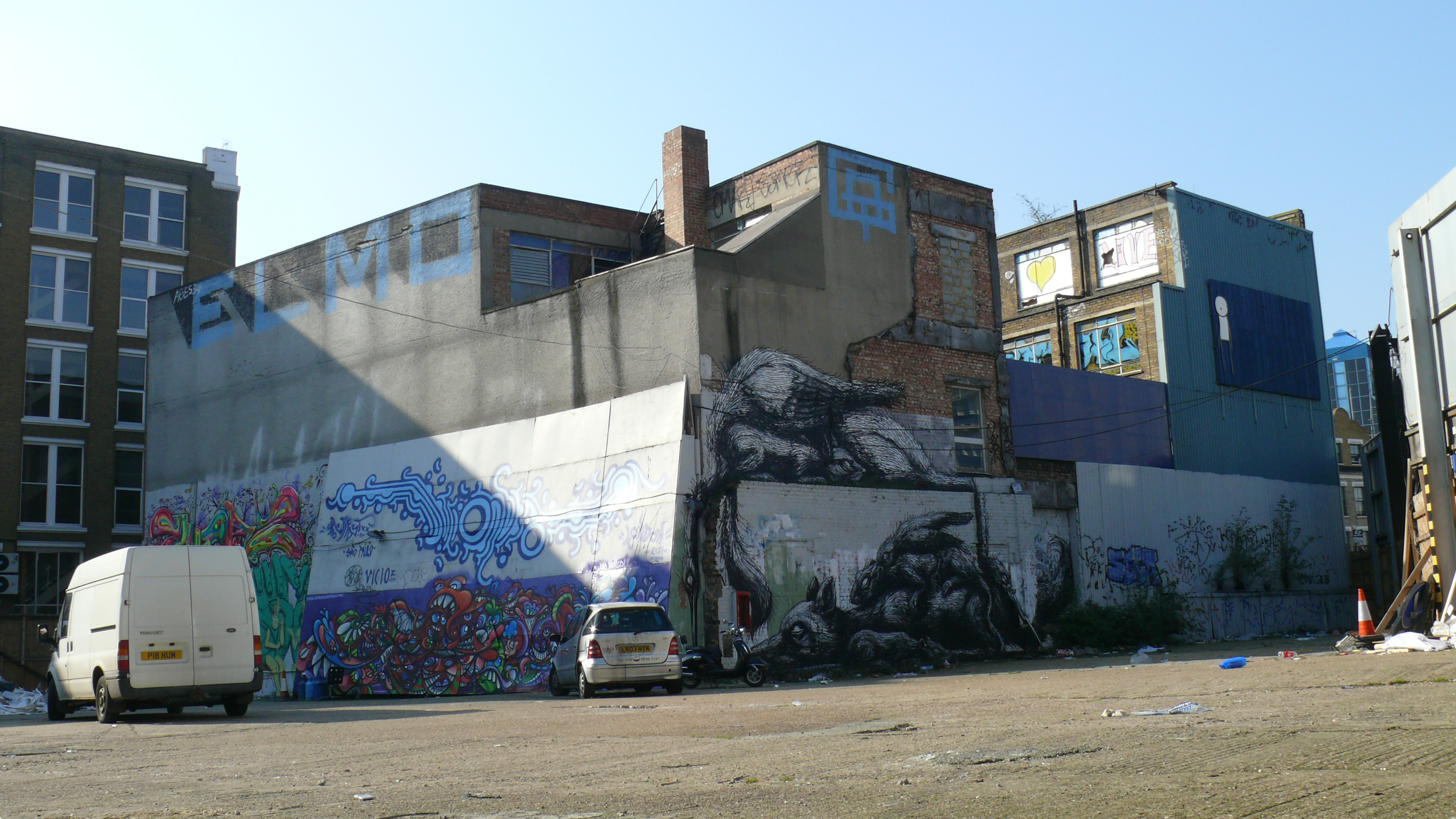
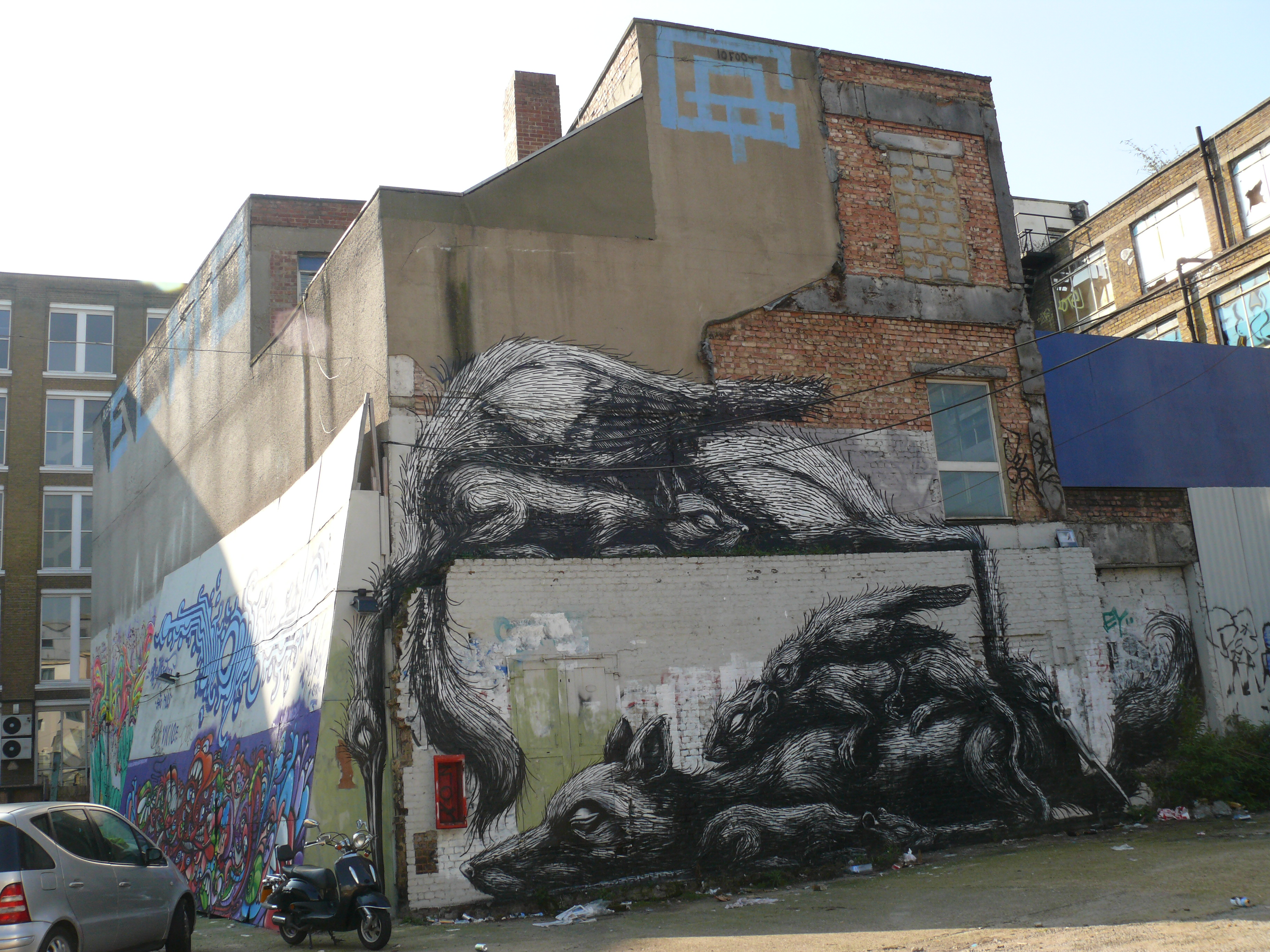
The Foundry has really been doing the rounds on the street art/graffiti blogs and websites over the last month or so. Some people are loving it and others are getting sick of hearing about it.
As we are huge fans of many of the artists that have been adorning the walls, we decided to jump on the band wagon and do a write up about it, yet to be slightly different we wanted to drop a little history to give you a understanding of this locations significance to the local community and art scene.
The Building operated as a bank originally and was decommissioned in the 90’s when Tracey and Jonathan Moberly took out a lease on the space and turned it into a gallery for local and emerging artists. To cover costs, they opened the Foundry bar in the front section of the building, but wanted people to know that it was predominantly a art space. The bar however became a hang out for many current and future celebrities, Pete Doherty was known for hosting his poetry nights there.
The walls of the basement are heavily covered in early work by many big name graffiti and street artists such and Banksy and Faile. The walls have also been heavily tagged by regulars and visitors alike.
The Foundry came into the spotlight for a different reason in early 2010 when Hackney council approved the plans to build an 18-storey hotel and retail complex on the space, of course this successfully outraged the local community. Its not the first time that underground venues have had to make way for big business, but in this case the anger was directed at the blatant attempt to cash in on emerging trends.
The back of the building has a 6 meter high Banksy on the rear wall that is to be preserved and made a focal point of the commissioned ” Art’otel” and a large wooden hording has been placed over the artwork to preserved for future placement as a feature in the hotel (the murals by Zezao & Mr.Sperm currently cover the front of the hording).
Of course this profiteering by the corporate world on a mainstream encroaching subculture angered the art community and resulted in heavy protesting. But as always this was a valiant but futile effort and the building is in the process of being shut down and ready for demolition.
So how this links into the current surge in artwork? Through the right channels and with permission of the current lease holders, local and travelling artists have been given the green light to go to town on the space.
Check out all the shots we have ever taken of the foundry here:







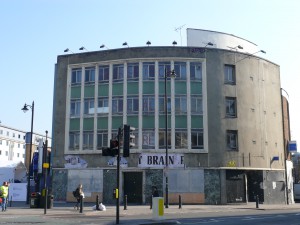 The Foundry has really been doing the rounds on the street art/graffiti blogs and websites over the last month or so. Some people are loving it and others are getting sick of hearing about it.