Jorge Rodríguez-Gerada is a Cuban American contemporary artist. He as bee around since the late 90´s he has been replacing the faces of cultural icons chosen by advertisers with the faces of anonymous people to question the controls imposed on public space, the role models designated and the type of events that are guarded by the collective memory.
His spectacular interventions are created for the sake of bringing awareness to relevant social issues. His large scale time base works avoid negative impact on the environment, challenge the conformity in contemporary art and allow for a reflection that goes beyond the completion of the piece to focus in its concept, process, and the metaphor that comes forth because of the material chosen.
Here below is ine if his works – an 11 Hectare portrait in Belfast, Northern Ireland!
We strolled through the London Art Fair for the fourth consecutive year and as always stumbled upon remarkable artworks from ever so talented artists.
In this series, we will tell you why we liked a particular piece from these artists as well as posting more works. We hope you will also enjoy it as we did.
Feel free to comment too at the end of this article. Let’s get started….
________________
Shaun Doyle & Mally Mallinson
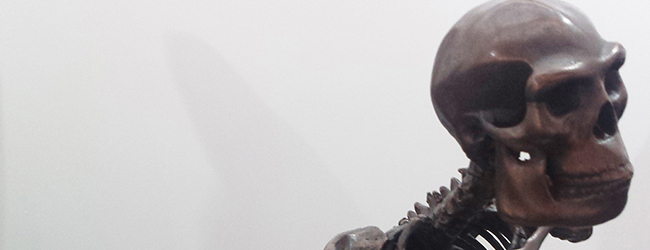
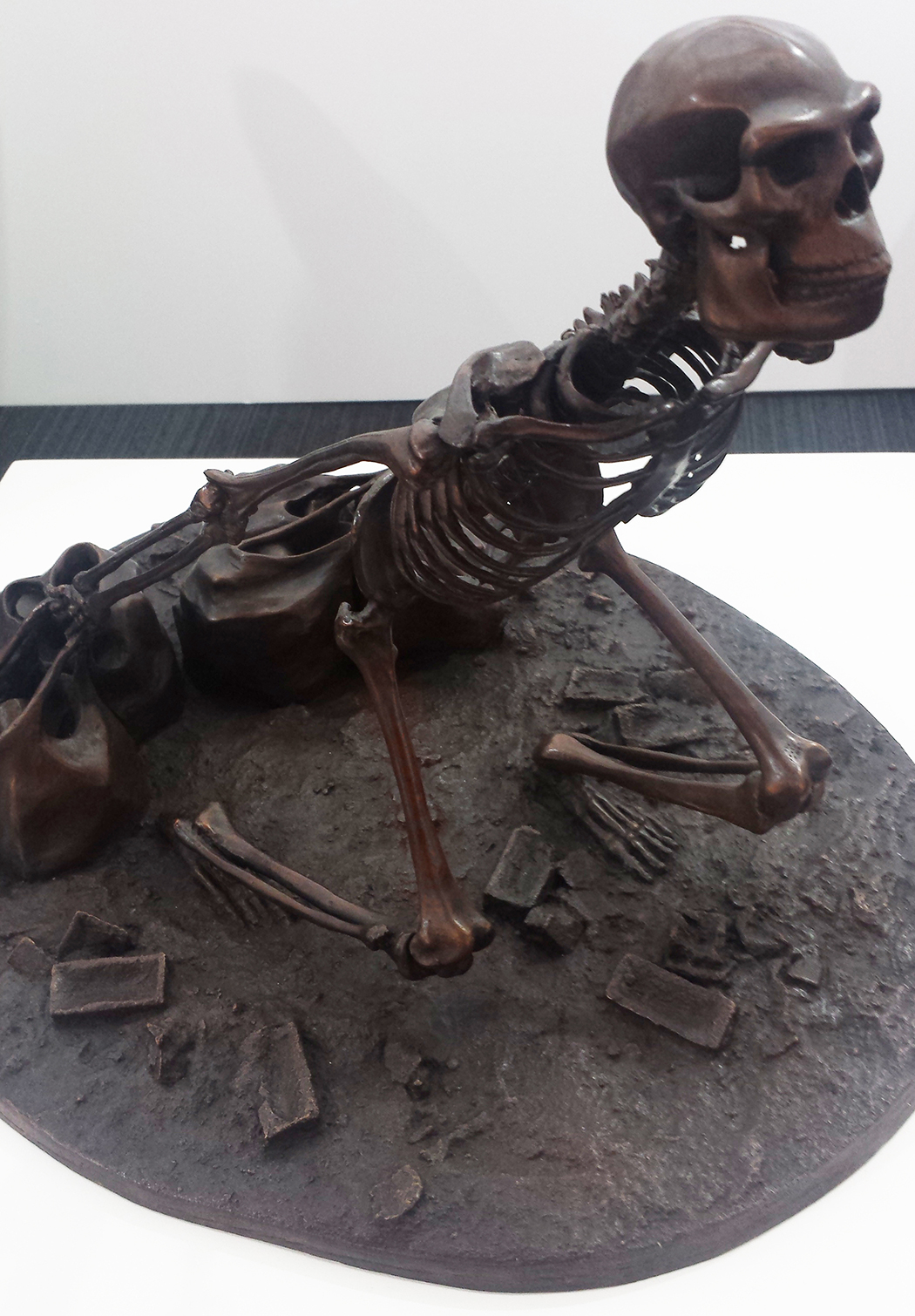
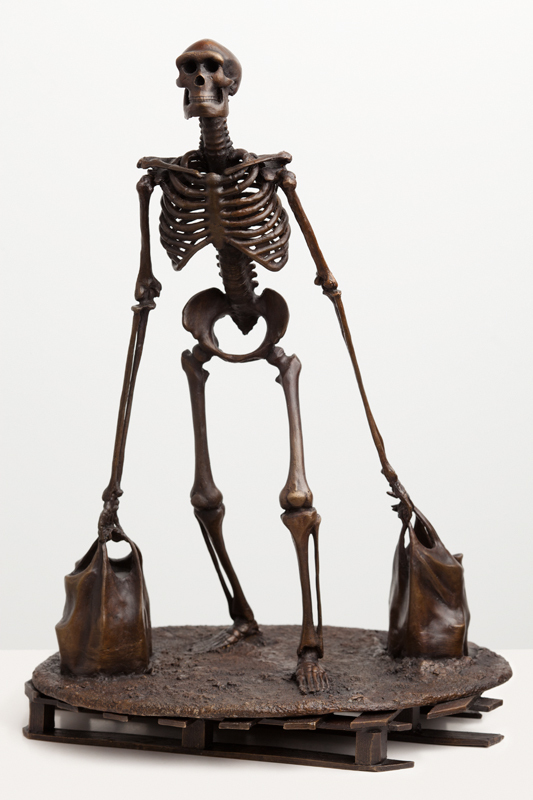
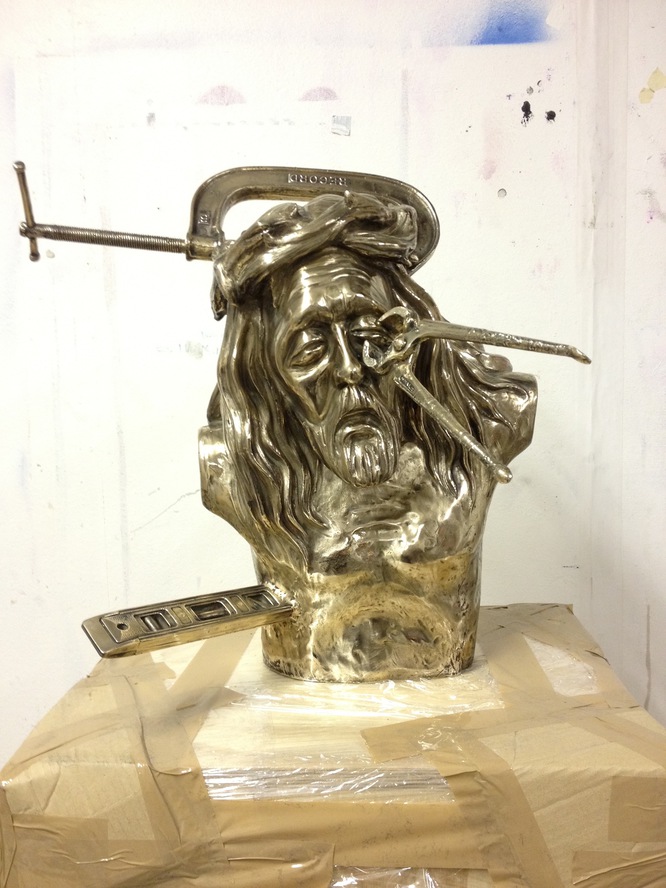
We stumbled upon the piece called “Sumo Ergo Sum(I shop therefore I am)” – cast bronze, edition of 9, H 42.5 x W 45 x D 56cm.
Click to enlarge
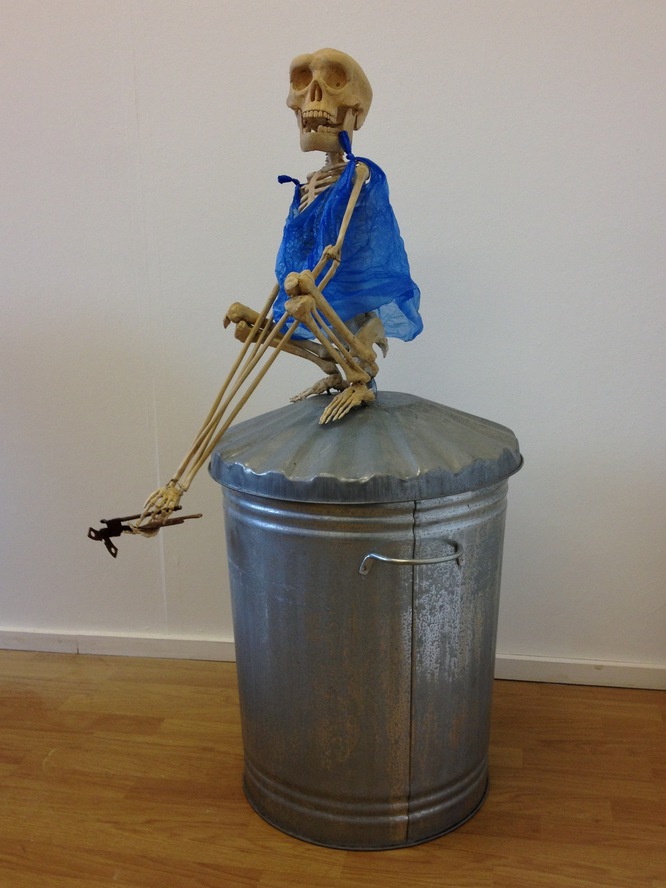
The skeleton sculpture, like any other ones to be honest, tickled our eyes right away.
Looking at the skull face expression, it was clear to us that it conveys a strong social message which was confirmed after reading up about the artists – keep on reading below.
About the artists
Our work deals with political and social thought. The forms we use to articulate our ideas often come from popular culture or are second hand, borrowed from another source. The way we put things together is witty, cheeky and aggressive; it mirrors the way we talk to each other. Context within our work is deliberately inconsistent. That inconsistency is our attempt to accommodate the messiness of the real world and allows different audiences different readings.
The lived-in, shabby aesthetic employed reflects the environments that excite us – the underfunded regional museum, the car boot sale, the dump; places where value systems are fluid, more confused or don’t exist at all. In these situations, forms and ideas have the potential to acquire alternate meanings and take on a new life. Through re-imagining objects and their identities we explore the processes of cultural transformation that take place after an object or idea has served its initial purpose. This re-cycling is a means of distilling useful agents; elements approaching redundancy are stripped down, re-formed and re-packaged. The results challenge the cleaner more commercial concerns of some other art forms and celebrate the possibilities of extreme behaviour and belief.
When Ole Kirk Christiansen came up with the idea of that brick we call LEGO, I can say with confidence that he was most probably miles away from thinking that one day, people all aver the world would use his brick, and in some cases, ton of them to create pieces of art.
There is even today some sort of art movement that has sprung. How about that?
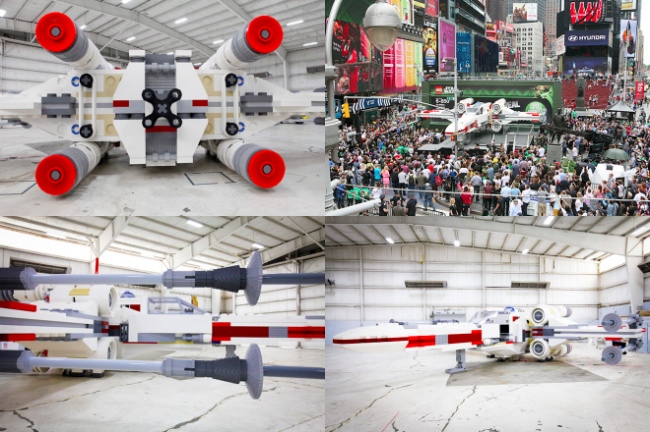
One very recent example of the frenzy that surrounds LEGO and art can be this life-sized Star Wars X-Wing fighter that was made from 5,335,200 individual bricks. Yes you heard it, over 5 millions of brick were used. It was 11 feet tall, 43 feet long 44 feet wide, and weighed almost 46,000 pounds. This is, as of today the largest model ever built.
But while some art purists may argue that the Brick X Wing is not really art but more a clever engineering poroject, and we would tend to agree, some other artists we feel, have really taken the brick and turn into an art medium.
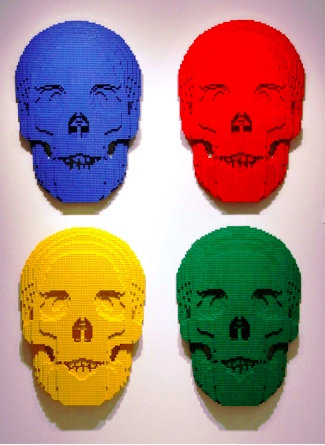
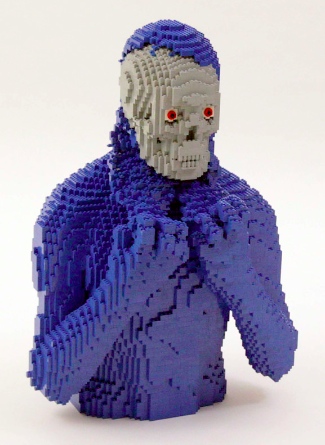
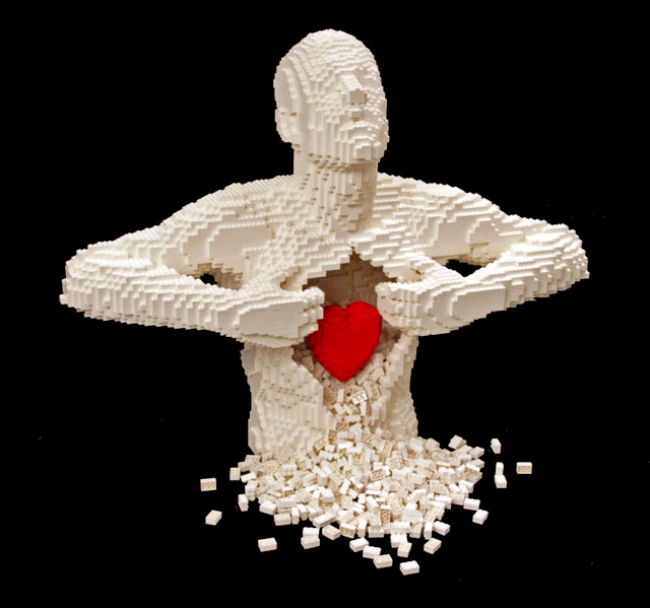
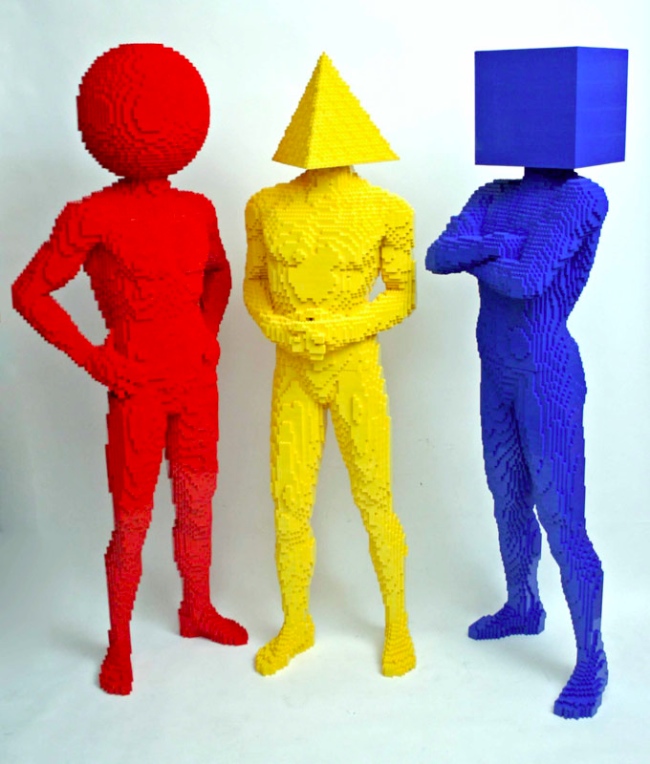
Nathan Sawaya is certainly one if these artists (we already published something about him) and has gained a recognisable art LEGO style with his Dali-esque statues that are intricate and perception-bending. We have included some of Nathan Sawaya’s works at the bottom of this post.
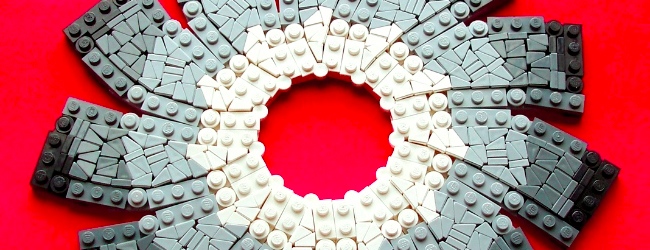
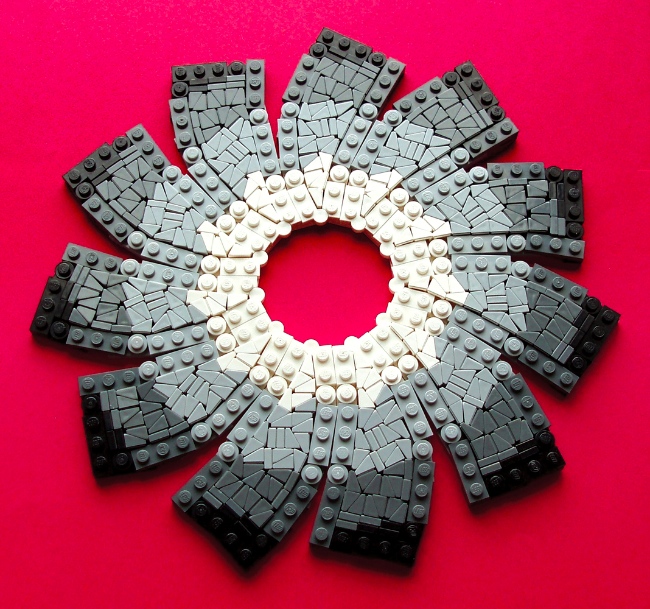
Other interesting artists are Katie Walker who builds mosaics, we have included one example below.
I have always found that acrylic paint used in conjunction with spray paint is a definite winner and give you astonishing results. However, it is difficult to master both mediums for most of us unless you are Will Barras.
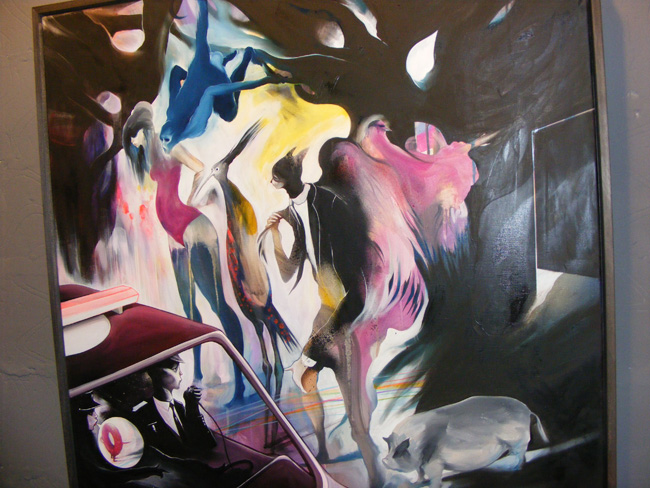
Bad Reception, his latest show at Stolen Space, brought to us a series of works never exhibited before which, for most of them, have been painted using acrylics and spray paint (oil and ink have also been used for some of the works).
I was walking towards the entrance of the gallery and could see some of Will Barras’ works and my first thought was ‘wow, it looks amazing from here’. I was eager to go in and check the show out.
The fact that most of the works are large scales pieces gives you the tone of the show – bold. A quick look around the gallery and it became obvious to me that the composition in his works is heavy and busy which, coupled with the large scale aspect make the whole experience very overwhelming. Add to this a varied and strong colour palette and often you get some sort of dramatic or epic feel to the painting, it is almost exhausting to look at his works as you need to look and look again to get the whole picture, to get the story behind it.
Indeed Will Barras intend to tell us a story, the story of Mr Benn – read more about iton the Stolen Space website
Will Barras’s technique is really remarkable, he manages to combine urban/graffiti techniques with more traditional mediums such as acrylics or oil and the result is breathtaking and definitely achieve to blur the line between abstract and reality – what is really going on these paintings?
“I want to maintain the natural flow and energy, the tension between abstract and figurative, while developing and elaborating on a narrative. To generate a multiple choice of possibilities of what could be happening Ideas usually develop from the everyday mundane, broken phone converations and awkward situations …” Will Barras
The show ran until the 14th November 2010.
NB: if you wonder whether the motorbike was part of the show, well not really. Will Barras decided to leave it there after the opening night. Random but it did fit well with the show!
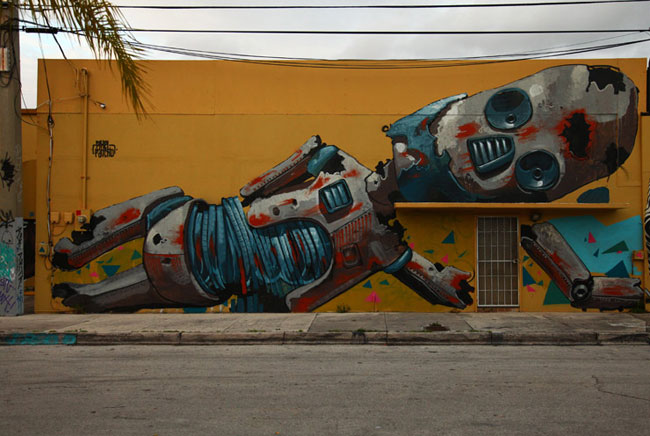
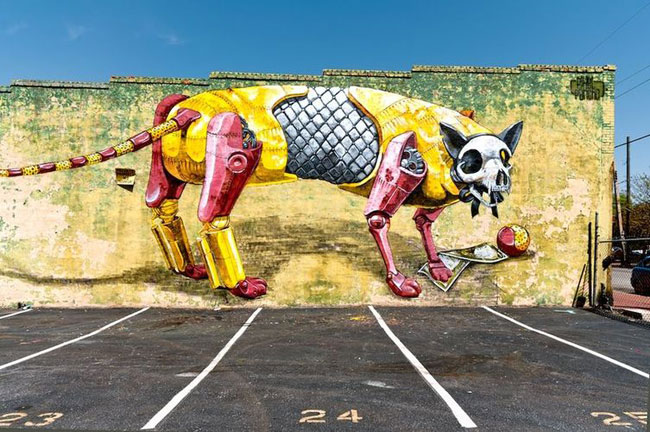
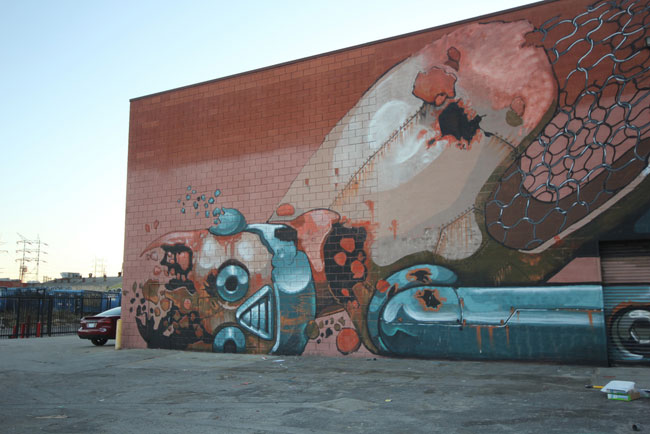
Pixel Pancho street art style stands out of the crowd and often includes robotic like characters. It was difficult to choose which pieces to show so anything Pixel Pancho sprays turns into wonders. We have included below a few examples of his works.
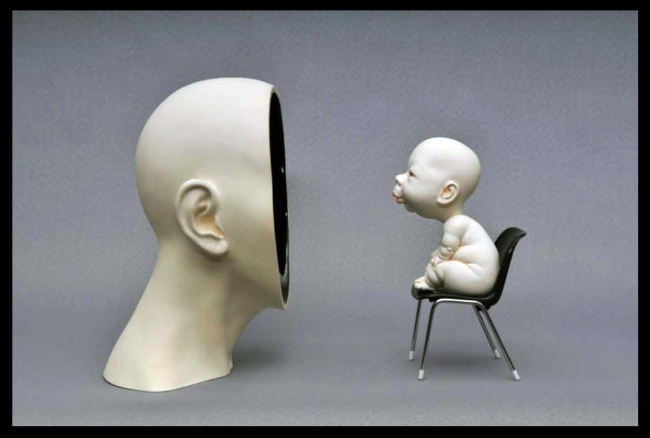
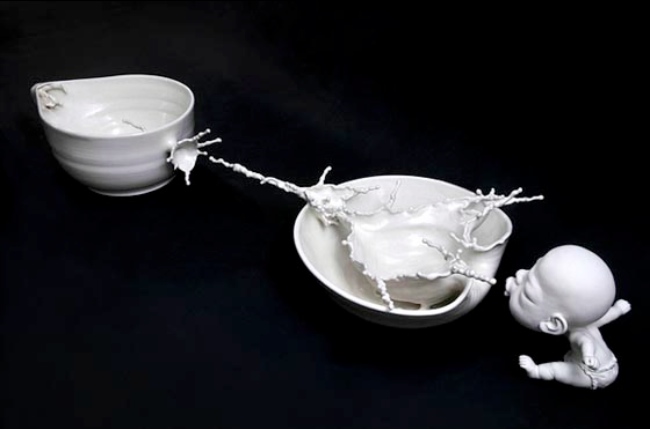
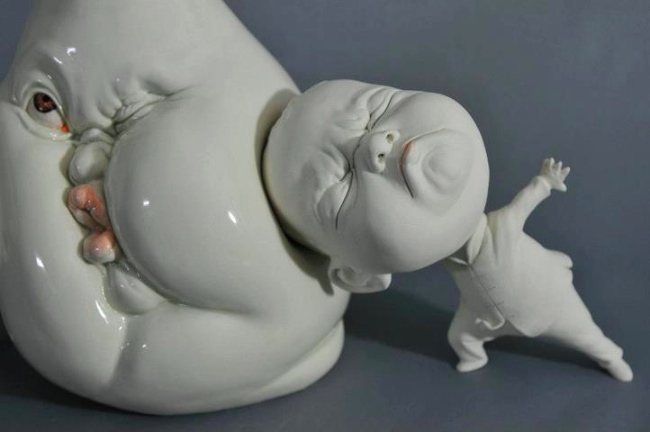
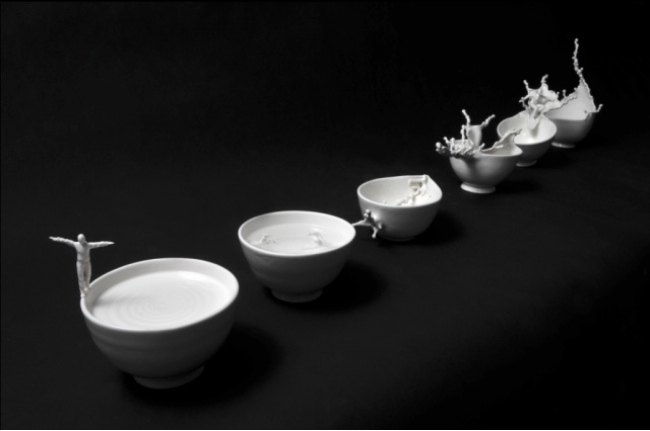
If I tell you “ceramics”, you’d probably look at me, nod politely and forget immediately that I mentioned that word but if I told you “Johnson Tsang’s ceramics”, I’d strongly advise you to listen and more importantly to take a look at his works as it is simply fantastic and will give you a complete new and fresh look at what you can do with ceramics.
Have you ever thought that emotions, movement and speed could be transposed into some ceramic works? Probably not. Ceramics may make you think of pots or something. Well see what you can do if you have Jonhson Tsang’s talent and skills.
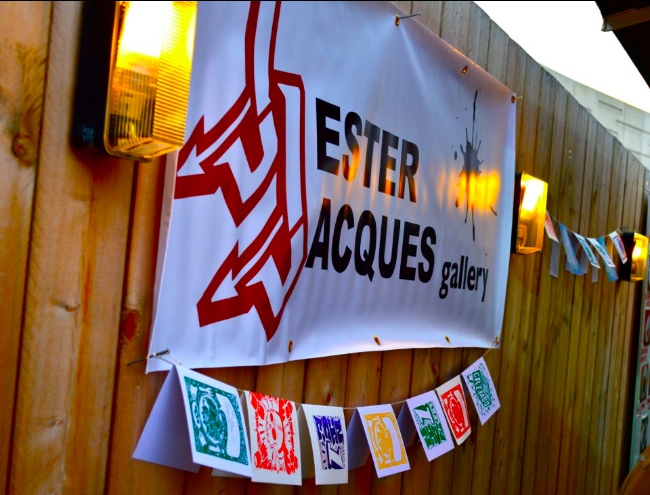
Jester Jacques Gallery, a newly created entity in the art world, have been offering shopping experience, both online and in their Pop-Up Shop since 2011. Their latest event just launched earlier this week at Boxpark with the set up of a pop up show and shop.
“We have a thoughtful collection built up by personal relationships and investment pieces.” Karen Shidlo, Co-Owner of Jester Jacques Gallery
With famous names as Shepard Fairey and Sweet Toof being sold alongside the work of up and coming young artists, JJ Gallery has created an exciting online shopping experience as well as pop up events as the one currently held at BoxPark.
The Pop Up will include a unique installation by Nathalie Guinamard and a street art piece by Nathan Bowen. We have included photgraphs from the opening which happened on the 7th February.
When –
Jester Jacques Pop Up Shop at Box Park February 18th – 21st Where –
Boxpark, 2-4 Bethnal Green Rd, London E1 6GY
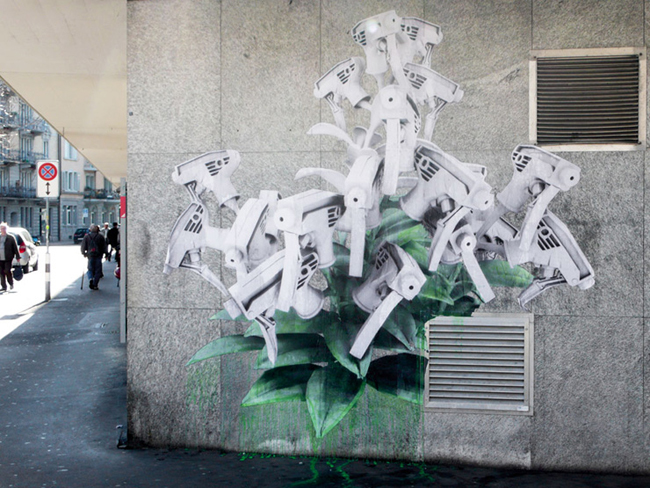
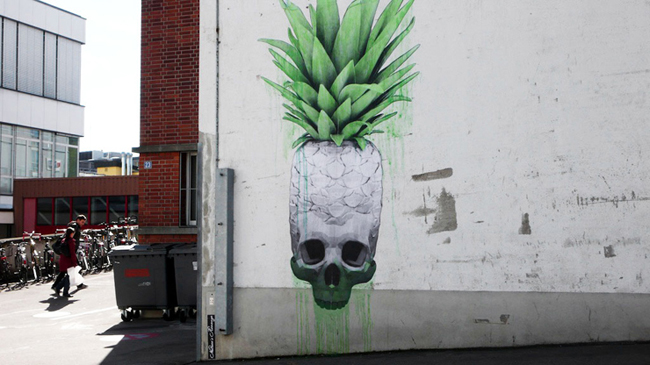
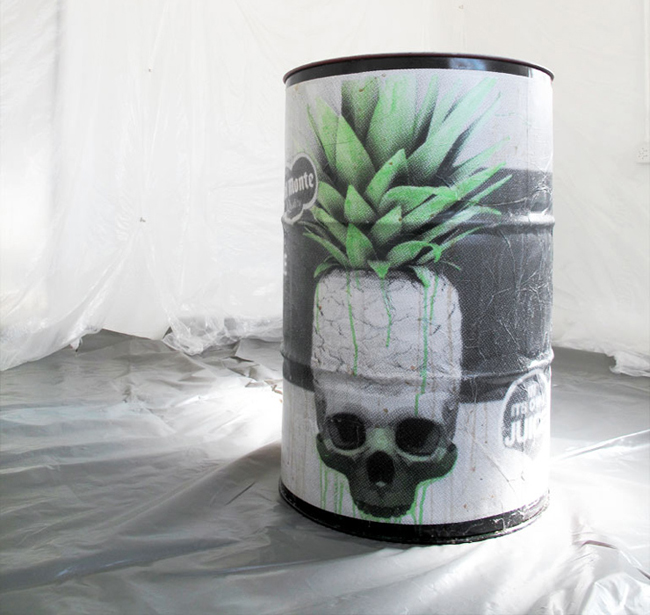
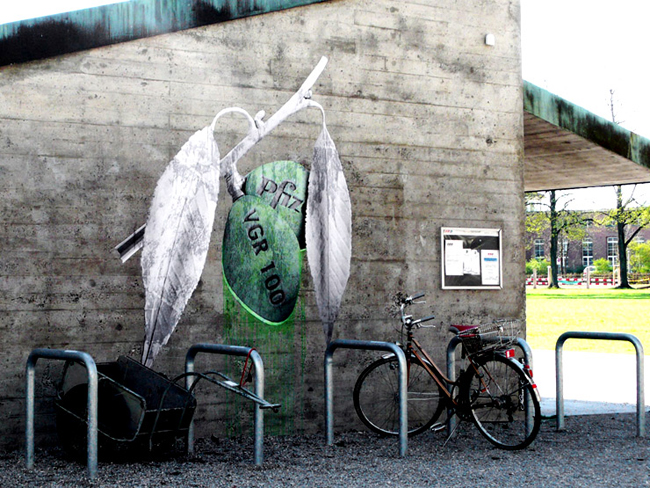
LUDO is a French Street Artist who is enjoying enjoyed a very successful first solo show in Zurich at the Starkat Gallery.
LUDO’s style is very particular and his pieces always depict ominous and imaginary plants which always seem to want to grab you as you walk past them. His street art series is actually called Nature’s Revenge which he has been focusing on for the past two years or so. A way perhaps to warn you all about the irreversible force of Dame Nature.
Photo London is located in the heart of the city and benefits from the support of London’s best photographers. Click here to watch these photographers discuss their love of photography, and why London is an important cultural hub for photography, in a special video for Photo London.
From the 19-22 May, Photo London will be celebrating the ever popular medium of photography across the capital by bringing some of the world’s leading practitioners, curators, exhibitors and dealers together with the public. Photo London have collaborated with 80 of the best galleries from around the globe to put together a stellar line up of both exhibitions and events, such as book signings and discussions, with those renowned in the field.
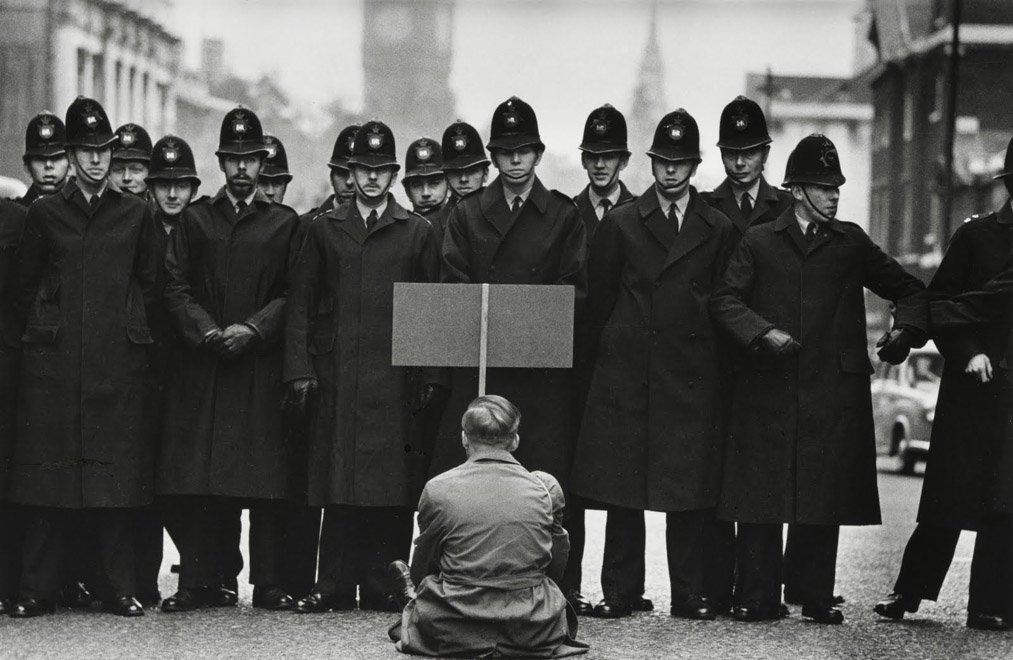
Amongst those attending is Don McCullin. Recently named Photo London’s Master of Photography 2016, the legendary war photographer will be the subject of an exclusive exhibition at Somerset House. McCullin will also be in conversation with Simon Baker, Photography Curator at Tate in a public talk on 19 May. This opportunity is available to anybody who purchases a ticket to Photo London thanks to the support of the LUMA Foundation, who work to support the activities of independent artists and pioneers.
Elsewhere, specially-commissioned exhibition, Photoprovocations, is set to be on view at the West Embankment Galleries. This showcase recognises Sergey Chilikov as an outstanding practitioner of the ‘new’ photography which emerged in the USSR in the 1970s. The work of Wolfgang Tillmans will also be displayed in Between Bridges at Somerset House. Stepping aside from the sensationalism surrounding the ‘Brexit’ coverage in the media, Tillmans aims to inform the public about the democratic and humantarian benefits of remaining within the European Union.
Photo London’s main exhibitors section welcomes a wealth of established galleries including Beetles+Huxley, London; Polka Galerie, Paris; The Photographers’ Gallery, London; Magnum Photos, Paris-London; and Michael Reid Gallery, Sydney-Berlin. In addition, new and emerging organisations will also have a place at the event in Photo London’s newest section Discovery, reserved specifically to introduce praiseworthy, but less well known, galleries to new audiences. Exhibitors include Tiwani Contemporary and TJ Boulting. Already one of the top 10 visitor attractions in the UK, Photo London’s home, Somerset House, is itself a cultural hotspot and a centre for art and culture in the heart of London.
London’s public museums and galleries will also put the spotlight on photography this month: Martin Parr will curate Strange and Familiar: Britain as Revealedby International Photographers at the Barbican Art Gallery; National Portrait Gallery hosts Vogue 100: A Century of Style; Science Museum/Media Space displays the work of William Henry Fox Talbot; the V&A presents Paul Strand: Photography and Film for the 20th Century; and Tate Modern examines contemporary work in Performing for the Camera.
This year’s Photo London edition will feature the talents of two rising practitioners from the London art scene. Walter and Zoniel will transform the uncanny underground spaces of The Deadhouse at Somerset House into a giant camera for opening night. By doing this, the artists plan to create the largest ever Ambrotype portrait as a live ‘happening’, energising visitors ahead of the following four days, which promise to be filled with world class photography and photographers.
Photo London 2016, 19-22 May, Somerset House, London.